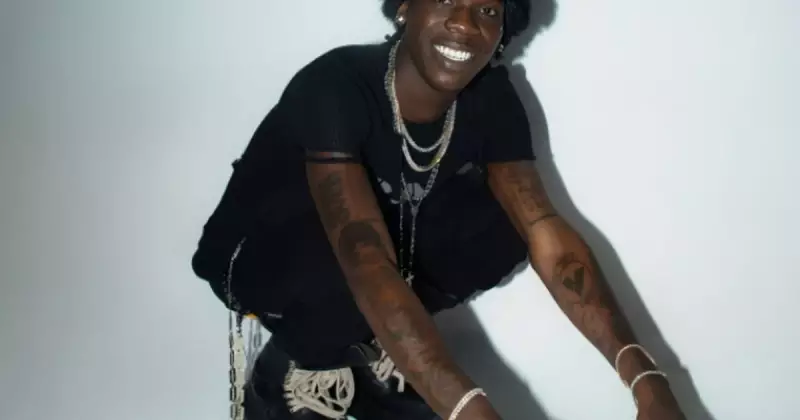
The Nigerian music scene in 2025 was loud with headline-grabbing feats, but the year's most profound commercial success story unfolded with remarkable quietness. Street-hop superstar Seyi Vibez, through a potent mix of originality and a deep catalogue, orchestrated a silent takeover of the country's streaming platforms, finishing the year as one of its most-streamed artists without the typical fanfare.
While giants like Wizkid, Asake, and Burna Boy commanded global attention and stadium tours, Vibez focused on consistent output. His strategy of releasing hit singles, strategic collaborations, and an ambitious album ensured his music resonated deeply, leading to a complete dominance across key digital services.
The Staggering Numbers Behind the Quiet Reign
The data from 2025 leaves no room for debate about Seyi Vibez's impact. His most emphatic victory was on Audiomack, where he solidified his status as the platform's most-streamed African artist. He first claimed this crown in 2023 and, by 2025, had not just retained it but massively extended his lead, amassing a colossal over 2.2 billion streams.
This placed him ahead of Asake, who himself crossed the 2 billion mark, and Burna Boy, who recorded nearly 2 billion streams. His influence wasn't confined to one platform. On Spotify Nigeria, only Wizkid accumulated more streams than Vibez in the preceding year. Similarly, he secured a formidable fourth-place ranking on Apple Music Nigeria, sitting just behind the trio of Wizkid, Burna Boy, and Asake.
His reach even extended to the highest political circles. A notable global recognition came when his featured verse on Olamide's track '99' earned a spot on former US President Barack Obama's coveted 2025 annual playlist, highlighting the wide appeal of his contributions.
Authenticity as a Global Strategy: The 'Fuji Moto' Blueprint
What makes Seyi Vibez's ascent particularly significant is his unwavering commitment to his roots. In an industry where artists often tweak their sound for international appeal, Vibez doubles down on his Yoruba heritage, street identity, and authentic Afrobeats dynamism.
This philosophy was the cornerstone of his 2025 album, 'Fuji Moto'. The project displayed clear ambition, featuring American hip-hop stars like French Montana, Trippie Redd, and NLE Choppa, alongside heavyweight producers. Yet, it never sacrificed his indigenous core. This decisive stance challenges a long-held narrative in African music discourse: that global success necessitates cultural compromise. Vibez proves that strategically executed authenticity can be a powerful passport to the top.
The Empire Built on Catalogue Depth and Relentless Work Ethic
Seyi Vibez's streaming empire is built on a foundation of prolific output and catalogue depth, which the streaming ecosystem heavily rewards. Since his mainstream breakthrough in 2022, he has released eight projects, not including collaborative works with his Vibez INC crew. This vast library contains hit records that continuously engage his rapidly growing, dedicated fanbase.
'Fuji Moto' represents both consolidation and expansion. The production roster, blending Nigerian talents with international names like Mally Mall and Dr. Luke, signals ambitions beyond regional dominance. The album's guest list is a masterclass in strategic range, featuring Olamide alongside the aforementioned American acts.
The major lesson from Vibez's 2025 is the power of compounding through consistent, high-quality releases. His work ethic in tirelessly putting out new material is nearly unrivalled, creating a catalogue with enduring replay value that attracts millions of listeners annually and guarantees top spots on year-end charts.
As competition in Nigerian music intensifies, the numbers speak unequivocally. Seyi Vibez has constructed a streaming juggernaut that transcends platform biases and geographic limits. His success demonstrates that Nigerian street-pop, delivered in Yoruba and Lagos pidgin, can captivate audiences from Ikorodu to the world's most powerful offices, proving what is possible when ambition meets cultural consistency.