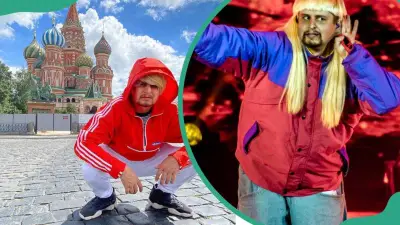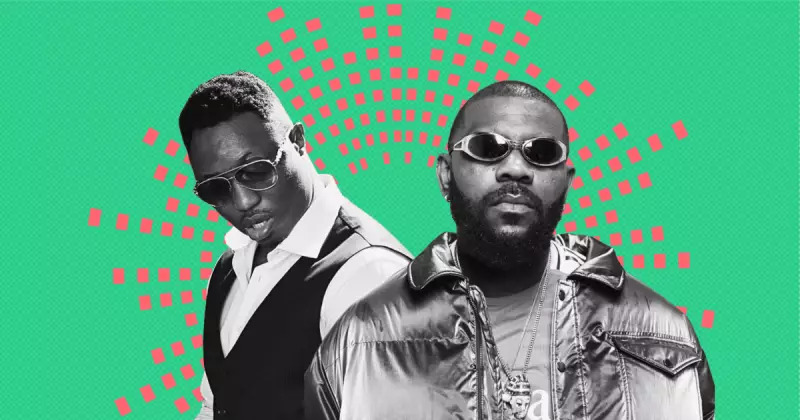
While many Nigerians are winding down for the holidays, the country's hip-hop scene is exploding with controversy. A bitter war of words has erupted between two of its biggest stars, Odumodublvck (Tochukwu Ojogwu, 32) and veteran rapper A-Q (Gilbert Bani, 39), turning the festive season into a battleground for lyrical savagery.
The Festive Firestorm on Social Media
The latest chapter in this ongoing saga ignited on Sunday, December 21, 2025. Odumodublvck, known for his confrontational style, took to X (formerly Twitter) to launch a direct attack on A-Q's relevance. In a post that quickly went viral, he mocked A-Q's lack of show bookings during the lucrative Christmas period.
"ITS FOUR DAYS TO CHRISTMAS AND A-FOOL HAS NOT BEEN BOOKED FOR ONE SHOW," Odumodublvck wrote. He dismissed A-Q's self-proclaimed leadership of hip-hop, accusing him of contaminating its doctrines and labeling him a "propaganda artiste." He also called on the Headies Awards to take note, a pointed reference given both artists' history with the prestigious ceremony.
A-Q, who left Chocolate City in November 2020 to go independent, fired back with surgical precision. His quoted response targeted Odumodublvck's dependencies and business dealings. "You need the bookings; I don't," A-Q began, listing Odumodublvck's reliance on Skepta for shows, the Big 2 for album sales, and Jeriq for Eastern appeal.
He delivered a deeply personal blow, referencing Odumodublvck's public rift with fellow rapper Blaqbonez and alleging "the worst contract in the history of the Nigerian music business." A-Q concluded by attacking Odumodublvck's character, stating, "Once a bum… Always and Forever a bum."
A Clash of Eras and Accolades
The irony of this feud is underscored by their shared recognition from the Headies Awards, though they represent different rap ideologies. A-Q won the Lyricist on the Roll award in 2021 for "The Last Cypher," solidifying his status as a purist's lyricist. Odumodublvck, representing a newer wave, claimed Best Rap Single and Rookie of the Year in 2023 for "Declan Rice," and was crowned the Headies Next Rated artist in April 2025.
The conflict quickly expanded beyond the two rappers. Odumodublvck shifted his focus to the entire Chocolate City label, which he branded a "devilish organization." He invoked the name of label legend M.I. Abaga, sneering at the suggestion he needed UK rapper Skepta's co-sign by stating he could have used M.I. instead.
This reference followed earlier public spats with M.I. in November 2025, where Odumodublvck had accused the veteran of hypocrisy and threatened legal action during his escalating dispute with Blaqbonez.
Legal Battles and the Blaqbonez Factor
This feud is far more than social media banter; it has serious legal ramifications. The tension is rooted in the complex fallout between Native Records (Odumodublvck's camp) and Chocolate City.
Central to the drama is rapper Blaqbonez, a Chocolate City artist and former collaborator with Odumodublvck on hits like "Tesla Boy." Their friendship soured in early 2025. The rivalry became public at the 17th Headies Awards in April 2025, and by June, Blaqbonez and A-Q released the track "Who’s Really Rapping," widely seen as a diss aimed at Odumodublvck's style.
The dispute has now entered the courtroom. In November 2025, it was reported that Olayinka Osagie Onobun, Head of A&R at Chocolate City and Blaqbonez's manager, filed a criminal intimidation suit against Odumodublvck. A Chief Magistrate summoned the rapper over allegations his social media conduct was threatening.
This case runs parallel to a separate civil lawsuit for assault and battery filed by photographer Kraziecent, who claims Odumodublvck attacked him in December 2024.
The Ideological War for Nigerian Hip-Hop
At its core, this clash represents a fundamental divide over the music industry's future. Odumodublvck positions himself as a rebel against a system he claims uses restrictive contracts and legal pressure to control new-generation artists. His attacks on Chocolate City are framed as a warning to upcoming talents.
Conversely, A-Q and his allies frame the issue as one of personal conduct and professionalism. They suggest Odumodublvck's legal troubles and aggressive outbursts are signs of instability, not evidence of a corrupt system. This battle, playing out in real-time on social media and in courtrooms, highlights the ongoing evolution and intense competition within Nigeria's vibrant hip-hop landscape.