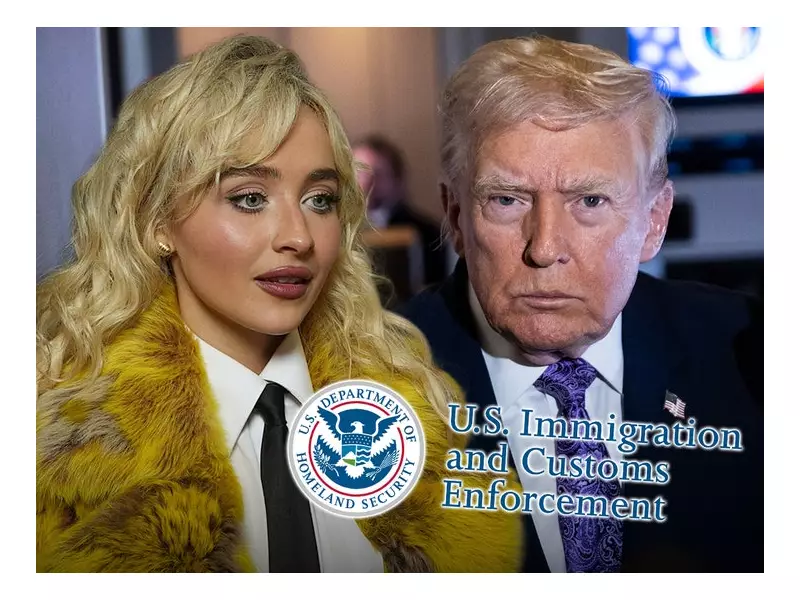
American pop sensation Sabrina Carpenter has launched a fierce attack on the White House after her music was used without permission in a controversial government video. The clip, which promoted immigration arrests by Immigration and Customs Enforcement (ICE), has ignited a major public relations firestorm.
Carpenter's Sharp Condemnation
The incident occurred on Tuesday, December 2, when the White House posted a montage on social media. The video featured footage of Department of Homeland Security arrests, set to a lyric from Carpenter's chart-topping track "Juno." The specific lyric used was, "Have you ever tried this one?"
Sabrina Carpenter did not hold back in her response. She publicly condemned the video, labeling it as "evil and disgusting." In a strongly worded statement, the singer declared, "Do not ever involve me or my music to benefit your inhumane agenda." Her reaction highlighted a clear rejection of having her artistic work associated with the government's immigration enforcement actions.
White House Fires Back
The White House responded swiftly and aggressively to the singer's criticism. In a statement provided to the media outlet TMZ, White House spokesperson Abigail Jackson delivered a sharp rebuke.
Jackson's message was pointed: "Here’s a Short n’ Sweet message for Sabrina Carpenter: we won’t apologize for deporting dangerous criminal illegal murderers, rapists, and pedophiles from our country." The spokesperson went further, adding, "Anyone who would defend these sick monsters must be stupid, or is it slow?" This exchange marked a significant escalation in the war of words between the entertainment industry and the administration.
Growing Backlash and a Pattern
The online backlash to the video was immediate and intense. Critics accused the administration of co-opting pop culture to promote a divisive political agenda. This controversy comes just days after another major pop star, Olivia Rodrigo, criticized the same administration for using her music in a separate post related to deportations.
Rodrigo had called that use of her work "racist, hateful propaganda," establishing a pattern that has angered the music community. Despite the mounting criticism from high-profile artists and the public, the White House has not removed the video. Officials continue to defend its use, arguing that it legitimately highlights efforts to target and remove violent offenders from the country.
This ongoing clash underscores the deepening cultural and political divide, where music and messaging collide on the national stage.