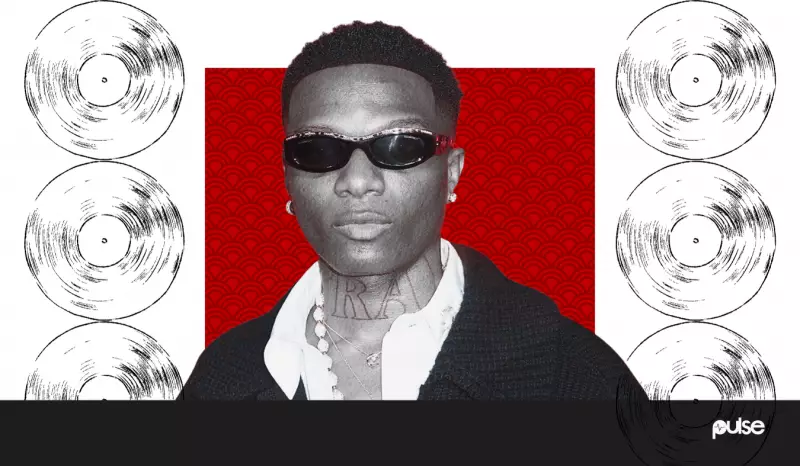
In an industry obsessed with constant noise and attention, one global superstar has mastered the art of speaking through silence. Wizkid, the Grammy-winning Nigerian artist, has transformed strategic absence into his most powerful weapon, proving that true dominance doesn't require daily validation.
The Art of Strategic Silence
While the global Afrobeats scene drowns in weekly single releases, TikTok challenges, and endless social media performances, Wizkid moves differently. The artist born Ayodeji Ibrahim Balogun has spent recent years perfecting the art of disappearance, granting minimal interviews and avoiding media rounds since 2022. Yet his impact remains undeniable.
Wizkid's achievements speak louder than any social media post could. His collaboration with Beyoncé on "Brown Skin Girl" earned him a Grammy Award, while his 2020 hit "Essence" featuring Tems became the first Nigerian song to chart on both the Billboard Hot 100 and Billboard Global 200. Further cementing his legacy, his writing contribution to Drake's "One Dance" secured a Guinness World Record, and his album Made In Lagos achieved Gold certification in both the U.S. and U.K.
The 2025 Calculated Comeback
After nearly two years of creative invisibility, Wizkid has staged a quiet but powerful takeover in 2025. Rather than flooding playlists, he has strategically aligned himself with the next wave of talent through carefully selected collaborations.
His feature lineup reads like a who's who of contemporary music: "Gimme Dat" with Ayra Starr, "Billionaires Club" with Olamide & Darkoo, "Forever Be Mine" with Gunna, and "BIG TIME" with Odumodublvck. Additional collaborations include work with DJ Tunez, DJ Maphorisa, Mavo, David Guetta, Tyla, Sarz, Asake, and Skillibeng.
The strategic approach has already yielded significant results. His collaboration with Ayra Starr on "Gimme Dat" has earned him his sixth Grammy nomination in the Best African Music Performance category, proving that quality trumps quantity every time.
From Hot-Headed Youth to Calculated CEO
Wizkid's current approach marks a dramatic evolution from his early career. In his younger years, he was famously confrontational on social media, regularly engaging in online spats that helped build his loyal Wizkid FC fanbase. Today, that same artist treats "Wizkid as a million-dollar company" rather than his personal identity.
In a revealing 2022 interview with The Guardian, Wizkid explained this philosophical shift: "I treat [Wizkid] as a million-dollar company, man. It's a business, not me." This CEO mindset explains his strategic withdrawal from constant public visibility.
His silence extends even to potential controversies. When rumors surfaced in 2017 about a domestic dispute involving his manager Jada Pollock, Wizkid offered no response, allowing the story to fade without oxygen. Similarly, despite vocal support during the #EndSars protests, he maintained radio silence during the crucial 2023 elections, confirming that he reserves his influence for personally chosen moments.
Wizkid's power lies in his refusal to perform the celebrity hamster wheel. He doesn't need daily engagement because his catalogue—from 2011's Superstar to global smash Made In Lagos—does the heavy lifting. Having become the first African artist to surpass 20 billion global audio-on-demand streams, his legacy speaks volumes even when he says nothing.
In today's oversharing culture, Wizkid's silence represents a revolutionary act. It demonstrates that true power isn't constant posting but knowing you can disappear for months and still have the entire industry waiting for your next move. While others scream for attention, Wizkid proves that silence remains the loudest sound when you've truly earned it.