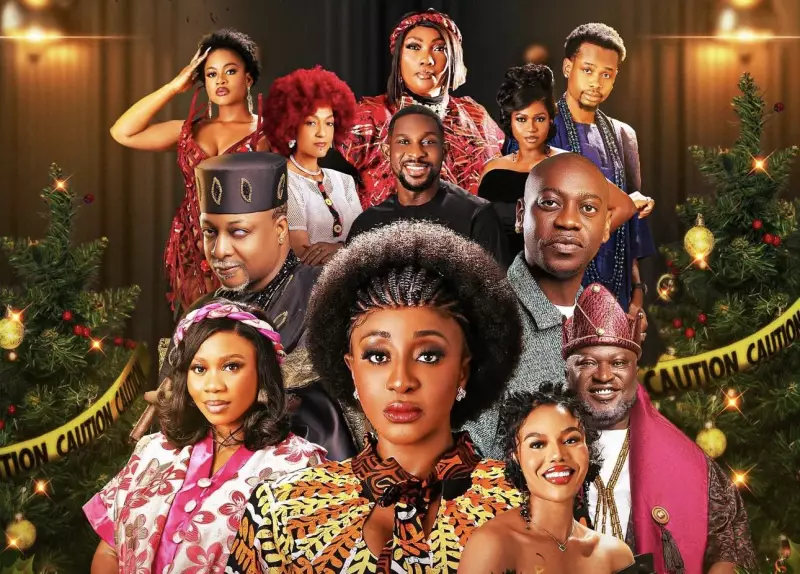
The National Film and Video Censors Board (NFVCB) has formally requested that renowned actress and producer Ini Edo alter the title of her latest film, 'A Very Dirty Christmas'. This directive comes in response to significant concerns voiced by the Christian Association of Nigeria (CAN) and segments of the Nigerian public, who found the title offensive to the Christian faith.
Board Responds to Public Outcry
In a statement released on Thursday, December 18, 2025, the NFVCB addressed the growing controversy. The board clarified that while it had not received any official written complaint from CAN's leadership, it took the concerns raised in the media seriously. The NFVCB emphasized that religious sensitivity and peaceful coexistence are central pillars of its regulatory mandate.
"The NFVCB wishes to sincerely acknowledge these concerns and to reassure the Christian community and the general public that the NFVCB holds religious sensitivity, mutual respect and peaceful coexistence as core considerations," the board stated.
Initial Approval and Subsequent Reconsideration
The board provided context for its original decision, explaining that the film underwent the standard censorship and classification process before its nationwide cinema release on December 16. The Film Censorship Committee assessed the title within the movie's overall fictional narrative, approving it as a creative expression not intended to mock Christmas.
However, acknowledging the power of public perception, the NFVCB took a proactive step. "In light of the concerns raised by CAN, and in the spirit of responsiveness and dialogue, the NFVCB has formally engaged the producers of the film and requested a modification of the title," the statement read. This move aims to prevent interpretations deemed offensive and to avert potential religious tensions.
Legal Powers and Continued Dialogue
The NFVCB also reminded stakeholders of its legal authority under the National Film and Video Censors Board Act. Specifically, it referenced Section 39(1), which empowers the Film Censorship Committee to order a film's withdrawal from circulation for further review if public interest demands it.
The board concluded by reaffirming its commitment to open dialogue with all parties. It promised to continue engaging with CAN, other faith-based organizations, film industry stakeholders, and the public to balance creative freedom with social responsibility.
The controversy began when CAN publicly criticized the film's title, calling it disrespectful and demanding an explanation from the NFVCB for its approval, especially during the Christmas season.