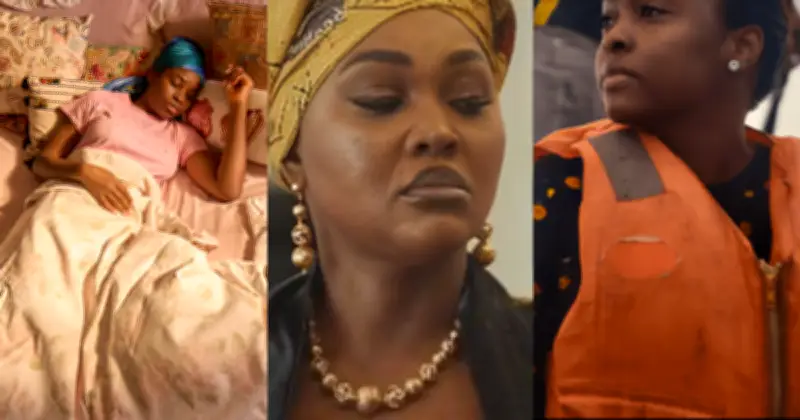
Nollywood is having a strong year at the box office, with romantic comedies, faith-based dramas and one ambitious historical epic all finding sizeable audiences. From reunions decades in the making to a directorial debut from one of the industry's biggest names, here's what's been pulling Nigerians into cinemas in 2026.
1. Call of My Life (₦574 million)
The year's biggest Nollywood earner so far is a romantic comedy about second chances. Soluchi, played by Uzoamaka Power, is left heartbroken when her boyfriend Kalu walks out on her, only for a routine customer service call to connect her with a charming stranger who slowly changes how she sees love. Simple premise, strong execution, solid marketing, and audiences clearly agreed.
2. The Return of Arinzo (over ₦351 million)
Directed by Iyabo Ojo, this sequel to the 2013 Yoruba classic Arinzo proves nostalgia still sells. A rising actor returns home with his fiancée to support his father's presidential bid, only to reignite a 17-year-old scandal buried in the family's past. Political betrayal and long-hidden secrets make for a story that did well at the box office.
3. Onobiren: A Woman's Story (₦138,165,673)
Laju Iren's faith-based drama had a solid seven-week run in cinemas. The film follows Roli as she leaves Warri for Lagos to build a life of her own, drawing on lessons her father once taught her about navigating deep waters. It's a resilient story about female solidarity and the men who choose to support rather than hinder it.
4. Ajosepo: The Gathering (over ₦128 million)
The sequel to 2024's Ajosepo opened strong with ₦41.3 million in its first weekend. Directed by Kayode Kasum and distributed by FilmOne, the film brings two families back together for a lavish Yoruba wedding, two years after a scandal nearly destroyed their relationship the first time around. Chaos, naturally, follows.
5. Efunroye: The Unicorn (over ₦102.6 million)
A historical epic produced by veteran actress Faithia Williams, this film traces the remarkable life of Madam Efunroye Tinubu, the 19th-century merchant and kingmaker who rose from a humble trader near Abeokuta to become one of Lagos's most powerful political and economic forces. It enjoyed a celebrated theatrical run nationwide.
6. Mother's Love (over ₦100 million)
Nollywood icon Omotola Jalade-Ekeinde steps behind the camera for the first time with this family drama, which opened at ₦24.1 million and went on to cross the ₦100 million mark. The story follows Adebisi, a sheltered young woman who discovers independence and falls for a man from a humble background during her NYSC year, a journey that eventually forces her quiet mother to confront long-buried family trauma.
7. The Boy Who Gave (₦73,603,010)
Set in the creeks of Port Harcourt and Bonny Island, this drama follows Idah, a teenager who gives up his education and childhood to raise his siblings after their parents' sudden death. It's one of the more emotionally heavy entries on this list, built entirely around sacrifice and endurance.
8. Okanjuwa (₦34.6 million)
A chaotic, laugh-out-loud Lagos comedy set during Eid al-Kabir, following Abdul Wahed and his wife Aliyah as they go to extravagant, very funny lengths, including a dramatic hunt for the perfect festival ram, to throw the party of the season and impress their social circle. The film opened with ₦13.1 million in its first weekend.
9. Aba Blues (₦52.95 million)
Set in 1989 Aba, this romantic drama follows Amara as her marriage is put to the test when her high school sweetheart resurfaces, pulling her between the life she's built and feelings from her past she thought she'd moved on from. Distributed by FilmOne Entertainment, the film opened with ₦19.9 million on its first weekend.
10. To Adaego With Love (roughly ₦23 million)
Set in 1975, in the years after the Nigerian Civil War, this historical romance follows a forbidden relationship between Major Balarabe Alkali, a Northern Nigerian soldier on a reconciliation mission, and Adaego, an Eastern Nigerian schoolteacher. Their love is tested by tribal divides, family loyalty and tradition, in a story about forgiveness and choosing love in a country still healing.