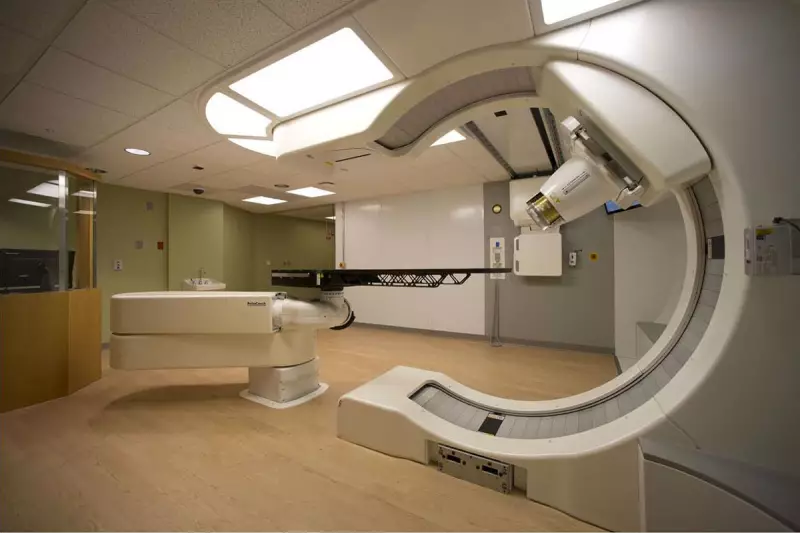
A revolutionary approach to proton therapy is offering new hope for patients battling aggressive and hard-to-treat cancers, with a dramatically reduced side effect profile. This breakthrough was highlighted in a recent case involving a rare salivary gland tumour, where precision-targeted radiation successfully eradicated the cancer while preserving surrounding healthy tissue.
A Precision Weapon Against Nerve-Seeking Tumours
The innovative method, known as step-and-shoot proton arc therapy, was first deployed by a medical team at Corewell Health William Beaumont University Hospital in Royal Oak, Michigan. This technique represents a significant advancement over traditional proton therapies. It uses a proton beam to deliver radiation more precisely and continuously to the tumour site through an automated system. This automation crucially reduces the lag time between radiation doses, unlike older methods that require slower, manual adjustments.
The enhanced precision is a game-changer for tumours like the one faced by 46-year-old Tiffiney Beard from Redford, Michigan. Beard was diagnosed in early 2024 with adenoid cystic carcinoma, a rare and highly invasive salivary gland cancer. Dr. Rohan Deraniyagala, a radiation oncologist at Corewell Health, explained the challenge: these tumours have a natural tendency to be "nerve-seeking," often weaving into critical nerve pathways. Conventional treatment typically brings severe side effects such as fatigue, jaw pain, swallowing difficulties, loss of taste, headaches, and memory issues.
Patient Success Story: Treatment Without Disruption
Tiffiney Beard became the first patient in the United States to receive this latest proton beam arc therapy for her rare head-and-neck cancer. Her tumour, about the size of a gumball, had infiltrated nerves leading to her brain. Following surgical removal, Beard underwent 33 proton therapy treatments.
The results were extraordinary. "After having the tumour removed... I had 33 proton therapy treatments in total and, amazingly, had no side effects and didn’t miss a day of work," Beard shared. "You hear a lot of stories about radiation side effects, and I just wasn’t having any." She completed her treatment in early August 2025, and approximately one year later, she remains cancer-free with no signs of radiation toxicity to other areas, including her brain.
The Future of Proton Therapy and Ongoing Research
While outcomes can vary, Dr. Deraniyagala is hopeful that other patients will experience similar success with this targeted approach. The field of proton beam therapy is evolving rapidly. Currently, physicians and scientists at the Corewell Health William Beaumont University Proton Therapy Centre are already trialling a next-generation system called DynamicARC.
This research, conducted in collaboration with Ion Beam Applications (IBA), an international proton therapy system manufacturer, aims to further refine the step-and-shoot proton arc technique. The goal is to create an even better-targeted delivery system that eliminates any lag time between radiation dosages and beam angles, potentially transforming cancer treatment for many more patients in the future.