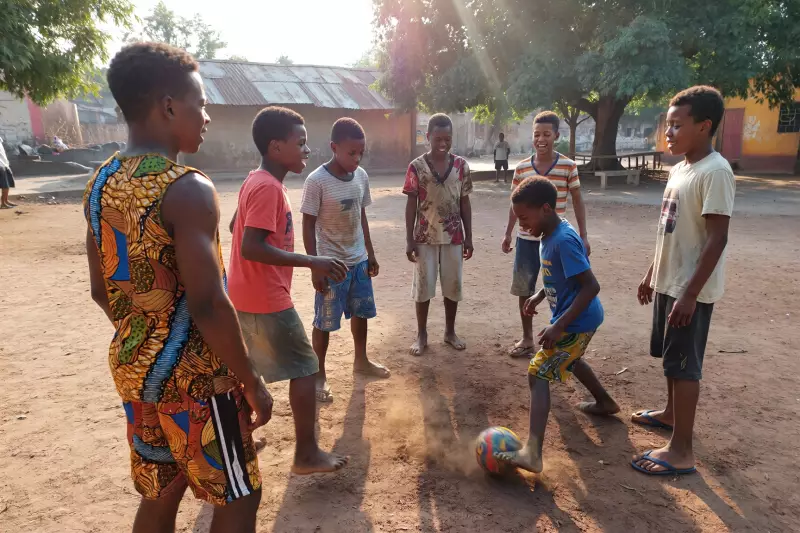
As a journalist who has travelled across Nigeria, from the bustling streets of Lagos to the remote villages of Zamfara, I have witnessed firsthand the profound disparities that define childhood in our nation. The experience of a Nigerian child is not a single story but a complex tapestry woven from threads of geography, wealth, and sheer circumstance.
The Stark Divide in Living Conditions
The data paints a sobering picture. According to UNICEF, 54 per cent of Nigerian children live in multidimensional poverty, lacking essentials like clean water, sanitation, healthcare, education, or adequate nutrition. More tragically, over 100 Nigerian children die every hour from preventable causes, as reported by the Voice of Nigeria.
In urban centres like Lagos and Abuja, a middle-class child might attend a private school with computer labs, enjoy extracurricular activities, and receive regular medical check-ups. They are digital natives with global aspirations.
Contrast this with the reality for a child in rural Zamfara or Yobe. Their day may begin before dawn, fetching water from a distant well. They might help on the family farm before attending a dilapidated school with an overwhelmed teacher, unsure if there will be food that evening. The gap between these two childhoods is a chasm of inequality.
The Northern Challenge and the Burden of Labour
The situation is particularly acute in the North. Cultural barriers, insecurity, and poverty combine to keep nearly 60 per cent of girls in core Northern regions out of school. Child labour remains pervasive, with research in Guardian Nigeria indicating about 70% of children engage in street hawking, 23% in domestic work, and 15% in street begging.
Healthcare access is a key determinant of survival. Malnutrition affects 32% of children under five, and vaccination coverage is dangerously low, with 31% of children aged 12-23 months completely unvaccinated, per Federal Ministry of Health data. For children in conflict-affected North-East states, these hardships are compounded by trauma and displacement.
A Spectrum of Childhood Experiences
For the affluent, Nigerian childhood mirrors global middle-class life—birthday parties, coding lessons, and plans for university abroad. For the struggling middle class, it involves resilience amidst power cuts and water shortages, but with basic needs often met.
For millions more, childhood is truncated by adult responsibilities. I recall meeting twelve-year-old Ibrahim in Sokoto, who ran his family's kiosk full-time. When asked about his dreams, he replied they were luxuries for others. Yet, across all divides, community remains central. Children are raised by networks of "aunties" and "uncles," and religious participation provides a strong moral and social framework.
Understanding Through Regional and Family Lenses
To grasp Nigerian childhood, one must appreciate regional disparities. Data shows primary school attendance can be as high as 80% in the South-West but plummets to 40-45% in the North-East, where malnutrition rates are also highest.
The family structure is predominantly extended, offering a crucial support system but also enforcing patriarchal norms and distinct gender roles. Economic pressures are straining these traditional systems, with parents working multiple jobs and children sometimes fostered to relatives, which can lead to exploitation.
Facts, Challenges, and Unyielding Hope
Three key facts define the context: Nigeria's incredible ethnic diversity, the paradox of being Africa's largest economy with widespread child poverty, and the remarkable resilience of its children despite facing immense challenges like being among the 14.8 million out-of-school children cited by the Ministry of Education.
The challenges are severe—a crisis in education, healthcare, and nutrition. Yet, the hope lies in the children themselves: their adaptability, intelligence, and capacity for joy. Improving their conditions requires urgent, multifaceted action—government commitment to universal services, economic reform, and cultural shifts, particularly around girls' education.
The future of Nigeria hinges on the choices we make for our children today. They are our most vital resource, and their well-being is the truest measure of our nation's progress.