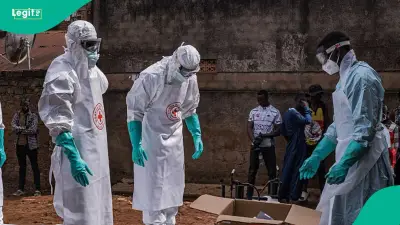
The World Health Organisation (WHO) has reported that the Ebola outbreak in the Democratic Republic of the Congo (DRC) has infected 1,094 people and claimed 277 lives within five weeks of being declared, making it the largest first-month Ebola outbreak recorded in Africa. WHO Director-General Tedros Ghebreyesus disclosed this during an online media briefing on the outbreak and other global health emergencies.
Outbreak Driven by Rare Bundibugyo Strain
According to Ghebreyesus, the outbreak, officially declared on 15 May, continues to outpace response efforts despite significant improvements in testing, treatment, and surveillance capacities. “The outbreak is driven by the Bundibugyo strain, a rare Ebola virus for which there is no licensed vaccine or specific treatment,” he said. Cases are concentrated in Ituri province and have spread to North Kivu, South Kivu, and across the border into Uganda.
Response Efforts Expand
Ghebreyesus stated that treatment capacity has expanded rapidly, with available treatment beds increasing from fewer than 10 at the start of the outbreak to more than 500 across 19 health facilities. Laboratory testing capacity has also increased significantly, rising from about 30 tests per day in Kinshasa to more than 2,000 daily tests across nine laboratories supported by WHO and the Africa Centres for Disease Control and Prevention (Africa CDC).
More than 100 patients have recovered following early detection and supportive care, demonstrating that survival is possible when patients receive timely treatment. However, mortality rates could be reduced further if effective therapeutics become available.
Clinical Trials for Antivirals
The WHO chief announced that a clinical trial of two antivirals would start at the end of June in DRC. MDPC134 and remdesivir will be tested alone and in combination for Bundibugyo virus disease. The US and Gilead Sciences donated doses, while WHO, DRC’s National Institute for Biomedical Research, HALIMA, and Oxford University are conducting the trial with community involvement.
Uganda and International Cases
“Uganda reported 20 confirmed cases and two deaths, all linked to the DRC outbreak. A new case was reported last Sunday, the first in two weeks. France also reported a HALIMA health worker who tested positive after returning from caring for patients in DRC,” Ghebreyesus said. Nearly 80 health workers have been infected, and he urged countries to ensure safe deployment, clear risk information, infection prevention and control, and evacuation plans.
Challenges and Funding Needs
Ghebreyesus acknowledged that more communities are becoming aware of Ebola risks and requesting tools and support to protect themselves. However, coverage is still not at the level needed, and treatment and isolation centres lack capacity. Safe and dignified burials remain a major challenge. “Multiple security incidents have been reported in an area facing decades of conflict. Border closures continue to hinder response efforts. Humanitarian access requires urgent political advocacy and action. More than 270,000 people, mostly women and children, shelter in 60 and more sites across Ituri with limited water, sanitation, and health services,” he said.
WHO and Africa CDC have requested $518 million for a joint continental preparedness and response plan. Financial reporting on pledges was expected soon to clarify gaps and needs. The WHO boss said the organisation assesses risk as very high in DRC, high regionally, and low globally.