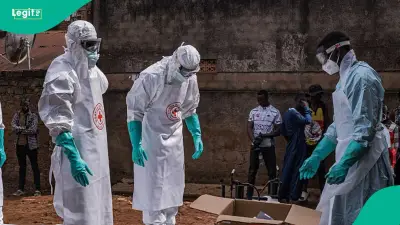
The Nigeria Centre for Disease Control and Prevention has announced a concerning rise in Lassa fever infections across the country. In its latest report, the agency confirmed 33 new cases in a single week, pushing the national Case Fatality Rate significantly higher than the previous year.
Weekly Outbreak Details and Demographic Impact
According to the NCDC's Lassa Fever Situation Report for Epidemiological Week 49, covering December 1 to 7, 2025, the new confirmed cases originated from four states: Bauchi, Ondo, Edo, and Taraba. These eight deaths recorded within that week alone resulted in a staggering weekly Case Fatality Rate of 24.2%.
The cumulative data for 2025 now stands at 1,069 confirmed cases and 195 deaths, producing an overall CFR of 18.2%. This marks a worrying increase from the 16.5% CFR documented during the same period in 2024. Nationwide, surveillance has identified 9,041 suspected cases and seven probable cases this year.
The outbreak has spread to 21 states and 103 Local Government Areas. However, the four aforementioned states bear the brunt, accounting for 89% of all confirmed infections. Ondo State leads in case numbers, followed by Bauchi, Edo, and Taraba.
Young adults between the ages of 21 and 30 are the most affected demographic. However, infections have been recorded in all age groups, from one-year-olds to individuals aged 96. Cases are slightly more prevalent among males than females. Notably, no new infections among healthcare workers were reported during the week under review.
National Response and Containment Efforts
The NCDC stated that it continues to lead a coordinated, multi-partner national response through its Lassa fever Technical Working Group. Key activities during this period have included:
- Conducting behavioural risk assessments in high-burden states.
- Training healthcare workers on case management and safety protocols.
- Performing infection prevention and control audits at health facilities.
- Carrying out extensive community sensitisation campaigns.
- Deploying rapid response teams to hotspot areas.
- Strengthening laboratory diagnostic and treatment capacity in affected states.
This comprehensive approach aims to curb transmission and improve patient outcomes amidst the rising fatality rate.
Parallel Challenge: Nigeria's Single WHO-Prequalified Antimalarial
In a related public health development, the National Institute for Pharmaceutical Research and Development has revealed a significant gap in the nation's medical production capacity. Nigeria currently has only one World Health Organisation-prequalified antimalarial product, manufactured by Swiss Pharma Nigeria.
This disclosure was made during a four-day Technical Support and Capacity Workshop for Pharmaceutical Companies in Lagos. The workshop, organized under the National Malaria Elimination Programme with World Bank support, aimed to equip local manufacturers to meet WHO prequalification standards.
NIPRD's Director-General, Dr. Obi Adigwe, represented by Technical Adviser Dr. Mercy Aboh, emphasized the workshop's goal: to provide hands-on support for the complex PQ application process. He identified major hurdles for local companies, including limited awareness, funding challenges, outdated equipment, and insufficient technical capacity.
Dr. Adigwe acknowledged the capital-intensive nature of the PQ process but highlighted that the workshop introduced participants to various funding platforms and government-backed support mechanisms. The ultimate objective is to position Nigerian firms to compete in the global antimalarial market, valued at approximately $161 million.
Okoko Okefu Oyale, Director and Project Manager of the IMPACT project, stressed that WHO prequalification is a critical ticket for Nigerian manufacturers to compete both locally and internationally. Consultants and participants, like Dr. Christopher Akunyili of Mecure, described the training as an eye-opener, shifting the perspective from mere regulatory compliance to understanding the strategic economic value of achieving WHO standards.
These parallel reports underscore the ongoing challenges in Nigeria's health sector, grappling with endemic infectious diseases while striving to build robust local pharmaceutical manufacturing to meet global health standards.