The World Health Organization has escalated the public health risk level of the Ebola outbreak in the Democratic Republic of the Congo from high to very high at the national level, as the virus continues to spread rapidly across parts of the country.
Risk Assessment Revised
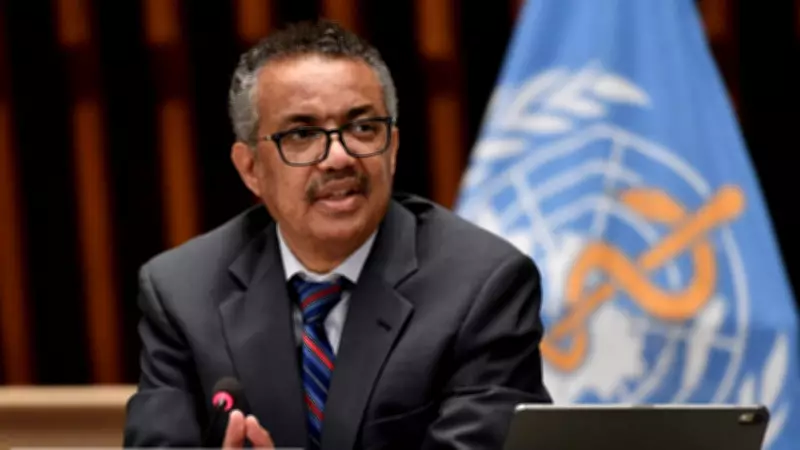
WHO Director-General Tedros Adhanom Ghebreyesus announced the revised assessment on Friday, May 22, warning that the outbreak had intensified considerably. “The Ebola outbreak in the Democratic Republic of the Congo is spreading rapidly,” Tedros told reporters. “We are now revising our risk assessment to very high at the national level, high at the regional level, and low at the global level.”
According to the WHO, there are currently 82 confirmed Ebola cases in the DRC, including seven confirmed deaths. However, Tedros cautioned that the true scale of the outbreak is believed to be much larger. “But we know the epidemic in DRC is much larger. There are now almost 750 suspected cases and 177 suspected deaths,” he said. The WHO chief added that the situation in neighbouring Uganda remained stable despite two confirmed cases linked to travellers arriving from the DRC, including one death.
Insecurity Disrupts Response
Tedros also highlighted that insecurity and violence in affected areas were seriously disrupting efforts to contain the outbreak. In the northeastern Ituri province, considered the epicentre of the outbreak, rioters reportedly attacked Rwampara hospital and set fire to tents used to isolate Ebola patients. The unrest erupted after the death of a 24-year-old man believed to be the son of a soldier, according to hospital officials. “The family wanted us to hand over his body so that they can bury him, but given the circumstances, that’s impossible,” one hospital official said.
Because Ebola spreads through bodily fluids and prolonged physical contact, authorities have implemented strict burial protocols aimed at limiting transmission. The outbreak is being caused by the Bundibugyo strain of Ebola, for which there is currently no approved vaccine or treatment.
Traditional Practices Fuel Spread
Health officials are therefore relying heavily on isolation measures, rapid contact tracing and safe burial procedures to limit the spread. Local civil society leader Jean Marie Ezadri warned that traditional mourning practices were contributing to infections. “Loved ones are throwing themselves at the bodies, touching the corpses and the clothes of the deceased, while organising mourning rituals bringing together loads of people,” Ezadri said. “Unfortunately, this is going on even during this epidemic, which explains the many instances of contamination.”
Tensions have also grown due to mistrust among some residents, with several locals questioning whether Ebola is real. “My brother is not dead from Ebola, it’s an imaginary disease,” said 22-year-old Jeremie Arwampara after the death of his sibling. Another mourner, Ezekiel Shambuyi, shouted: “Why are they refusing to give us the bodies? He’s my big brother, I cannot be afraid of him.” The crowd outside the hospital was eventually dispersed after soldiers fired warning shots into the air. A nurse was reportedly injured by stones thrown during the unrest.
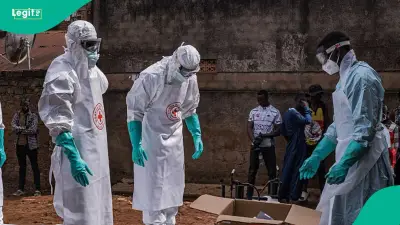
Later, healthcare workers wearing full protective suits carried three coffins to a cemetery under armed escort from soldiers and police. One mourner, Musa Amuri, said he was heartbroken that his father had to be buried without a traditional farewell. “They’re going to bury our father without us seeing him, it breaks my heart,” he said. Another resident, Maman Leonie, rejected the Ebola diagnosis after her brother’s death. “He was just sick, let the government come to our aid!” she pleaded.
Healthcare Infrastructure Weak
The outbreak has renewed concerns over weak healthcare infrastructure in rural areas of Ituri, where residents have long complained of limited government presence and repeated violence by armed groups. Hospital officials in the town of Mongbwalu said awareness among residents had improved in recent days, but warned that medical facilities were still dangerously underprepared. “Suspected cases are mixed in with other patients in the hospital wards, with a high risk of infection,” one official said.