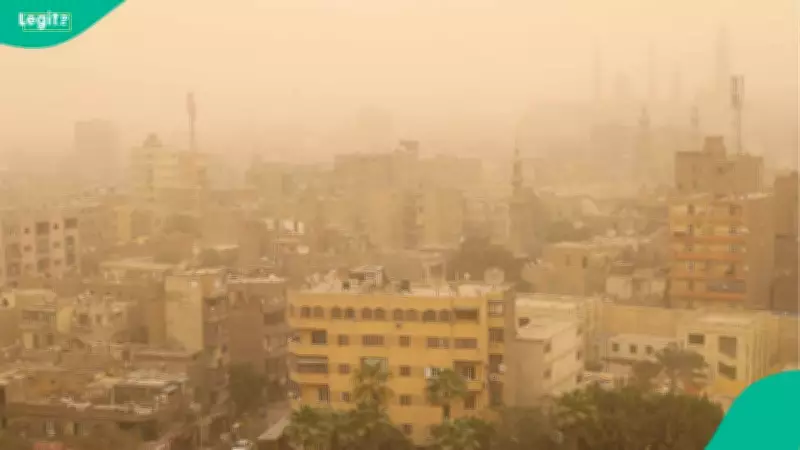
Global Air Pollution Crisis Exposed: Report Warns of Health Emergency
A new report published by The Guardian UK on January 27 has brought renewed attention to the escalating dangers of air pollution worldwide. The findings reveal that air pollution remains the world's largest environmental health risk, directly linked to millions of premature deaths each year. Experts emphasize that this is not a distant threat but a present-day crisis affecting cardiovascular, respiratory, and neurological health across the globe.
WHO Warning on Air Pollution Levels
According to the World Health Organization (WHO), an alarming 99% of the global population is exposed to air pollution levels that exceed health-based guidelines. This environmental hazard is associated with nearly 7 million premature deaths annually, making it a critical public health emergency. The report underscores that pollution impacts hearts, lungs, brains, and blood vessels, with vulnerable populations, including children, facing severe consequences.
New Delhi: A Case Study in Pollution Crisis
The situation in New Delhi illustrates the extreme dangers of unchecked air pollution. During peak periods, PM2.5 concentrations regularly exceed WHO guideline levels by 24 times. The Air Quality Life Index estimates that such exposure reduces life expectancy by almost 12 years in the city. Researchers link this pollution to higher risks of heart attacks, strokes, chronic respiratory diseases, and impaired brain development in children. Shockingly, 15% of all deaths in Delhi are directly attributed to air pollution.
The crisis has prompted drastic measures, including lockdowns ordered by the Supreme Court of India. Justice Arun Mishra famously remarked, "The world is laughing at us. You are reducing the lifespan of people. Why are people being forced to live in gas chambers?" Local doctors have compared breathing Delhi's air on bad days to smoking 50 cigarettes daily, highlighting the severe health impacts.
London's Progress and Persistent Challenges
In contrast, London demonstrates both the dangers of pollution and the benefits of strong clean air policies. The Royal College of Physicians reports that 30,000 deaths annually in the UK are linked to air pollution. However, initiatives like low-emission zones (LEZ) and ultra-low-emission zones (ULEZ) have shown positive results.
Between 2016 and 2023, nitrogen dioxide levels in London declined by nearly half, with air quality improving at 99% of monitoring sites. A 2024 city hall report noted that nitrogen dioxide was down by about 27% overall, while PM2.5 from vehicle exhausts was 31% lower in outer London than it would have been without ULEZ expansion. Despite these improvements, many UK areas still frequently breach safe limits, indicating ongoing challenges.
Personal Recommendations for Cleaner Air
American researcher Devi Sridhar, who contributed to the report, offers practical suggestions for reducing pollution exposure. She emphasizes that while individual choices matter, government action remains the most decisive factor in protecting public health. Her recommendations include:
- Switch off vehicle engines while waiting: Idling vehicles increase exhaust fumes, harming both drivers and pedestrians. Sridhar notes that health gains from exercise or healthy eating can be undone by exposure to these emissions.
- Avoid wood-burning stoves and open fires: Often marketed as sustainable, these produce fine particulate matter indoors and outdoors. WHO categorizes this as indoor air pollution, a risk factor long targeted in low-income countries. A UK study links wood burning to nearly 2,500 deaths annually, more than 27,000 years of life lost, and thousands of new asthma and diabetes cases.
Broader Environmental Context
The air pollution crisis is part of a larger environmental challenge. A recent study from the University of Oxford warns that if global warming reaches 2.0°C above pre-industrial levels, almost half of the world's population—around 3.79 billion people—could face extreme heat by 2050. Climate scientists describe this scenario as increasingly likely, underscoring the interconnected nature of environmental and health emergencies.
In summary, the report stresses that air pollution is a global health emergency requiring urgent action. While cities like London show that policy interventions can yield significant improvements, the crisis in New Delhi highlights the devastating consequences of inaction. Protecting public health demands a combination of robust government policies and informed individual choices to mitigate this pervasive threat.