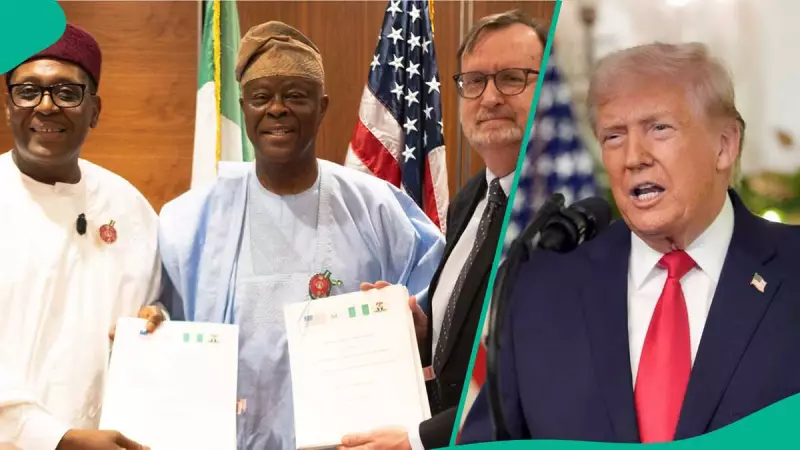
The United States and Nigeria have solidified a major five-year health partnership, with a combined investment of $5.1 billion aimed at revitalizing the West African nation's healthcare system. A distinctive feature of the agreement is the allocation of approximately $200 million in US funding specifically to support Christian faith-based healthcare providers.
Details of the Landmark Health Memorandum of Understanding
The bilateral Memorandum of Understanding (MoU) was signed under the America First Global Health Strategy. According to the terms, the United States government intends to commit nearly $2.1 billion in health assistance to Nigeria. In parallel, the Nigerian government has pledged to invest close to $3.0 billion in new domestic health expenditures over the same five-year period, which is set to run from April 2026 to December 2030.
This combined $5.1 billion co-investment is reported to be the largest of its kind under the current US global health strategy. The agreement focuses on strengthening core health areas including:
- HIV/AIDS prevention and treatment
- Malaria control
- Tuberculosis eradication
- Maternal and child health services
- Polio surveillance and outbreak response
Special $200 Million Allocation for Christian Health Facilities
A significant portion of the US funding, roughly $200 million, is earmarked exclusively for supporting Christian faith-based healthcare facilities. The US Mission in Nigeria highlighted the critical role these institutions play, noting that while they constitute about 10% of the country's healthcare providers, they serve over 30% of Nigeria's population of 230 million people.
"Nigeria’s more than 900 faith-based clinics and hospitals serve more than 30 percent of the country’s people, often in areas where healthcare facilities are limited or absent," a statement from the US government explained. The dedicated funds are intended to strengthen these facilities, enhance their workforce capacity, and expand access to integrated health services.
Context: Security Concerns and Domestic Commitments
The US government indicated that the agreement was negotiated within the context of Nigeria's ongoing reforms aimed at protecting Christian communities from violence. It clarified that continued US support would be linked to Nigeria's progress in combating extremist religious violence, particularly against vulnerable Christian populations.
On the Nigerian side, the Coordinating Minister of Health and Social Welfare, Professor Muhammad Ali Pate, hailed the MoU as a major step toward safeguarding public health and strengthening national resilience. "This partnership underscores our determination to build a health system that can prevent, detect, and respond to health threats, while expanding access to affordable, quality care for all Nigerians," Pate stated.
Furthermore, Nigeria has committed to allocating at least six percent of executed annual Federal and State budgets to health. This domestic commitment is projected to mobilize the nearly $3 billion in local financing and has reportedly already been reflected in the Federal Government's proposed 2026 Appropriation bill.
The US statement added a note of caution, stressing that like all foreign assistance, the programs remain subject to broader US foreign policy priorities, with the option to pause or terminate funding if national interests are affected.