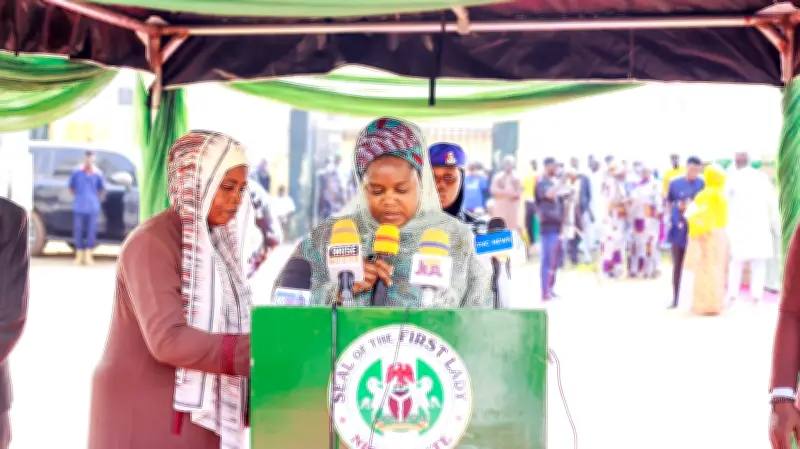
The Niger State Primary Health Care Development Agency, in collaboration with development partners, has flagged off the 2026 First Round June/July Maternal, Newborn and Child Health Week. Wife of the Niger State Governor, Hajiya Fatima Mohammed Umaru Bago, officially launched the campaign at Sabon Wuse Basic Health Centre in Tafa Local Government Area.
Significance of the Health Week
The First Lady described the Maternal, Newborn and Child Health Week as one of the most impactful health interventions in the state. She noted that this year’s exercise is particularly significant as it coincides with the third anniversary of Governor Mohammed Umaru Bago’s administration under the New Niger Agenda, through which the health sector has continued to receive priority attention.
According to her, the campaign provides an annual opportunity to connect women and children with essential healthcare services while also reminding communities of the importance of healthcare. “Year after year, the campaign provides an opportunity to reach women and children with essential healthcare services and to remind communities of the importance of healthcare,” she said.
Call for Collective Responsibility
Hajiya Bago emphasised that healthcare is a shared responsibility, stressing that government cannot do it alone. She called on relevant stakeholders to continue playing their roles to ensure that mothers and children receive the care they deserve. She urged pregnant women, nursing mothers, and caregivers to take full advantage of the services being offered during the health week by visiting the nearest healthcare facility or designated outreach centres in their wards. According to her, the services are designed to protect the health and wellbeing of both mothers and children.
The governor’s wife also commended the management of the Ministry of Health, the Niger State Primary Health Care Development Agency, and development partners for their untiring commitment toward improving the health sector across the state.
Government and Partner Support
Speaking at the event, the Commissioner for Health, Dr. Murtala Bagana Mohammed, stated that sustainable development is impossible without healthy mothers, healthy children, and strong communities. Dr. Bagana explained that the event serves as a reminder that the health of women and children remains a critical development imperative. “Every healthy mother strengthens the foundation of a family, and every healthy child represents a future contributor to the social and economic progress of the state,” he said.
The commissioner noted that investments in maternal, newborn, and child health services amount to investments in human capital development. He added that healthcare remains a strategic priority of Governor Bago’s administration and a critical enabler of inclusive growth and social development.
Agency Highlights
In his remarks, the Executive Director of the Niger State Primary Health Care Development Agency, Dr. Junaidu Inuwa, highlighted the importance of the health week, noting that despite progress recorded over the years, maternal mortality, child morbidity, malnutrition, and vaccine-preventable diseases continue to pose significant public health challenges. Dr. Inuwa explained that through the Maternal, Newborn and Child Health Week, the agency has been able to accelerate access to essential services such as routine immunisation, Vitamin A supplementation, nutrition screening, antenatal care, health promotion, family planning counselling, health education, and other life-saving interventions that directly contribute to the survival, health, and well-being of mothers and children.
Partner Commitments
In their separate goodwill messages, representatives of the National Primary Health Care Development Agency (NPHCDA), UNICEF, the World Health Organization (WHO), Sultan Foundation, and other partners reaffirmed their continued commitment to supporting the healthcare sector in the state. Highlights of the event included the administration of vaccine syrup to children by the governor’s wife and the distribution of mama kits to pregnant women.