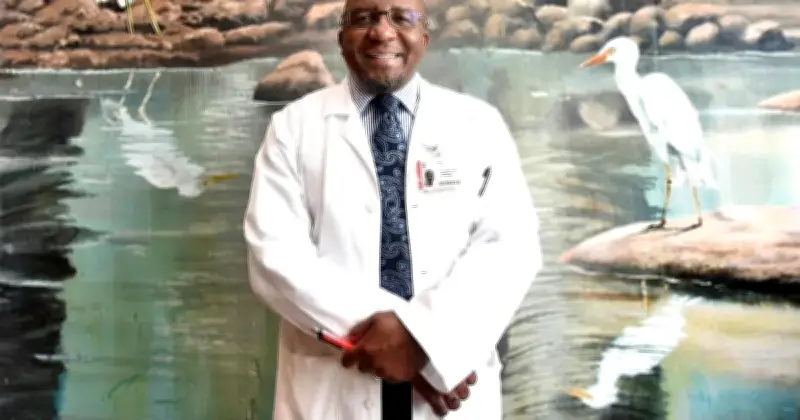
In March 2019, a South African surgeon led the world's first middle-ear transplant using 3D-printed titanium bones, restoring hearing in a patient who had suffered from conductive hearing loss. Professor Mashudu Tshifularo and his team at Steve Biko Academic Hospital in Pretoria performed the groundbreaking procedure, which replaced damaged ossicles—the tiny bones in the middle ear—with custom-made implants.
Who is Professor Mashudu Tshifularo?
Professor Mashudu Tshifularo is a South African ear, nose, and throat (ENT) surgeon, researcher, and academic. He serves as the head of the Department of Otorhinolaryngology at the University of Pretoria's Faculty of Health Sciences. His medical career began in South Africa, where he later specialized in otorhinolaryngology, focusing on conditions affecting hearing, balance, and breathing.
Before his 3D-printed ear breakthrough, Tshifularo developed a bloodless tonsillectomy procedure and contributed to hearing-related programs aimed at expanding access to treatment. His innovative approach has made him a notable figure in reconstructive ear surgery.

The Surgery and Its Impact
The middle ear contains three of the smallest bones in the human body: the malleus (hammer), incus (anvil), and stapes (stirrup). These bones, collectively known as the ossicles, transmit sound vibrations from the eardrum to the inner ear. Damage from trauma, infections, birth defects, or other conditions can lead to conductive hearing loss.
Tshifularo's team used 3D-printing technology to create titanium replacements for the damaged bones. Titanium is known for being compatible with the human body, and the implants were designed to replace only the damaged parts, reducing risks and improving the chances of restoring hearing.
The Patient Who Heard Again
The first widely reported recipient was a 35-year-old man whose middle ear had been severely damaged in a car accident. The damage affected the tiny bones responsible for transmitting sound, leaving him with major hearing loss. After the operation, reports said the patient regained hearing, marking a major milestone in reconstructive ear surgery.
In an interview with the University of Pretoria, the patient said he regained about 75% of his hearing after the transplant. He described the procedure as life-changing, having suffered years of hearing problems before the surgery.
A Decade of Research and Future Implications
The historic operation was not an overnight success. Tshifularo said his research into the technology took years, with many organizations initially refusing to support the idea. He learned about 3D printing himself and continued developing the concept despite doubts from others. His goal was to create a treatment that could eventually help more people suffering from middle-ear damage.
The procedure showed how 3D printing could move beyond models and prototypes to producing medical implants for use inside the human body. It opened discussions about the future of personalized medicine, where treatments and implants can be designed to match individual patients. However, the procedure does not cure all forms of deafness; it specifically targets conductive hearing loss caused by damage to the middle ear, not hearing loss from inner ear or auditory nerve problems.
For Professor Tshifularo, the achievement represents what can happen when medicine and technology work together—transforming a once-impossible idea into a treatment that gives people the chance to hear again.