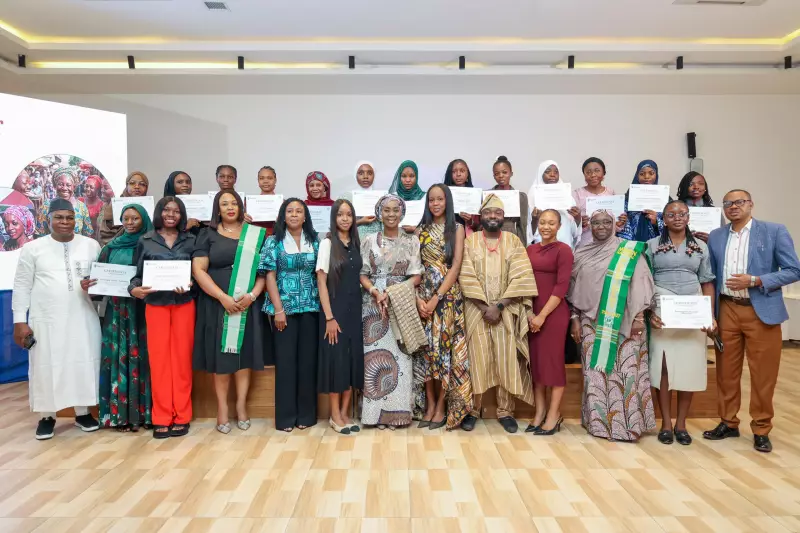
The Federal Government has declared that the health and wellbeing of Nigerian women are non-negotiable pillars for achieving sustainable economic growth and successful national development. This position was reinforced during the official launch of the Built for Her Foundation in Abuja, an initiative dedicated to advancing women's health across the country.
Government Prioritises Women's Health in National Reforms
Representing the Coordinating Minister of Health and Social Welfare, Professor Muhammad Ali Pate, his Chief of Staff, Dr. Mayowa Alade, delivered a powerful message. He stated that the nation's future prosperity is inextricably linked to the health of its women and girls. The minister highlighted that Nigeria's persistently high maternal and child mortality rates are not merely clinical issues but symptoms of deeper systemic failures.
These challenges, he noted, are influenced by a complex web of factors including limited access to quality healthcare, a shortage of skilled health workers, inadequate financial protection, and broader social and economic determinants.
Professor Pate detailed the government's ongoing efforts through the Nigeria Health Sector Renewal Investment Initiative (NHSRII). This comprehensive reform agenda aims to strengthen health sector governance, improve population health outcomes, unlock the healthcare value chain, and bolster national health security.
"A central pillar of this initiative is the prioritisation of women's health and the deliberate effort to crash maternal and child mortality rates, which remains unacceptably high," he said. He pointed to early signs of progress, noting a 17% reduction in maternal deaths within health facilities located in the specific Local Government Areas monitored under the MAMII programme.
Built for Her Foundation: A Data-Driven Approach
The founder of the Built for Her Foundation, Dr. Teniola Saraki, explained that the organisation was born from the belief that women deserve a world intentionally designed for their wellbeing. She emphasised that women's health encompasses far more than reproductive care, extending to areas like cancer, cardiovascular disease, mental health, and autoimmune disorders, where women often face delayed diagnosis and worse outcomes.
Citing alarming statistics, Dr. Saraki revealed that Nigeria loses approximately one mother every seven minutes. In 2023 alone, an estimated 75,000 maternal deaths occurred in the country, accounting for a staggering 29% of all global maternal fatalities.
She referenced a 2024 McKinsey Health Institute report which found that women globally spend about 25% more of their lives in poor health compared to men. This disparity, she argued, is largely driven by gaps in data, research, and access. "These gaps are not inevitable. They reflect how health systems have been designed and delivered, and they can be addressed through intentional, evidence-based action," Dr. Saraki asserted.
The foundation's strategy is anchored on the McKinsey Health Institute's framework for closing the gender health gap. It commits to working through strategic partnerships across healthcare delivery, research, education, technology, and community organisations.
Scholarships and a Call for Collaborative Action
A key moment at the launch event was the recognition of the first 30 beneficiaries of the Built for Her National Medical Students Scholarship, delivered in partnership with the Nigerian Medical Students’ Association (NiMSA). Selected from over 100 applicants across all six geopolitical zones, the beneficiaries are all 400-level medical students.
One scholar, Hindat Abdulwahab, described the award as "a beacon of hope" and a powerful affirmation that women belong at the forefront of medical leadership. "The Built for Her Foundation is not just funding education; it is igniting a movement that tells women they are seen, valued and capable of transforming healthcare," she stated.
Also speaking, Mrs. Toyin Saraki of the Wellbeing Foundation Africa stressed that sustainable national progress is impossible without prioritising women's health. She commended the new foundation for entering the arena with a strong, analytical framework grounded in data, research, and accountability.
The Federal Government concluded that initiatives like the Built for Her Foundation, which integrate healthcare with education, research, and community engagement, are critical complements to public sector efforts. The event underscored a unified resolve to ensure Nigerian women are properly counted in health data, adequately studied in research, and invested in as primary drivers of national change and development.