Key players from Nigeria's health sector and academia have joined forces to establish a powerful new Regional Think Tank (RTT). This initiative is designed to fast-track improvements in maternal, newborn, child, nutrition, and health outcomes across sub-Saharan Africa.
A Dire Need for Accelerated Action
The launch comes as a direct response to alarming statistics. With the 2030 deadline for the Sustainable Development Goals (SDGs) fast approaching, Africa is significantly off track in meeting its health targets. In 2023 alone, the region suffered an estimated 201,205 maternal deaths, with the heaviest burden in West, East, Central, and Southern Africa.
According to a communique issued in Abuja in October, a shocking quarter of these deaths were due to postpartum haemorrhage (PPH). This is a condition that is largely preventable when proven, life-saving interventions are widely implemented.
Overlapping Crises in Child Health
The challenges extend far beyond maternal health. The communique highlights that newborn mortality remains unacceptably high, with over one million newborn deaths every year in sub-Saharan Africa. Stillbirths also persist as a major public health concern.
Furthermore, malnutrition plays a devastating role, contributing to nearly 45% of all deaths in children under five years old. These overlapping issues create a complex crisis that demands a coordinated and evidence-based response.
How the Think Tank Plans to Make a Difference
The newly unveiled Regional Think Tank will not be just another talking shop. It is built on the frameworks of SDG 3, the African Union Agenda 2063, and other key action plans. Its core mission is to drive tangible change by addressing persistent problems in health programming across the continent.
The RTT aims to tackle fragmentation, slow adoption of innovations, gaps between policy and practice, and weak monitoring systems. It will serve as a central platform to harmonise evidence, strengthen country-level plans, and support the large-scale rollout of high-impact solutions like the E-MOTIVE intervention for postpartum haemorrhage.
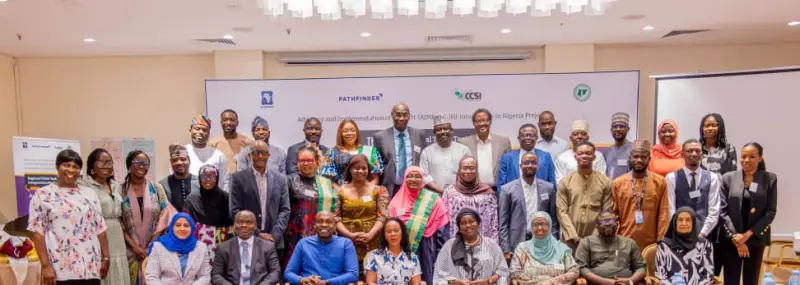
The inaugural meeting saw broad representation from across sub-Saharan Africa. Participants included:
- Africa Centres of Excellence from Nigeria, Guinea, and Senegal.
- Academic institutions like Muhimbili University, University of Nairobi, and University of Rwanda.
- Civil society and implementing partners such as White Ribbon, CCSI, MWAN, and Pathfinder International.
- Funders and private sector including the Bill & Melinda Gates Foundation and Ferring Pharmaceuticals.
The group formally endorsed a governance structure featuring a Steering Committee with both Anglophone and Francophone leadership, and a Secretariat to coordinate activities. The overarching vision is clear: to accelerate implementation at scale and avert thousands of preventable deaths in the near future.