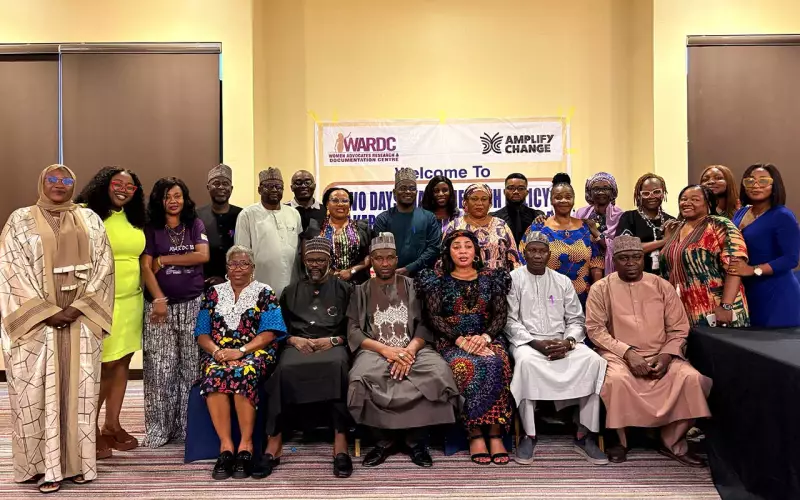
A critical policy dialogue has intensified demands for immediate action to tackle Nigeria's severe sexual, reproductive, and maternal health emergency. The Women Advocates Research and Documentation Centre (WARDC), in collaboration with Amplify Change, convened a high-level roundtable on December 27, 2025, bringing together policymakers, legislators, and civil society leaders.
Political Will and Funding: The Core Challenges
Participants conducted a stark analysis of the situation, identifying why preventable deaths among women and girls remain rampant despite existing laws. In a powerful address, Professor Patricia Donli, Executive Director of the Gender Equality Peace and Development Centre (GEPaDC), pinpointed the central problem. She argued that Nigeria's SRHR crisis stems not from a lack of policies, but from a profound deficit in political will and sustainable financing.
"When it comes to sexual and reproductive health and rights, a whole lot has been said already. What we are hoping to get from conversations like this with policymakers is what will actually change the narrative. For me, political will is critical," Donli stated.
She highlighted the chronic underfunding of the health sector, citing the unfulfilled Abuja Declaration target of allocating 15% of the national budget to health. Donli criticized a system where elites bypass local healthcare through medical tourism, suggesting that if leaders were mandated to use domestic facilities, improvements would swiftly follow.
State Perspectives: Legislative Actions and Claims
The roundtable featured insights from state legislators who outlined local efforts. Muhammad Abubakar Luggerewo, Speaker of the Gombe State House of Assembly, presented his state as a model of commitment. He detailed investments in revitalizing primary healthcare, claiming each of the state's 114 wards has at least two fully equipped, 24-hour health centers.
Luggerewo also addressed perceptions about northern Nigeria, asserting that the idea women are routinely denied healthcare is exaggerated. He further championed Gombe's health insurance scheme as one of the nation's best, inviting other states to study and surpass it.
From Ogun State, Chief Whip and Chair of the House Committee on Women Affairs, Bakare Omolola Olanrewaju, brought a nurse's perspective to the legislative discourse. She emphasized the need for early SRHR education and called for legal reforms on safe abortion, particularly for survivors of rape and incest.
"A woman who was raped should not be forced to carry a pregnancy that will destroy her mental health," Olanrewaju declared, appealing directly to the male-dominated Senate to reconsider restrictive laws.
Haruna Aliyu, a legislator from Jigawa State, highlighted existing legal frameworks like the Violence Against Persons Law and the Child Rights Act, which prescribe severe penalties for violations. He explained the legislature's role in oversight to ensure executive implementation.
A Unified Call for Governance Overhaul
The dialogue concluded with a strong consensus: Nigeria's maternal health and SRHR crisis is fundamentally a governance failure. Participants agreed that without genuine political commitment, adequate and released funding, harmonized and humane laws, and rigorous accountability mechanisms, preventable deaths will continue to undermine the country's development and human rights obligations.
The roundtable served as a urgent reminder that policies on paper are meaningless without the will and resources to execute them, and that women's lives depend on closing this implementation gap.