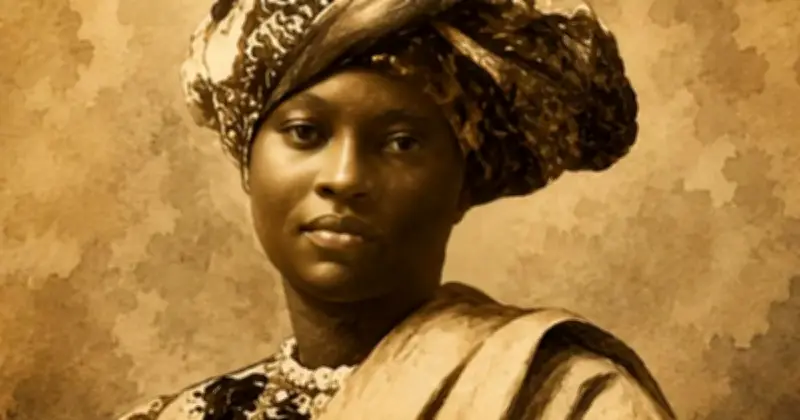
Ore Green, born in Lagos in 1885, became West Africa's first female pharmacist in 1916 after qualifying in London, breaking barriers for women in medicine decades before it became common. Her achievement came at a time when higher education for African women was extremely rare, and her story remains a cornerstone of Nigeria's medical history.
Early Life and Education of Ore Green
Ore Green was born in Lagos in 1885 as the younger daughter of Francis Colley Green, a former Superintendent of the Lagos Detective Force. She attended the CMS Girls Seminary and St. Mary's Convent School in Lagos, and later received private lessons under Reverend W.B. Euba. From an early age, she excelled academically, particularly in Mathematics, Greek, Latin, and Geometry.
Beyond academics, Ore Green was fluent in English, French, and Latin, and had a passion for the arts. In 1911, she famously played Portia in a Lagos production of William Shakespeare's The Merchant of Venice, showcasing her cultural and intellectual versatility.
The Journey to Becoming West Africa's First Female Pharmacist
In 1912, Ore Green travelled to London to continue her education, where she pursued multiple qualifications. She earned a First Class Certificate in the Theory of Music from the London College of Music, qualified in midwifery through the Central Midwives Board, and obtained an Honours Certificate from the Clapham School of Midwifery and Clapham Maternity Hospital.
Her most significant achievement came in 1916 when she passed the qualifying examinations of the Pharmaceutical Society of London and obtained the Apothecaries' Certificate as a Licensed Druggist from Westminster College of Chemistry, Pharmacy and Botany. This made her the first West African woman to obtain a practical pharmaceutical qualification, effectively becoming West Africa's first female pharmacist.
Returning to Lagos and Opening Her Own Practice
After qualifying, Green worked as a dispenser at the Soho Eye and Ear Hospital in London before returning to Lagos in 1917. She joined the hospital of Dr. Richard Akinwande Savage as a midwife. The Savage family later became one of the most influential medical families in West African history, with Dr. Savage's daughter, Dr. Agnes Yewande Savage, becoming West Africa's first female doctor to train and qualify in orthodox medicine in 1929.
Green never married and had no children, according to historical sources. Instead, she established her own practice at 71 Campbell Street, Lagos, where she worked as both a nurse and pharmacist. Many people knew her simply as Nurse Green, and she built a reputation as an accomplished professional and a cultured intellectual.
Legacy and Impact on Nigerian Women in Healthcare
Ore Green's achievements paved the way for generations of Nigerian and African women pursuing careers in pharmacy and healthcare. She proved that African women could excel in professions almost completely dominated by men, at a time when such roles were unheard of for women.
Even more than a century later, her story continues to inspire young women in Nigeria and across Africa. Her legacy remains an important part of Nigeria's medical history, and her name is celebrated as a pioneer who broke barriers in healthcare.