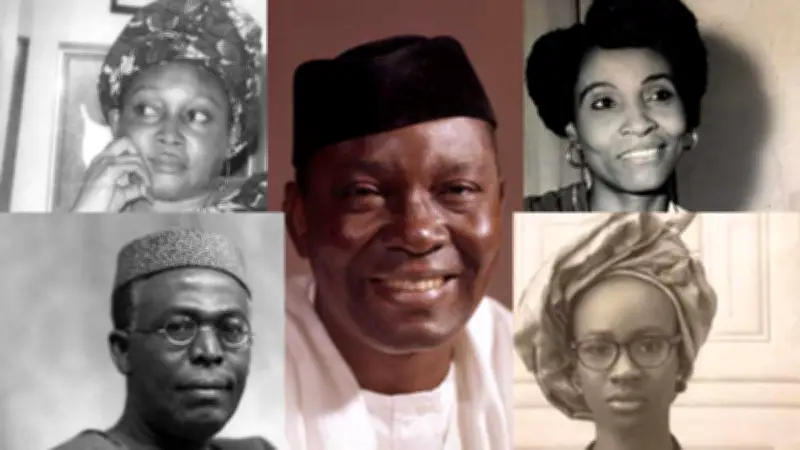
The story of Nigeria's journey to independence is incomplete without acknowledging the remarkable contributions of its nationalists. These courageous individuals dedicated their lives to ending British colonial rule and securing freedom for their people. Professor Sati Umaru Fwatshak, a historian at the University of Jos, provides valuable perspectives on their struggles for social justice and human rights.
Key Takeaways
- Nigerian nationalists successfully ended British colonial rule and achieved independence in 1960 through activism and political negotiations.
- Prominent leaders such as Herbert Macaulay, Nnamdi Azikiwe, Obafemi Awolowo, Ahmadu Bello, and Anthony Enahoro shaped the independence movement.
- Female activists including Funmilayo Ransome-Kuti, Margaret Ekpo, and Kudirat Abiola championed women's rights and democratic freedoms.
List of 10 Nigerian Nationalists and Their Contributions
Nigerian nationalists fostered national unity and emphasized intercultural connections. The NCNC movement instilled a sense of identity and pride among the populace, ultimately leading to Nigeria's freedom in 1960.
10. Obafemi Awolowo
Obafemi Jeremiah Oyeniyi Awolowo was one of the foremost Nigerian nationalists of the 20th century. A lawyer with a passion for journalism, he established the Nigerian Tribune in 1949 to spread nationalist ideas. As Premier of Western Nigeria, Awolowo introduced free primary education and healthcare reforms that became models across Africa. His advocacy for federalism and regional autonomy significantly influenced Nigeria's path to self-government.
9. Herbert Macaulay
Olayinka Herbert Samuel Heelas Badmus Macaulay, often called the Father of Nigerian Nationalism, was a highly educated engineer, musician, journalist, and politician. In 1923, he founded the Nigerian National Democratic Party (NNDP), Nigeria's first political party, giving Nigerians a stronger voice in governance. He used newspapers and public campaigns to challenge colonial policies.
8. Nnamdi Azikiwe
Nnamdi Benjamin Azikiwe, popularly known as Zik, served as Nigeria's first President from 1963 to 1966. Through newspapers like the West African Pilot, he inspired political awareness across ethnic lines. His advocacy for self-rule transformed nationalism from an elite movement into a mass struggle involving ordinary Nigerians.
7. Ahmadu Bello
Alhaji Sir Ahmadu Bello, the Sardauna of Sokoto, was the only Premier of Northern Nigeria, serving from 1954 to 1966. He promoted education, modernization, and political participation in the North. Bello played a key role in negotiating constitutional arrangements that led to independence.
6. Anthony Enahoro
Anthony Eromosele Enahoro made history in 1953 by moving the motion for Nigeria's self-government in the House of Representatives. He was the youngest newspaper editor at age 21 and his action accelerated constitutional negotiations, marking a crucial milestone on the road to independence.
5. Kudirat Abiola
Alhaja Kudirat Abiola became a symbol of resistance against military dictatorship after the annulment of the 1993 presidential election won by her husband, Moshood Abiola. She inspired millions to fight for democracy until her assassination in 1996 while her husband was in detention.
4. Funmilayo Ransome-Kuti
Funmilayo Ransome-Kuti was a teacher, women's rights activist, and the first Nigerian woman to drive a car. Through the Abeokuta Women's Union, she organized thousands of women to challenge unfair taxation and discriminatory colonial policies, establishing women's political participation in Nigeria.
3. Aminu Kano
Mallam Aminu Kano led a socialist movement in Northern Nigeria through the Northern Elements Progressive Union (NEPU). He advocated for social equality and challenged the dominance of traditional elites, becoming a strong voice for the poor and marginalized.
2. Gani Fawehinmi
Abdul-Ganiyu Oyesola Fawehinmi was a renowned human and civil rights activist, lawyer, author, and philanthropist. Passionate about journalism and national affairs, he defended human rights and campaigned against corruption and injustice throughout his life.
1. Margaret Ekpo
Margaret Ekpo mobilized women politically in Eastern Nigeria and fought for voting rights and representation. Her activism significantly expanded women's democratic participation. The Calabar Airport is named after her in recognition of her contributions.
How Did Nigerian Nationalists Fight for Social Justice and Human Rights?
Professor Sati Umaru Fwatshak explains that traditional nationalists resisted British conquest during the era of primary resistance. Modern nationalists, led by educated elites, initially sought inclusion in governance and later demanded full independence after World War II. They utilized constitutional conferences and negotiations, eventually achieving self-rule in the 1950s and independence in 1960.
Political Parties Formed by Nigerian Nationalists
- Northern People's Congress (NPC)
- United Middle Belt Congress (UMBC)
- Borno Youth Movement (BYM)
- Northern Elements Progressive Union (NEPU)
- Action Group
- Nigerian National Democratic Party (NNDP)
- National Council of Nigeria and the Cameroons (NCNC)
Lesser-Known Nationalists
Professor Sati highlights figures like Joseph Tarka, Pastor David Lot, Patrick Dokotri, Moses Rwang, and Mallam Sa’adu Zungur, who fought for the rights of ethnic minorities but are often overlooked in national history.