Senator Ireti Kingibe of the African Democratic Congress (ADC) has publicly claimed that Nigeria's tax reform laws require every citizen to pay 25 per cent of their earnings to the federal government — a claim that a fact-check has found to be false.
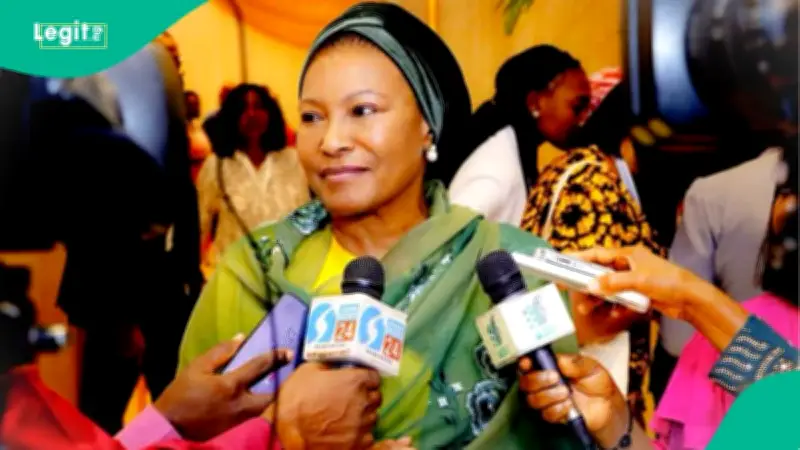
Mrs Kingibe made the remarks at a gathering of her supporters in Abuja, urging them to vote against the ruling All Progressives Congress (APC) ahead of the 2027 general elections. A video of her address, delivered in pidgin English, went viral on social media. The date of the event could not be independently confirmed.
What Senator Kingibe Said
During her address, Mrs Kingibe, who is seeking re-election and was originally elected to the Senate on the Labour Party ticket, criticised several government policies, including electricity tariff increases and the four tax reform laws passed by the National Assembly and signed by President Bola Tinubu. She told her audience the laws contain a provision making Nigerians pay 25 per cent of their income as tax. She also said the government had not begun implementing the laws because it feared public criticism ahead of the 2027 elections.
According to Premium Times, when she was contacted for the verification of the viral video and seek clarification, she stood by both claims.
What the Nigeria Tax Act 2025 Actually Says
The Nigeria Tax Act 2025, along with three companion laws, was passed by the National Assembly in June 2025, gazetted in September 2025, and took effect on January 1, 2026 — directly contradicting the senator's claim that implementation had not started.
Section 58 of the Act sets out progressive personal income tax rates, not a flat 25 per cent charge on all earnings. Under the Fourth Schedule to the Act, the first N800,000 of annual chargeable income attracts zero per cent tax. The next N2.2 million is taxed at 15 per cent, followed by 18 per cent on the next N9 million, 21 per cent on the next N13 million, and 23 per cent on the next N25 million. The 25 per cent rate applies only to the portion of annual chargeable income that exceeds N50 million.
The law also carves out exemptions for minimum-wage earners. Employees whose gross income does not exceed the national minimum wage are fully exempt under Section 162, while qualifying deductions such as pension contributions and rent relief can further reduce an individual's chargeable income.
Expert Reaction and Exemptions
Tax expert Okey Udo, a fellow and chartered tax practitioner at Vog Global Consult and a member of the education committee of the Chartered Institute of Taxation of Nigeria (CITN), said the senator's claim was either based on a misunderstanding of the legislation or was politically motivated. He rejected the suggestion that every Nigerian is required to pay 25 per cent of their earnings as tax.
Mrs Kingibe, notably, was a member of the 10th Senate that passed the tax reform laws she is now criticising.
Legit.ng earlier reported that the Federal Government has announced major personal income tax exemptions that will take effect from January, offering relief to millions of low-income earners as enforcement of Nigeria's new tax reforms begins. Under the reforms, individuals earning up to about N100,000 per month will no longer be required to pay personal income tax. The announcement was made by Taiwo Oyedele, chairman of the Presidential Committee on Fiscal Policy and Tax Reforms, who said the changes had been designed to reduce hardship, improve fairness, and reset the relationship between citizens and the tax system.