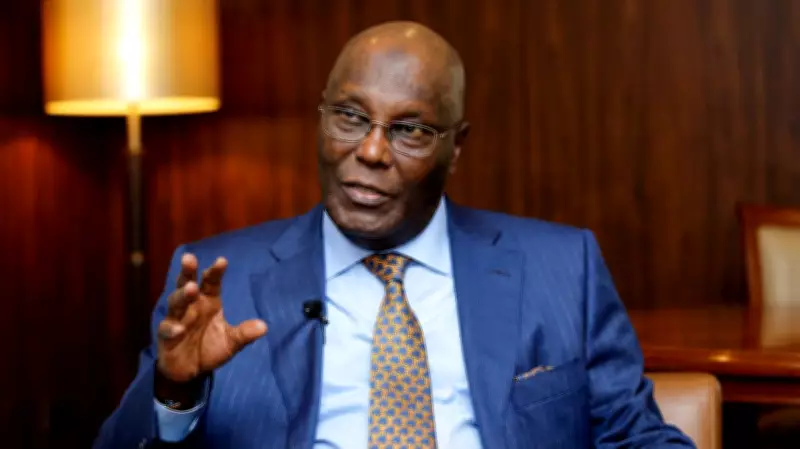
The Arewa Citizens Parliament (ACP) has alleged that former Vice President Atiku Abubakar has become the most valuable indirect political ally of President Bola Ahmed Tinubu ahead of the 2027 general elections. The group accused Atiku of weakening and destabilizing opposition politics through what it described as decades-long presidential ambition and dominance over coalition efforts.
ACP's Allegations Against Atiku
In a statement by the National Leader of the ACP, Hon. Saidu Jibrin, the group said no single individual had done more damage to opposition unity than the former vice president. Jibrin stated that Atiku has remained permanently in presidential mode for nearly three decades, moving across political parties, reshaping alliances around himself, and positioning himself as the unavoidable centre of opposition politics.
Jibrin said: 'Yet after all these years of endless ambition, he bequeathed a weakened and crisis-ridden opposition in Nigeria. The ACP is alarmed that at a period when Nigerians expected opposition leaders to subordinate personal ambition to national survival, the political space is once again being suffocated by the familiar politics of control, entitlement, and domination.'
Nigeria's Current Challenges
The ACP highlighted that Nigeria is facing one of its darkest periods, with families unable to afford food, farmers abandoning lands due to insecurity, young people losing hope, and businesses collapsing. The group noted that millions are angry with the APC government and desperately searching for a credible alternative. However, instead of building a disciplined coalition capable of confronting the ruling party, opposition politics has been dragged into internal tensions revolving around Atiku's presidential calculations.
'The painful truth is that Alhaji Atiku Abubakar has gradually transformed from an opposition figure into President Bola Tinubu's most valuable indirect political ally,' Jibrin added.
Pattern of Opposition Fragmentation
The ACP observed that every election cycle follows the same pattern: coalition talks begin, opposition figures attempt to unite, Nigerians raise hopes for a formidable alternative, and then Atiku arrives with the determination to dominate and personalize the entire process around his lifelong presidential project. The result has been distrust, fragmentation, internal rebellion, weakened alliances, disappointed supporters, and electoral failure.
This pattern was evident within the PDP before the 2023 elections, when unresolved ambition and internal power struggles fractured the opposition and handed strategic advantage to the APC. The same destructive politics has resurfaced in emerging coalition efforts ahead of 2027.
Concerns Over Northern Leadership
The group also expressed concern that Northern Nigeria continues to recycle the same political actors while younger and more dynamic leaders are denied opportunities to emerge. The region faces severe challenges including terrorism, poverty, collapsing agriculture, unemployment, drug abuse, and widespread hopelessness among young people. The ACP argued that the political conversation should focus on solving these urgent problems instead of being dominated by another Atiku presidential project.
Jibrin stated: 'No democracy can grow when the same individuals refuse to leave the stage after decades of political dominance. No opposition can succeed when coalition platforms are reduced to vehicles for personal ambition rather than instruments of national rescue.'
Call for New Leadership
The ACP warned opposition political actors not to allow the mistakes of 2023 to repeat themselves. If the opposition enters 2027 fragmented and divided, President Tinubu's path to re-election will become easier, and Atiku will bear significant responsibility for that outcome. The group called on Northern political stakeholders, youth groups, professionals, civil society organizations, and genuine democrats to reject politics driven by entitlement and personal obsession with power.
'Nigeria urgently needs a new generation of leadership defined by sacrifice, humility, strategic thinking, inclusion, and collective purpose, not another cycle of recycled ambition. The future of the North and the survival of Nigeria's democracy cannot continue to be sacrificed on the altar of one man's unending presidential quest,' Jibrin concluded.