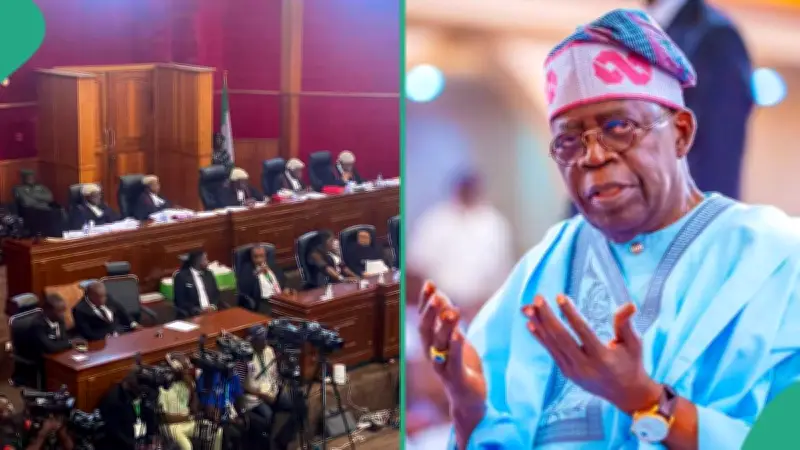
The Code of Conduct Tribunal (CCT) has formally requested the National Assembly's backing to convert the body into a National Anti-Corruption Court, in a move the tribunal says would significantly speed up the prosecution of corruption cases across Nigeria.
CCT Seeks Conversion to Anti-Corruption Court
The tribunal's Acting Director of Litigation, Yahaya Laraski, made the disclosure in a statement on Monday while reviewing the achievements and challenges of the tribunal under its current leadership. According to The Punch, Laraski said the proposed legislation was being pursued as an Executive Bill, channelled through the Attorney-General of the Federation and the Secretary to the Government of the Federation.
Under the plan, the new court would operate seven judicial divisions spread across the country, staffed by 37 judges assigned exclusively to corruption-related matters. The court would accept cases from anti-graft agencies, other relevant institutions, and civil society organisations.

Summary Trials to Conclude Within Six Weeks
A key feature of the proposal is a summary trial system, under which all corruption cases must be concluded within six weeks of a defendant's arraignment — a sharp contrast to the drawn-out proceedings that currently characterise many high-profile corruption trials in Nigeria.
On the tribunal's recent work, Laraski said the new leadership had recovered two of its three estate properties that were allegedly disposed of illegally. These include the official residence of the tribunal chairman and the North-Eastern States Zonal Office in Bauchi.
Internal Reforms and Funding Struggles
He also said the status of the tribunal's chairman had been raised to that of a Chief Judge of the Federal High Court, while members of the tribunal now hold the equivalent status of Federal High Court judges. Seven new departments have been created alongside the three already in existence, and a backlog of staff promotions has been cleared.
However, Laraski pointed to two significant obstacles limiting the tribunal's effectiveness. The first is a narrow scope of jurisdiction — the tribunal can only hear cases that the Code of Conduct Bureau chooses to refer to it, leaving the body largely dependent on another agency's discretion.
The second challenge is funding. Laraski said the tribunal has been unable to access its N2 billion budgetary allocation, and called on the government to provide furniture, ICT equipment, vehicles, and staff training programmes to keep operations running effectively.
EFCC Officials Face Corruption Trials
Legit.ng earlier reported that EFCC chairman Ola Olukoyede revealed that more than five of his own staff are currently facing prosecution for corruption and financial malpractice. Olukoyede made the claim in a video shared on his social media page on Monday, September 7, 2026. The EFCC boss also disclosed that over 40 staff have been dismissed in under three years, with more case files currently being prepared.