The Economic and Financial Crimes Commission (EFCC) has confirmed that 18 states across Nigeria are currently under investigation over allegations involving the mismanagement of public funds. The commission, however, declined to disclose the names of the affected states, saying doing so could jeopardise ongoing investigations.
EFCC Spokesperson Confirms Investigations
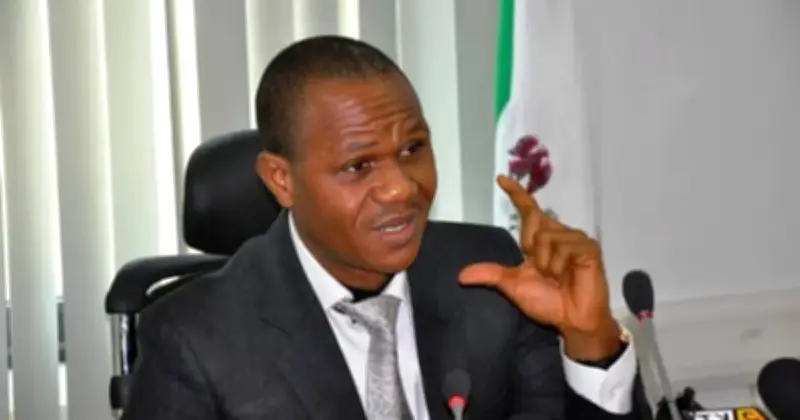
The disclosure was made on Thursday by the EFCC's Director of Public Affairs, Wilson Uwujaren, during an interview on Arise Television. Speaking during the interview, Uwujaren said the investigation into Osun State, which recently led to the temporary restriction of one of the state's accounts, is only one of several ongoing cases involving state governments.
"Like we said in the statement, there are about 18 other states that we have ongoing investigations," he said. When asked to identify the states involved, Uwujaren declined.
"I don't want to start mentioning those states by name now." He explained that withholding the names was necessary to protect the integrity of the investigations. "Not running away per se, but not to jeopardise the investigation that is currently ongoing."
Why Did the EFCC Freeze Osun State's Account?
Uwujaren said the EFCC's action against Osun State was not politically motivated and was based on intelligence gathered during an investigation that began in March 2026. According to him, several state officials have already been questioned as part of the probe. He also clarified that the commission did not freeze all of Osun State's accounts. Instead, only one statutory account was placed under temporary restriction, while the state government remains free to operate its other accounts.
"We only targeted one statutory account... It does not stop the government from operating other accounts that they have."
EFCC Says It Has 72 Hours to Obtain a Court Order
Uwujaren explained that under Nigerian law, the commission can place a temporary restriction on an account suspected to be linked to suspicious financial activity. He said the commission relied on Section 34 of the EFCC Act and Section 7(6) of the Money Laundering (Prevention and Prohibition) Act, 2022, in restricting the Osun State account. He noted that these provisions empower the EFCC to temporarily restrict any account suspected of being linked to suspicious financial transactions, not just accounts belonging to state governments.
However, within 72 hours, the EFCC must either obtain a court order to continue the restriction or lift it. "We have a 72-hour window to obtain a court order... within which we either obtain a court order to continue to freeze it or lift the restriction." He added that the 72-hour period had not expired at the time of the interview.
Why the EFCC Says It Did Not Act During the Ekiti Election
Responding to questions about why a similar action was not taken during the Ekiti State governorship election, Uwujaren said the circumstances were different. According to him, the commission only intervenes when intelligence available to investigators justifies such action.
"If you talk about what happened in Ekiti, we didn't have any reason to intervene the way we are intervening now. And you don't have access to the information that we have access to."
EFCC Recalls Similar Action in Edo State
Uwujaren also pointed to a similar intervention in Edo State before Governor Monday Okpebholo assumed office. According to him, the EFCC restricted a state government account after detecting suspicious movement of funds. He claimed the commission's intervention preserved $12 billion for the state, enabling the incoming administration to access the funds after taking office.
"This is not targeted at any particular government. We are simply doing our work under the law."
The Osun Government Plans Legal Action
The Osun State Government has criticised the account restriction and indicated it would challenge the EFCC's action in court. Uwujaren said the state has every right to seek judicial intervention and that the anti-graft agency would respond through the legal process.