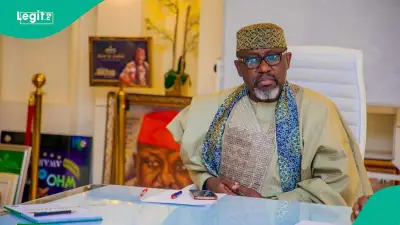
Dr Abdullahi Umar Ganduje, former Governor of Kano State and immediate past National Chairman of the All Progressives Congress (APC), has linked the widespread street begging in parts of Northern Nigeria to the neglect of persons living with disabilities. He made these remarks on Friday in Abuja during the premiere of a documentary marking 10 years of Let’s Talk Humanity (LTH), an organisation focused on the education of deaf and blind individuals.
Ganduje Discloses Reason for Spate of Street Begging
Ganduje stated that many physically challenged persons have been sidelined in society, leaving them with limited opportunities for self-reliance. According to him, “In the northern part of this country, people with disabilities are so much relegated to the background. That’s why we have an array of beggars across the northern part of this country day and night.” He emphasised that the neglect has negatively affected their psyche and motivation, making it difficult for them to see themselves as equal members of society.
Call for Investment in Education and Assistive Technology
The former governor urged state governments, development partners, and philanthropists to increase investment in education and assistive technologies for persons with special needs. He noted that with the right support, individuals with disabilities could become productive members of society rather than resorting to begging. “They can develop to the extent that they can even be employers of labour. They can develop to the extent that they can be genius in various fields of endeavours,” Ganduje stated.
Stakeholders Emphasise Inclusion in Development Planning
Also speaking at the event, the Minister of Humanitarian Affairs and Disaster Management, Dr Bernard M. Doro, stressed the need to prioritise inclusion when designing programmes and technologies. He said accessibility should be integrated from the outset rather than treated as an afterthought. “When we develop assisted devices or technology in general this has to be done with People Living with disability in mind. You don’t wait until you do it before you begin to adapt it for people to use… we must move towards a future where accessibility is by design,” he said.
Initiative Highlights Impact on Special Needs Education
Founder of Let’s Talk Humanity, Fatima Ganduje Abiola-Ajumobi, said the organisation has supported about 1,000 beneficiaries annually since its inception in 2015. Reflecting on the journey, she expressed optimism about expanding its impact through partnerships and long-term planning. “Seeing the faces of alumni, members of staff, and supporters of Tudun Maliki here today takes me back to the very beginning 10 years ago—when you trusted me with something so important: the future of your education, and the possibility of change through technology,” she said. She added that the organisation aims to establish a national resource centre for individuals with sensory impairments to enhance access to global knowledge and support systems.
Push for Broader Collaboration
Ganduje commended the initiative and reiterated the need for stronger collaboration among government agencies, development partners, and private stakeholders to address the challenges facing persons with disabilities. He expressed confidence that sustained investment and inclusive policies would reduce street begging and improve quality of life across affected communities.