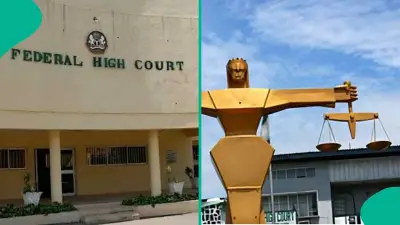
A civil society organization has dragged the Federal Government to court over the alleged lack of transparency surrounding the $5 billion Abu Dhabi financing deal. The group, identified as the Centre for Anti-Corruption and Open Leadership (CACOL), filed the suit at the Federal High Court in Abuja, seeking an order to compel the government to disclose the full details of the agreement.
Lawsuit Filed Over Non-Disclosure
The suit, marked FHC/ABJ/CS/987/2026, was filed by CACOL's legal team led by Barrister Femi Falana. The group argues that the secrecy surrounding the deal violates the provisions of the Freedom of Information Act, 2011, and the Nigerian Constitution, which guarantee citizens the right to access information on public expenditures.
In a statement issued after the filing, CACOL's Executive Chairman, Debo Adeniran, said the group decided to approach the court because the Federal Government had failed to respond to a formal request for details of the deal. "We wrote to the Ministry of Finance and the Debt Management Office in July, but we have not received any response," Adeniran said. "This suit is to ensure that the government is held accountable for a transaction that will have a significant impact on the nation's debt profile."
Details of the $5 Billion Deal
The $5 billion financing arrangement was announced by the Federal Government in March 2026, following a visit by President Bola Tinubu to Abu Dhabi. According to the government, the funds are intended to support infrastructure projects, including the Lagos-Calabar Coastal Highway and the rehabilitation of the Port Harcourt refinery. However, critics have questioned the lack of public consultation and the absence of a detailed breakdown of the terms and conditions.
The Debt Management Office (DMO) has confirmed that the loan carries an interest rate of 9.5% per annum, with a maturity period of 15 years and a 3-year moratorium. However, the DMO has not disclosed the identity of the lender, citing confidentiality agreements. This has fueled speculation that the deal may involve a sovereign wealth fund or a consortium of international banks.
Government's Response and Next Steps
In response to the lawsuit, the Federal Ministry of Justice has said it will defend the government's position. A spokesperson for the ministry, who spoke on condition of anonymity, told Nairametrics that "the government has acted in the best interest of the country, and all necessary approvals were obtained." The ministry has also argued that some details of the deal are classified for national security reasons.
Legal experts say the case could set a precedent for how the government handles public disclosure of major financial transactions. The court has scheduled a hearing for September 15, 2026, to determine whether to grant CACOL's request for an order of mandamus. If the court rules in favor of the group, the government will be required to publish the full text of the financing agreement, including the lender's identity and the specific terms of repayment.
The outcome of this case will have far-reaching implications for fiscal transparency in Nigeria, as it could compel future administrations to be more open about their borrowing activities.