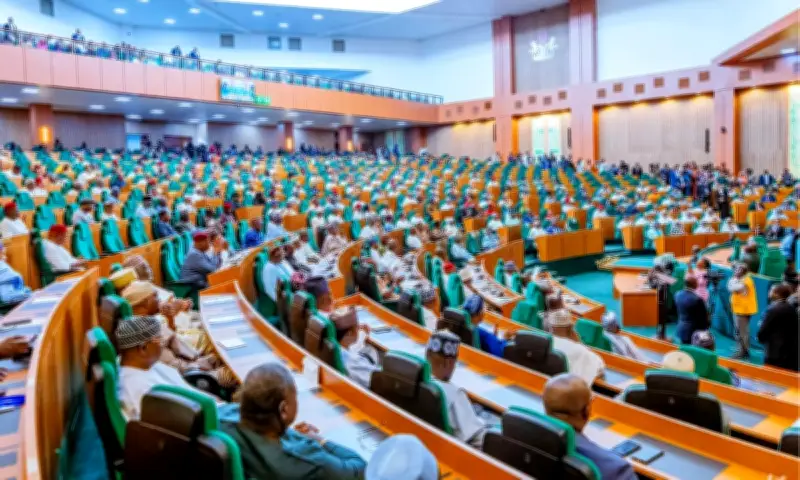
In a surprising legislative shift, the House of Representatives has withdrawn its self-sponsored constitutional amendment bill aimed at establishing state police across Nigeria. The decision, made during Tuesday's plenary session, July 14, clears the path for lawmakers to focus entirely on a separate, executive-backed State Police Bill forwarded by the presidency.
Withdrawal and Fast-Tracking of Executive Bill
Following the withdrawal of its own draft, the Green Chamber immediately fast-tracked the executive's proposal to ensure the momentum on decentralized policing remains intact. The executive-sponsored bill successfully scaled both its first and second readings during Tuesday's sitting.
After its second reading, the bill was referred to the House Committee on Constitutional Review for further legislative input, public hearings, and clause-by-clause evaluation. This administrative move consolidates policing reform efforts into a single legislative track, streamlining the complex constitutional amendment process required to allow sub-national policing.
Next Steps in the Legislative Process
The executive bill will now undergo detailed scrutiny at the committee level, where lawmakers will refine its provisions before presenting it back to the floor for final passage. The adoption of President Tinubu's version signals a unified approach to reforming Nigeria's security architecture, which has long been a subject of debate.
According to sources within the House, the decision to adopt the executive bill was influenced by the need to avoid duplication of efforts and to accelerate the constitutional amendment process. The committee is expected to hold public hearings to gather input from stakeholders, including state governments, security experts, and civil society organizations.
Implications for Policing Reform
If passed, the State Police Bill would amend the 1999 Constitution to allow states to establish their own police forces, a move proponents argue will improve local security responses. Critics, however, have raised concerns about potential abuse by state governors and the need for robust oversight mechanisms.
The House's decision marks a significant step in the push for decentralized policing in Nigeria, which has gained traction amid rising insecurity across the country. The executive bill's progress will be closely monitored as it moves through the committee stage.