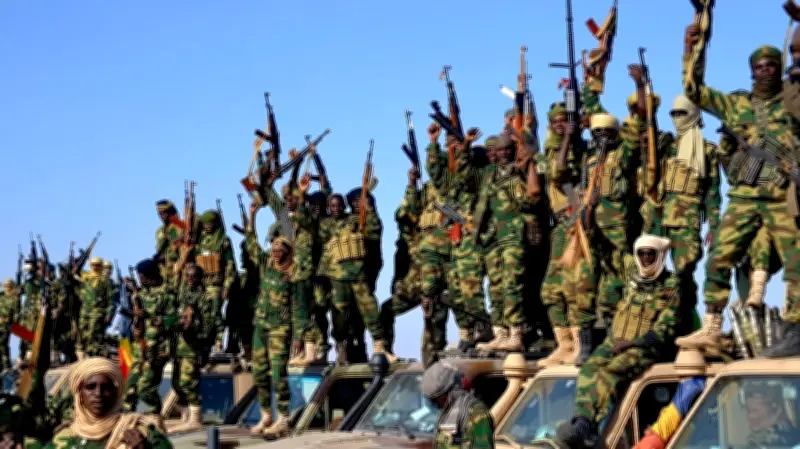
Rising insecurity and violent conflicts are driving families into chronic poverty in northern Nigeria, according to new research spearheaded by the Development Research and Projects Center (dRPC). The study, titled 'Insecurity, Livelihoods and Welfare in Northern Nigeria', was launched at a high-level webinar on Wednesday.
Key findings of the report
The report, jointly conducted over one year by the Chronic Poverty Advisory Network (CPAN) of the Institute of Development Studies, United Kingdom, and the dRPC, with support from the Foreign, Commonwealth and Development Office (FCDO), shows that violent conflicts drastically slash household spending by up to 14 per cent. The study urges the Federal Government to harmonise peacebuilding with economic empowerment to stem the trend.
Presenting the data, CPAN Deputy Director Dr Vidya Diwakar explained that the study tracked three distinct conflict pathways using national survey datasets and extensive qualitative fieldwork. In the North-East, Boko Haram and ISWAP insurgency caused the most severe long-term damage, reducing household expenditure by 8 to 14 per cent. In the North-Central, farmer-herder clashes hit near-poor households the hardest, triggering a 14 per cent drop in expenditure. Banditry and kidnapping in the North-West caused spending losses of 4 to 11 per cent among moderately poor households.
Livelihood diversification as a protective factor
Dr Diwakar said: “Livelihood diversification is the single most consistent protective factor across all three conflict types, building resilience and escape from chronic poverty. Despite this success factor, however, the study finds that only 13 per cent of northern household heads were currently experimenting with diversification of economic opportunities.”
The report identified livelihood diversification across farm and off-farm enterprises as the single most effective shield against conflict-induced poverty. However, the study found a critical gap in community adaptation. It further showed that while education strengthens capacity for income diversification, the benefits remain significantly weaker for women and youth-headed households, who constitute 28.9 per cent of the region’s population.
Government response
Minister of Humanitarian Affairs and Poverty Reduction, Dr Bernard Doro, noted that the findings would guide the ministry’s new 'One Humanitarian, One Poverty Response System' (OHOPRS) policy. Dr Doro pledged sustained government collaboration with researchers to refine state interventions. He challenged the academic community to provide deeper insights into “targeting, sequencing, and graduation pathways under OHOPRS, especially for women and youth who are routinely left behind.”
Reviewing the study, SPRiNG Team Lead Dr Ukoha Ukiwo, alongside the Director of the Plateau State Peace Building Agency, Dr Julie Sanda, emphasised the need to link peace interventions with economic recovery. Representing the Office of the Special Assistant to the President on Chieftaincy Matters, Alhaji Abba Waziri, stressed that “training traditional leaders for peacebuilding work” is vital to restoring local marketplaces.
Executive Director of the dRPC, Dr Judith-Ann Walker, lauded the minister’s open-door policy and his framework built on “one system, one register, and one pathway.”