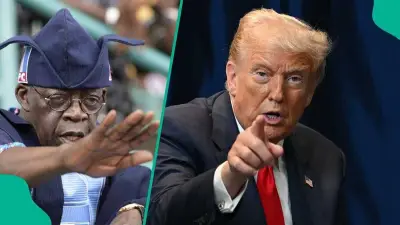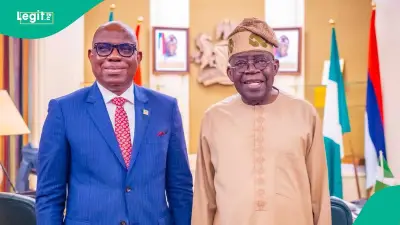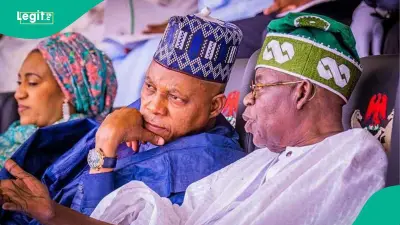
The debate over the construction of Christian and Muslim worship centres within the National Assembly Complex has evolved beyond a matter of inclusion or convenience. It rather reflects an enduring tendency of the country’s political class to deploy religion as a strategic instrument of power rather than a moral compass, JOHN AKUBO reports.
At face value, the optics suggested a balance – a mosque completed in 2023 and a chapel inaugurated in March 2026, both standing within the National Assembly, symbolising the country’s plural religious identity and a closer place for worship within the official premises. However, beneath the surface symmetry lies the question of whether religion has been effectively deployed to inculcate desired ethical conduct or merely serve as a tool for political interests.
Over time, religion has been intertwined with politics across the country. From campaign rallies punctuated with prayers to public officials frequently invoking divine guidance, faith has remained a powerful currency in the game of politics. Understanding that religious identity shapes community life and social values, politicians exploit the language of faith, attending religious gatherings and aligning themselves with influential clerics. Ironically, most members of the electorate perceive visible devotion by a political figure as a sign of humility, accountability, and moral grounding sufficient to inspire trust. This development, which critics describe as dangerous, is sadly gaining ground, and they worry that where religious symbolism becomes a substitute for performance, it becomes easier to appear righteous than to govern effectively.
The emergence of President Bola Ahmed Tinubu and Vice President Kashim Shettima through the same faith ticket in 2023 marked a defining moment in the country’s democratic journey. Defenders of the ticket tagged it a pragmatic decision driven by electoral calculations and competence. They argued that governance should not be reduced to religious balancing and that voters should prioritise capability over religious identity. Critics, however, warned that the move risked deepening the politicisation of religion and undermining the country’s delicate ethno-religious equilibrium. For them, the concern was not merely about representation, but precedent and its implications in a society where identity politics already runs deep.
Three years into the administration, emphasis has shifted from religion to performance as millions of Nigerians grapple with socio-economic strain occasioned by rising inflation, unemployment and heightened insecurity. According to critics, the religious composition of leadership has had little or no visible impact on citizens’ daily lives, while the expectation that shared faith at the helm might translate into moral clarity or decisive governance is short-lived. The existing gap between expectations and outcomes has left many wondering whether, beyond mobilising political support, religion can actually translate into ethical governance, fairness, and measurable improvements in citizens’ lives.
While the answer appears inconclusive and, for some, deeply disappointing, the construction of worship centres within the National Assembly Complex has amplified the debate. With the prayer centres believed to have been funded through voluntary contributions, supporters believed that, in a high-pressure environment such as the legislature, these centres provide lawmakers with a space for reflection and moral recalibration. In their view, though faith and governance might not be mutually exclusive, faith can nevertheless enhance leadership by grounding it in ethical principles.
But others have continued to question the rationale behind lawmakers dedicating religious facilities within a federal institution in a city that already hosts two major national worship centres – the National Mosque and the National Christian Centre. They felt the issue is not convenience but symbolism; that the presence of the structures within the seat of legislative power reinforces the growing institutionalisation of religion in governance, which has continued to blur the line between personal belief and state responsibility. It also raises a troubling possibility of visible religiosity prioritised over substantive governance; images of leaders praying, commissioning places of worship or invoking divine guidance, for some strange reasons, resonate deeply with citizens. While such actions project humility, faith and a sense of moral purpose, they can equally be deceptive. Thus, critics argue that religious imagery has increasingly become a form of political theatre – one that creates the appearance of moral leadership without necessarily delivering its substance.
This concern was echoed by a former National Treasurer of the Labour Party, Oluchi Oparah, who warned against fusing religious symbolism with effective governance. According to her, the focus on building worship centres within the National Assembly distracts from more urgent responsibilities such as lawmaking, oversight and accountability. “The issue is not whether lawmakers have places to pray. The issue is whether they are doing the work Nigerians elected them to do,” Oparah argued. Her critique reflects a broader frustration among citizens, who perceive a disconnect between leaders’ visible piety and the realities of governance. In the face of multiple religions, citizens wonder what has become of the strong laws that protect lives and property, the rigorous oversight of public spending and accountability. Such questions cut through the symbolism, demanding answers that cannot be provided by religious gestures alone.
Interestingly, some of the strongest critiques of the trend have come not from political opponents, but from among religious leaders. At the recent inauguration of the chapel, Bishop Matthew Hassan Kukah tasked lawmakers to confront national challenges with urgency and courage. His remarks were not a rejection of faith, but a call to deepen it, to move from ritual to action. Kukah emphasised that faith must be lived and not merely professed. Also, a former Head of State, Gen. Yakubu Gowon, echoed the same sentiment, urging unity and love across religious divides. But even within his conciliatory tone was an implicit reminder that faith must serve the common good. Together, their messages highlighted a critical distinction between religion as a personal moral compass and as a public performance.
The growing fusion of religion and politics in the country carries significant risks. When religion becomes a tool of political messaging, it can be used to deflect criticism, mobilise support along identity lines and create emotional connections that overshadow policy debates. It can also complicate accountability. Leaders who are perceived as “godly” may be judged less harshly, while critics risk being framed as irreverent or disrespectful of faith. Over time, this dynamic can weaken democratic institutions, shifting focus away from performance and towards perception. In such an environment, elections risk becoming contests of identity rather than evaluations of competence, governance becomes secondary to symbolism, and citizens, caught between faith and frustration, may struggle to separate belief from reality.
The Nigerian constitution defines the state as secular. Yet, the increasing visibility of religion within public institutions raises important questions about neutrality. The challenge is not to eliminate religion from public life, but to ensure it does not overshadow the core principles of governance, fairness, accountability, and service.
For ordinary Nigerians, the debate is ultimately less about theology and more about survival. In a country grappling with economic hardship, insecurity, unemployment and the rising cost of living, critics said citizens are more concerned with delivering the dividends of governance than with leaders’ prayer centres. For instance, a former presidential candidate of the Social Democratic Party (SDP), Adewole Adebayo, described the centres as a misplaced priority and urged lawmakers to focus on addressing poverty and improving citizens’ welfare rather than funding religious structures with taxpayers’ money. “The National Assembly was meant to be the house of the people, but it is increasingly becoming detached”, he said, stressing that there was no justification for additional worship centres in FCT. According to him, true service to God lies in good governance, accountability, and care for the vulnerable, rather than in erecting religious buildings. “The best form of worship is truth, accountability and commitment to the welfare of the people. If leaders serve the people well, Nigerians will pray for them everywhere – mosques, churches and homes.” Adebayo noted that no amount of religious symbolism can shield public officials from consequences if governance fails to meet citizens’ expectations. He maintained that any decision to build mosques or churches within the National Assembly should be privately funded. Describing the move as “self-serving,” he stressed that governance rooted in service would earn both public trust and spiritual legitimacy.
Also, a constitutional lawyer and public affairs Analyst, Joel U. Usman, said the worship centres are not a constitutional necessity. He held that, given the country’s current challenges, it is both a distraction and a misplaced priority to erect worship centres in the legislature. “The presence or absence of places of worship within the National Assembly Complex is not the country’s problem. Nigeria’s real challenges lie in the lack of good governance, worsening insecurity, a struggling economy and significant infrastructural deficits. “The critical question, therefore, is whether the National Assembly is fulfilling its constitutional mandate, and the answer regrettably is ‘no,’” he said. Usman added that in a democratic system, the National Assembly exists to represent the diverse constituencies that make up the country, to make laws, and to ensure accountability by acting as a check on the executive. “Its duty is to ensure that governance reflects the will and interests of the people, serving as a vital bridge between citizens and government. In light of widespread poverty and hardship across the country, public resources should be directed towards addressing pressing national needs rather than projects that do not contribute meaningfully to governance or development.”