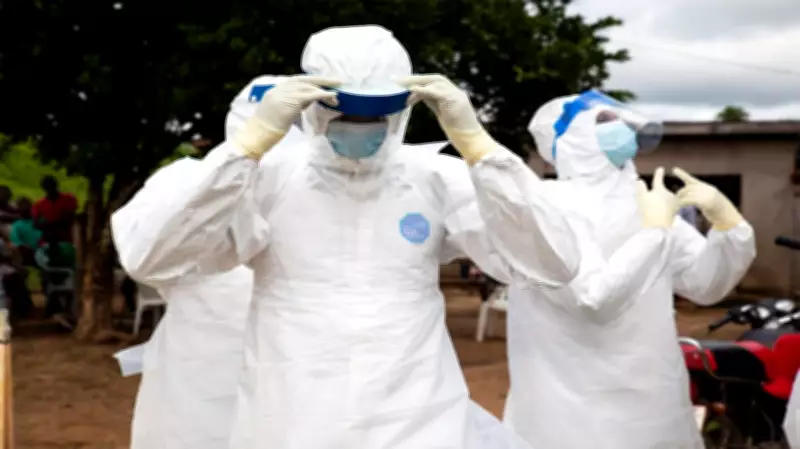
The Nigeria Centre for Disease Control and Prevention (NCDC) has placed Nigeria at high risk of Ebola importation due to ongoing transmission in the Democratic Republic of Congo (DRC) and Uganda, international travel, and uncertainty regarding the full magnitude of the outbreak.
Unfortunately, three Red Cross volunteers died in the DRC from suspected Ebola, likely contracted while managing dead bodies, the organization has said. The volunteers are believed to have contracted the virus on March 27 while working in the eastern region of Ituri on a project unrelated to Ebola, before the outbreak was identified.
Meanwhile, the Human Rights Writers Association of Nigeria (HURIWA) has expressed grave concern over emerging warnings from continental and global health authorities indicating a renewed and expanding Ebola threat across parts of Africa.
Risk Assessment and Preparedness
The high-risk placement followed a dynamic risk assessment conducted by NCDC, which estimated the risk of Ebola importation into Nigeria as high and identified high-risk states, border communities, major transport hubs, and Points of Entry (PoEs).
In a public health advisory issued in Abuja, the Director-General of NCDC, Dr. Jide Idris, noted that NCDC is intensifying national coordination activities to strengthen Ebola preparedness and rapid response capacity across the country. He added that the National Emergency Operations Centre (EOC) is on alert mode for heightened preparedness.
Dr. Idris noted that although Nigeria has not recorded any confirmed case of Ebola Virus Disease (EVD) associated with the present regional outbreak at the time of the release, surveillance and preparedness activities continue across the country in view of the Public Health Emergency of International Concern (PHEIC) declaration by the World Health Organization (WHO) and the rising number of cases in DRC and Uganda.
Surveillance and Travel Advisory
Idris observed that NCDC has intensified event-based surveillance and epidemic intelligence activities across the country, including enhanced monitoring of alerts, rumors, and unusual public health events to support early detection, reporting, and response.
He urged travelers from countries with confirmed Ebola cases to monitor their health for 21 days and immediately report symptoms such as fever, weakness, vomiting, or unexplained bleeding.
Red Cross Volunteers Casualties
The Red Cross volunteers are among the first known victims of DRC's Ebola outbreak, which has resulted in more than 200 suspected deaths and more than 850 suspected cases. The International Federation of Red Cross and Red Crescent Societies (IFRC) said they had died after serving their communities with courage and humanity.
Alikana Udumusi Augustin, Sezabo Katanabo, and Ajiko Chandiru Viviane had been working in the town of Mongwalu, now considered the epicenter of the outbreak. They died between May 5 and 16, 2026. Health experts warn that the bodies of Ebola patients can spread the virus because bodily fluids remain highly infectious after death.
HURIWA Calls for National Emergency Preparedness
HURIWA warned that the situation, if not urgently contained, carries significant risks for Nigeria given its population density, cross-border mobility, and historically vulnerable health surveillance systems.
Reports from the Africa Centres for Disease Control and Prevention (Africa CDC) indicate that at least 10 African countries are assessed to be at risk of Ebola transmission due to ongoing outbreaks in Central and East Africa. The countries identified include Angola, Burundi, the Central African Republic, the Republic of Congo, Ethiopia, Kenya, Rwanda, South Sudan, Tanzania, and Zambia.
This warning comes after earlier emergency declarations by WHO, which classified the outbreak as a public health emergency of international concern due to its lethality, rapid transmission potential, and historically high fatality rates.
HURIWA expressed alarm that despite clear and credible warnings, Nigeria has yet to publicly communicate a comprehensive, structured, and visible national preparedness framework comparable to the coordinated response mechanisms deployed during the COVID-19 pandemic.
The association called on the Federal Government to immediately activate a full-scale National Ebola Prevention and Preparedness Framework coordinated by NCDC in collaboration with state governments.