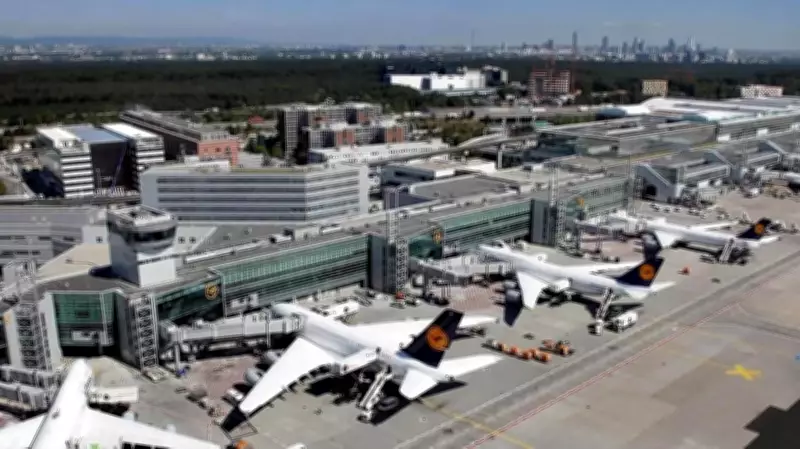
Some aviation experts have attributed the collapse of the former national carrier, Nigeria Airways, to political interference, poor economic management, and the government's failure to properly restructure the airline before its liquidation.
Root Causes of the Collapse
Industry experts expressed that the former national carrier did not fail because government ownership was inherently flawed, but rather because successive administrations ignored the principles of commercialisation and market-driven management adopted by countries such as the United Kingdom and Germany in restructuring their national airlines.
Samuel Caulcrick, former Rector of the Nigerian College of Aviation Technology (NCAT), in an interview with The Guardian, questioned why Nigeria failed to adopt lessons from the privatisation models used for British Airways and Lufthansa before the airline's liquidation in 2003. According to him, while the UK and Germany recapitalised and restructured their airlines before privatisation, Nigeria allowed its national carrier to deteriorate under political control, bureaucratic corruption, and chronic underfunding.
Contrasting Approaches to Privatisation
Caulcrick stated: "The decline of Nigeria Airways stemmed from a toxic mix of political interference, bureaucratic corruption, and capital starvation. Unlike the UK and Germany, which prepared their flag carriers for privatisation by aggressively restructuring governance and injecting necessary liquidity, Nigeria's state-owned enterprises were treated as political tools rather than profit-driven, market-capitalist businesses."
He explained that as far back as 1994, the British High Commissioner to Nigeria had presented a blueprint on the privatisation of British Airways to the administration of late General Sani Abacha. The British Government undertook aggressive reforms before privatising British Airways in the 1980s, cutting bureaucracy, reducing excess staffing, modernising operations, and positioning the airline for profitability. Similarly, Germany ensured long-term protection for Lufthansa through strategic interventions and financial support before fully privatising the airline, including injecting massive rescue funds during crises such as the COVID-19 pandemic.
Nigeria's Flawed Model
Caulcrick noted that Nigeria adopted an entirely different approach by undercapitalising Nigeria Airways and subjecting the airline to political patronage. Politically appointed executives lacked the operational independence required to run a competitive airline, while the carrier became weighed down by overstaffing, debt, and the misuse of monopoly powers.
He regretted that several public enterprises, including the former National Electric Power Authority (NEPA), Nigerian Railways Corporation (NRC), and Nigerian National Shipping Line (NNSL), among others, suffered a similar decline following the Structural Adjustment Programme (SAP) era due to government controls that prevented them from operating as commercially viable businesses.