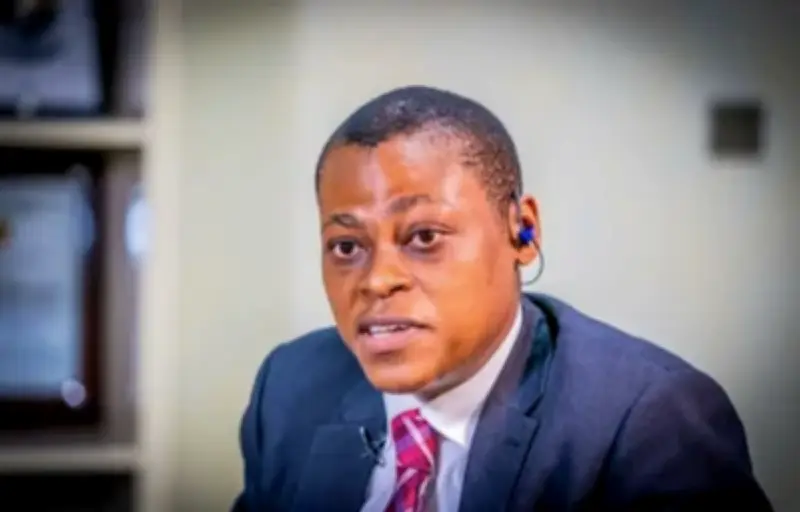
Broadcaster and Arise Television host Rufai Oseni has accused the Federal Government of applying double standards in handling inflammatory statements, arguing that a person's political, religious, and ethnic affiliations often determine whether they face accountability.
Oseni's Reaction to Senator Fadahunsi's Controversy
Oseni made the remarks while reacting to the controversy surrounding Senator Francis Fadahunsi, who faced public backlash over a viral video containing incendiary remarks directed at political opponents ahead of the Osun State governorship election.
Faulting Fadahunsi’s defense that the video was manipulated using artificial intelligence, Oseni noted that the lawmaker appeared to contradict himself by later asserting that he only meant defeating opponents at the ballot box. He argued that law enforcement agencies possessed sufficient evidence to prosecute the senator if the administration were genuinely committed to tackling hate speech and inciting rhetoric.
Criticism of Selective Justice in Nigeria
While suggesting that the senator should have been allowed to defend himself in court following police interrogation, Oseni expressed skepticism that any meaningful legal action would follow, noting that high-profile figures in Nigeria routinely evade consequences for provocative speech.
Highlighting what he described as systemic hypocrisy in law enforcement, Oseni drew a contrast between the treatment of prominent northern clerics and political enforcers versus detained Indigenous People of Biafra leader Nnamdi Kanu.
Oseni's Comparison of Gumi and Kanu
“The hypocrisy on which the country lives is that there are some that cannot say it. An example goes back to the case of the likes of Sheikh Gumi. They can say some things and get away with it. If you are probably an Nnamdi Kanu, you cannot say some things. That’s how the country is structured.”
Concluding his analysis, Oseni emphasized that the legal and public response to provocative statements in Nigeria remains heavily tied to identity rather than the rule of law.
Identity-Based Justice System
“So, what is said in Nigeria depends on where you are when you said it, your political affiliation, your religious affiliation, your racial affiliation, your tribal affiliation, that’s just it.”
The remarks come amid ongoing debates about freedom of expression and the enforcement of hate speech laws in Nigeria, with critics often pointing to perceived disparities in how such cases are handled.