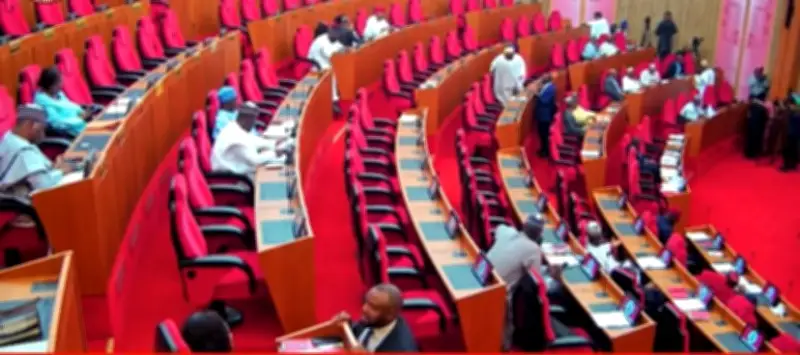
The Nigerian Senate on Wednesday passed for second reading a bill aimed at strengthening the country's legal framework against counterfeit medical products, fake drugs, and unwholesome processed foods. The bill, sponsored by Sadiq Suleiman (APC-Kwara North), seeks to repeal the Counterfeit and Fake Drugs and Unwholesome Processed Foods (Miscellaneous Provisions) Act of 2004.
Key provisions of the bill
Leading the debate, Senator Suleiman explained that the proposed legislation also prohibits the use of toxic substances to hasten the natural ripening of fruits and reviews penalty provisions for hawking drugs, poison, and other food products. The bill establishes a more comprehensive legal framework to regulate counterfeit medical products, fake drugs, and unwholesome processed foods.
Senator Suleiman emphasized that every Nigerian deserves genuine, safe, and effective medicines, lamenting that criminal networks continue to profit from counterfeit products at the expense of innocent lives. According to him, counterfeit medicines contribute to infant deaths, treatment failures, antimicrobial resistance, worsening chronic illnesses, and declining public confidence in Nigeria's healthcare delivery system.
He added that adulterated cosmetics, contaminated packaged water, and unwholesome processed foods have exposed millions of Nigerians to preventable diseases, disabilities, and avoidable deaths daily. While acknowledging efforts by the National Agency for Food and Drug Administration and Control (NAFDAC), the Pharmacy Council of Nigeria, and other stakeholders, Senator Suleiman noted that criminal networks have become increasingly sophisticated, making it imperative to modernize existing legislation and strengthen enforcement mechanisms.
Penalties and enforcement
The bill prohibits the hawking and sale of medicines in open markets, motor parks, roadside stalls, unlicensed premises, and illegal online platforms. Offenders face up to 15 years' imprisonment, substantial fines, and mandatory compensation where counterfeit products cause death or grievous bodily harm. The bill also empowers courts to order asset forfeiture, seize offending premises, and strengthen criminal prosecution through accelerated trials and recognition of electronic evidence.
Senator Suleiman proposed retaining NAFDAC as the principal enforcement authority while establishing national and state task forces to improve intelligence sharing and coordinated enforcement. He stated, "Counterfeit medicines have become silent weapons of mass destruction. They destroy lives, weaken healthcare delivery and undermine public confidence in genuine pharmaceutical products."
Senators express support
Contributing to the debate, Samson Ekong (APC-Akwa Ibom South) described the bill as timely, saying victims of counterfeit medicines often end up enriching casket makers through preventable deaths. "Health is wealth. The Senate must send a clear signal that these abuses must stop and appropriate penalties must be enforced," he said.
Also, Adams Oshiomhole (APC-Edo North) said fake drugs have become widespread across urban and rural communities, contributing significantly to kidney diseases and other organ failures. "We are all potential victims of fake drugs. This legislation deserves the support of every senator because it concerns every Nigerian family," he added.
Deputy Senate President Barau Jibrin supported the bill's objectives but urged lawmakers to establish a clear nexus with the NAFDAC Act to avoid duplicating existing responsibilities.
Next steps
The News Agency of Nigeria (NAN) reports that the Senate passed the bill for a second reading in a voice vote. Senate President Godswill Akpabio referred the bill to the Senate Committee on Health (Secondary and Tertiary) for a public hearing.