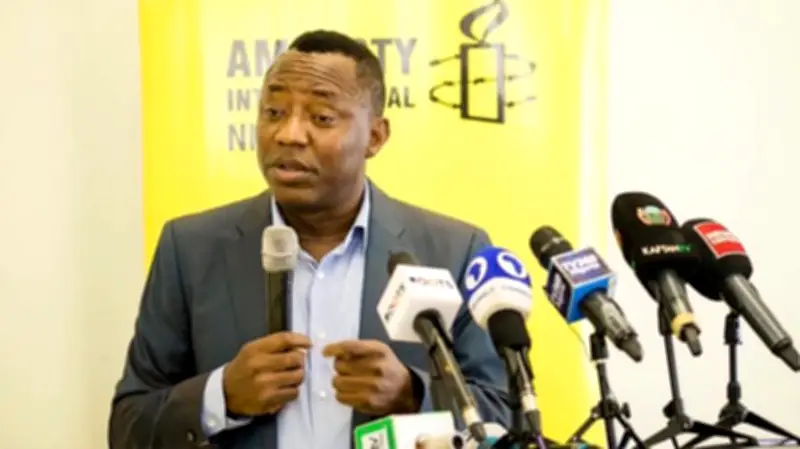
The Socio-Economic Rights and Accountability Project (SERAP) has voiced strong concern over the reported revocation of the bail granted to activist and journalist Omoyele Sowore by the Federal High Court in Abuja. The bail was revoked over allegations of cyberbullying linked to social media posts concerning President Bola Ahmed Tinubu. SERAP also raised alarm over the reported issuance of a bench warrant for Sowore's arrest in connection with charges brought by the Department of State Services (DSS).
SERAP's Statement on Sowore's Case
In a statement issued by its Deputy Director, Kolawole Oluwadare, SERAP described the revocation of Sowore's bail as the latest escalation in a pattern of continued harassment and reprisals allegedly carried out in retaliation for what it termed the legitimate and peaceful exercise of Sowore's human rights. According to Oluwadare, SERAP is concerned that Sowore continues to face what it described as spurious charges and targeted reprisals, including alleged harassment through the abuse of judicial processes, because of his human rights work and advocacy for reforms, accountability, and the rule of law.
Chilling Effect on Freedoms
The organization argued that measures of this nature, particularly in cases involving criticism of public officials and matters of public interest, could have a chilling effect on journalists, activists, civil society organizations, and other citizens seeking to exercise their constitutional rights to freedom of expression and access to information. SERAP further expressed concern over what it described as a broader pattern of legal actions, arrests, and prosecutions targeting activists, journalists, and government critics under the current administration. It warned that such actions could foster an atmosphere of fear and self-censorship incompatible with democratic governance, accountability, the rule of law, and respect for human rights.
Fundamental Democratic Principles
SERAP maintained that criticism of public officials and government policies is a fundamental element of a democratic society, stressing that public office holders are expected to tolerate a greater degree of public scrutiny than private citizens. The organization added that legal processes should not be used, or be perceived as being used, to intimidate or silence dissenting voices or individuals engaged in legitimate public-interest advocacy. SERAP also argued that the revocation of Sowore's bail raises concerns over due process, the selective application of the law, and restrictions on the constitutional right to liberty, noting that the principles of presumption of innocence, equality before the law, and personal liberty are guaranteed under the 1999 Constitution (as amended).
Right to Bail and Due Process
The organization stated that the right to bail is closely linked to the presumption of innocence and that restriction on liberty before a final determination of guilt should remain exceptional, necessary, and proportionate, with pretrial detention serving only as a measure of last resort. According to SERAP, the revocation of bail in circumstances that may discourage the exercise of fundamental freedoms raises broader concerns regarding access to justice, judicial independence, and the rule of law.
Call for Action
SERAP called on the Federal Government to immediately withdraw what it described as unjust charges against Sowore, reverse the revocation of his bail, and discontinue measures that allegedly restrict his liberty. It also urged President Tinubu to ensure that Sowore is able to carry out his journalistic and human rights activities without harassment, intimidation, arrest, or reprisals. SERAP further called on the administration to undertake comprehensive reforms to ensure that the administration of bail is fully consistent with Nigeria's constitutional and international human rights obligations, including safeguards for personal liberty, access to justice, protection against arbitrary detention, and equal treatment before the law.