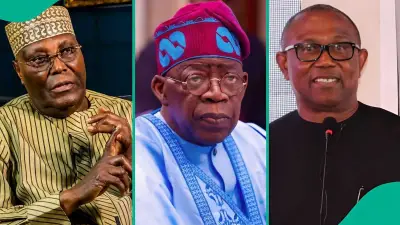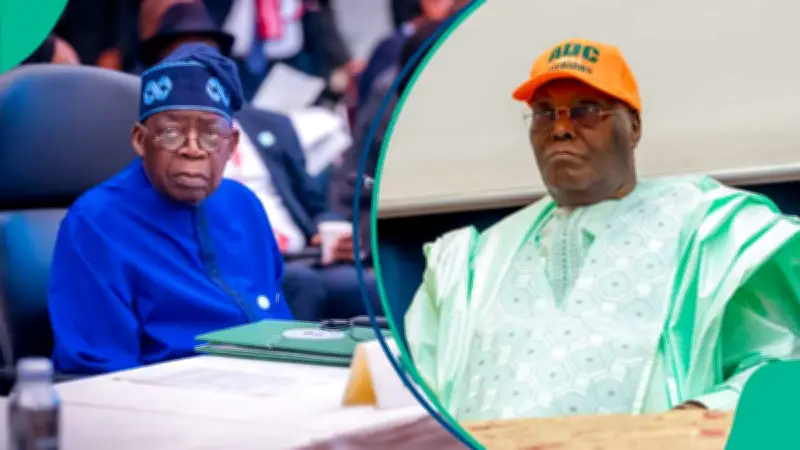
More than $10.2 million spent by the camps of President Bola Ahmed Tinubu and African Democratic Congress (ADC) presidential candidate Atiku Abubakar on lobbying activities in the United States could have funded tens of thousands of small businesses in Nigeria, according to an analysis of publicly available filings.
US Lobbying Contracts and Their Costs
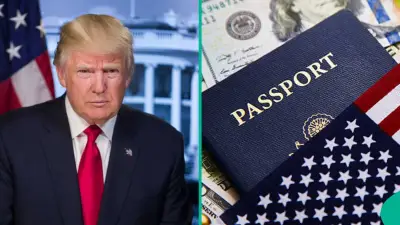
Documents filed under the United States Foreign Agents Registration Act (FARA) showed that the federal government of Nigeria engaged Washington-based DCI Group from December 2025 on a monthly retainer of $750,000. The initial six-month contract, worth $4.5 million, included an automatic renewal clause that could push the total to $9 million. The government paid the first $4.5 million upfront, according to Vanguard on Sunday, September 13, 2026.
The stated purpose was to help Nigeria communicate its actions to US policymakers, particularly around the protection of Christian communities and support for counter-terrorism efforts.

Atiku, separately, engaged Von Batten-Montague-York, L.C. earlier this year under a $1.2 million, 12-month agreement. Filings with the US Department of Justice said the firm would strengthen his standing in US policy circles, facilitate engagement with members of Congress and executive-branch officials, and provide strategic advice on policy positioning. In July, reports said the firm began circulating more than 60 pages of historical US Department of Justice records related to a 1993 alleged drug offence asset-forfeiture case linked to Tinubu among members of the Trump administration and senior congressional staff.
Opportunity Cost: What $14.28bn Could Achieve
At an exchange rate of N1,400 to the dollar, the combined $10.2 million translates to roughly N14.28 billion. If shared in N250,000 packages, the sum could theoretically reach 56,000 micro-enterprises. At N500,000 per beneficiary, the figure drops to 28,000, and at N1 million, about 14,000 businesses.
The calculation extends to education. At Lagos State University, where regular students pay N90,000 in annual tuition, N14 billion could cover fees for over 155,000 students. The same amount could fund the N20,000 monthly upkeep allowance that the Nigerian Education Loan Fund pays to as many as 700,000 beneficiaries.
The World Bank noted in December 2025 that Nigerian micro, small and medium enterprises account for nearly half of GDP and a large share of jobs, yet fewer than one in 20 have access to bank credit. It subsequently approved a $500 million financing package for the sector.
Experts and Accountability Group Question Spending
An economic expert, who asked not to be named, described the lobbying expenditure as a waste of resources given the scale of domestic need, and warned that taking political disputes abroad could carry reputational consequences for Nigeria.
Okechukwu Nwanguma, Executive Director of the Rule of Law and Accountability Advocacy Centre (RULAAC), said the core issue is opportunity cost. "In a country where millions are struggling with unemployment, inadequate healthcare, deteriorating schools, insecurity and collapsing infrastructure, every billion naira of public money spent on lobbying abroad must be justified against what that money could have achieved at home," he said.
Nwanguma drew a distinction between Atiku's private spending and government expenditure, arguing that where taxpayers' money is involved, full disclosure of who was paid, how much, and what results were expected is non-negotiable. "You cannot repeatedly tell Nigerians that there is no money while billions are available for expenditures whose public value has not been convincingly demonstrated," he added.
Bismarck Rewane, Managing Director of Financial Derivatives Company, said in June 2026 that successful reforms should attract investment, increase productivity, create jobs and improve living standards, and that small businesses are particularly hurt by unreliable electricity and high operating costs, suggesting that cash alone, without supporting infrastructure, may not be enough to maximise impact.
Diaspora Group Condemns Atiku's Campaign
Earlier, Legit.ng reported that a Nigerian diaspora group based in the United States condemned Atiku over what it called a coordinated Washington lobbying effort aimed at discrediting President Tinubu before the 2027 elections.

The Nigerians in Diaspora Monitoring Group (NDMG) USA Chapter accused Atiku and his associates of turning a domestic political rivalry into an international embarrassment for Nigeria.