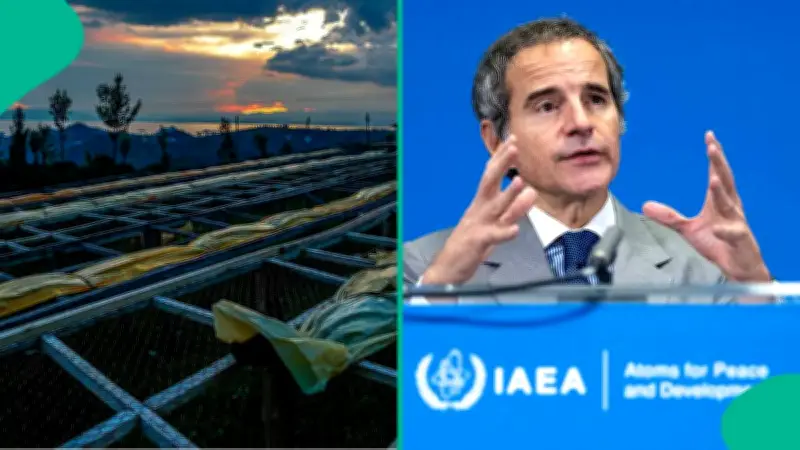
The head of the International Atomic Energy Agency (IAEA), Rafael Grossi, said on Friday that Iran's pledge not to build nuclear weapons must be backed by "very strong" verification measures. His comments come as the United States and Iran negotiate a permanent settlement to end the Middle East war, which began in late February with a US-Israeli campaign of strikes.
Grossi Calls for Robust Verification
Grossi explained: "The government of Iran has declared quite clearly that this is not their intention. But of course intentions are not enough. We have to have a very strong verification system in place… as soon as is practicable." He added that the IAEA had so far "barely initiated" talks with Iran following the preliminary deal signed last week between Washington and Tehran.
Iran's Enriched Uranium Stockpile
The agreement requires Iran's stockpile of enriched uranium to be "downblended" under UN supervision. Before the war, the IAEA estimated Iran had 440 kilograms of uranium enriched to 60 percent. Uranium enriched to 90 percent can be used to make a nuclear bomb. Grossi noted that alternatives such as shipping the uranium out of Iran could also be considered, though this would be "more complicated".
Contradicting Statements on Inspections
Iran's nuclear programme has long been a source of tension with Western powers. While Iran insists its programme is for civilian use, the US and allies suspect otherwise. US President Donald Trump said on Tuesday that Tehran had "fully and completely agreed" to allow UN inspectors back into the country. Grossi echoed this optimism on Wednesday, saying inspections were "going to happen". However, Iranian officials stated this week that they had no intention of admitting the watchdog.
Strait of Hormuz Dispute
Beyond nuclear issues, the Strait of Hormuz remains a major sticking point in negotiations. Iran closed the waterway during the war, disrupting global energy shipments. On Wednesday, a cargo ship was struck by an unknown projectile in the strait, forcing the UN to suspend evacuation efforts for stranded mariners. The UK Maritime Trade Operations (UKMTO) reported damage to the vessel but no casualties. Iran has also proposed introducing fees for crossing the strait, a move strongly opposed by Washington and Gulf nations. US Secretary of State Marco Rubio warned that such charges would lead to "total chaos", stressing that America seeks a deal but "not at any price".
Ordinary Iranians Express Frustration
Despite diplomatic progress, ordinary Iranians say daily life has not improved. Amir, a 28-year-old government worker, told AFP: "Overall, nothing has improved. Life has simply become more difficult." Mehdi, 35, a content creator, added: "Until such changes are felt in people's everyday lives, it is only natural that hope will remain accompanied by doubt, and that anticipation will give way to exhaustion and anxiety."
António Guterres Speaks on US-Iran Peace Deal
Legit.ng earlier reported that António Guterres, Secretary-General of the United Nations, announced on X that the United States and Iran had reached a landmark peace agreement. The deal provides for an immediate and permanent ceasefire, marking a significant turning point in efforts to end hostilities.