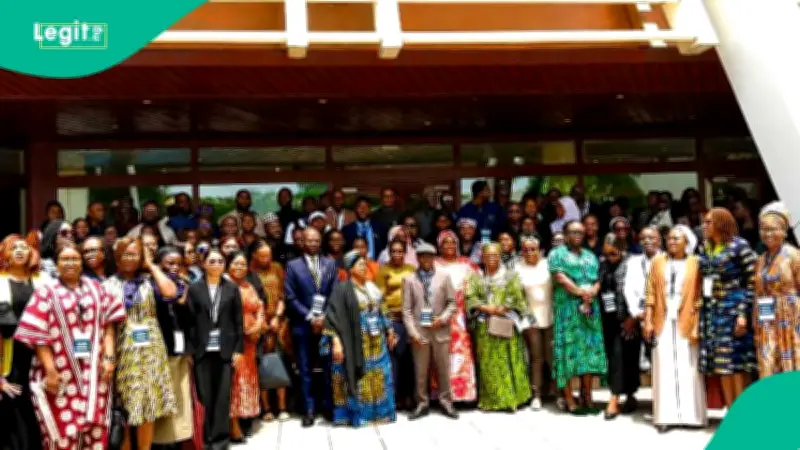
Nigeria's progress in reducing HIV infections and expanding healthcare access faces a new threat from gender-based violence (GBV) and intimate partner violence (IPV), government officials, development partners, and health experts warned on Thursday. The warning came during the Global Fund Grant Cycle 8 (GC8) National Consultative Workshop on Gender Equality, Gender-Based Violence and Intimate Partner Violence Programming in Nigeria, organized by the United Nations Development Programme (UNDP) under the Joint United Nations Team on HIV/AIDS, with support from the Global Fund and other partners.
Violence, stigma, and discrimination hinder access to HIV services
Participants noted that violence, stigma, and discrimination continue to prevent many women, girls, and vulnerable groups from accessing HIV prevention, testing, and treatment services, despite gains recorded in Nigeria's HIV response. Speaking at the workshop, Director of Public Prosecutions of the Federation, Oyedepo Iseoluwa Rotimi (SAN), emphasized that Nigeria's public health challenges cannot be separated from issues of justice, protection, and human rights. Representing the Attorney-General of the Federation and Minister of Justice, Rotimi said key populations often face stigma, fear, and institutional barriers that discourage them from seeking healthcare.
While acknowledging that Nigeria has recorded a decline in overall HIV prevalence, Rotimi noted that new infections remain disproportionately high among vulnerable populations. He also highlighted the challenges facing inmates in correctional facilities and survivors of human trafficking, arguing that limited access to healthcare and support services heightens their exposure to HIV, tuberculosis, and other health risks. He called for stronger collaboration between health and justice institutions, better referral systems for survivors of violence, expanded healthcare services in custodial centres, and greater investment in programmes addressing the underlying causes of vulnerability.
UNDP calls for stronger integration of gender interventions
UNDP Gender Lead, Onyinye Belinda Ndubuisi, said intimate partner violence continues to affect women's ability to seek medical care, disclose their HIV status, and access support services. According to her, the consultation brought together government agencies, civil society groups, development partners, and human rights advocates to identify gaps in existing interventions and develop practical solutions. Ndubuisi stressed that stakeholders want gender-focused interventions to be fully integrated into Nigeria's Global Fund GC8 proposal rather than treated as secondary issues. She emphasized the need for investments that go beyond awareness campaigns to provide direct support for survivors and address the social and economic conditions that perpetuate violence.
UNAIDS says laws alone are not enough
Country Director of the Joint United Nations Programme on HIV/AIDS (UNAIDS) in Nigeria, Krittayawan Boonto, noted that Nigeria has enacted laws to protect women and children from violence, but implementation remains a major challenge. She pointed out that many survivors still face difficulties reporting abuse and accessing support services. Boonto urged policymakers to ensure that GBV and IPV interventions are clearly reflected in funding priorities, with measurable targets and accountability mechanisms. She added that the Global Fund's eighth grant cycle presents an opportunity to secure long-term investments capable of improving outcomes for women, girls, and other vulnerable groups.
Violence remains a barrier to HIV services
Head of HIV at the Global Fund, Dr. Izukanji Sikazwe, said ending violence and discrimination is essential to ending the HIV epidemic. According to her, fear of abuse, social exclusion, and other forms of violence continue to prevent many people from accessing HIV prevention, testing, and treatment services. Sikazwe said the Global Fund is working with governments and communities to identify interventions that can reduce vulnerability while improving access to HIV, tuberculosis, and malaria services. She also expressed concern over reports showing that many incidents of violence occur within families and trusted environments, making prevention and response efforts more complex and urgent.
Recommendations to shape future funding
Participants agreed that strengthening protection systems, improving access to justice, and expanding survivor-centred services will be key to achieving both public health and gender equality objectives. Recommendations from the consultation are expected to inform Nigeria's Global Fund Grant Cycle 8 funding request and guide future investments aimed at preventing and responding to gender-based and intimate partner violence.