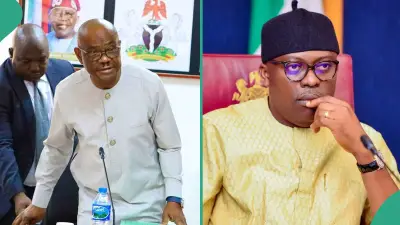
Osun State will hold its governorship election on Saturday, August 15, 2026, a contest widely regarded as one of the most tense in Nigeria in recent years. The Independent National Electoral Commission (INEC) has confirmed the date, and the race features a strong political battle between incumbent Governor Ademola Adeleke and the All Progressives Congress (APC). The outcome is expected to shape the balance of political influence in the state.
Beyond the election, Osun carries deep cultural and spiritual significance rooted in its famous river and Yoruba heritage. From its UNESCO-listed sacred grove to its identity as the ancestral home of the Yoruba race, the state holds a unique place in Nigerian history. Here are 15 interesting facts about Osun State as voters prepare to choose their next governor.
Creation and Geography
Osun State was created on August 27, 1991, from the old Oyo State. Its capital is Osogbo, which also serves as a major commercial and cultural centre. The state is bordered by Ekiti and Ondo states to the east, Kwara to the north, Ogun to the south, and Oyo to the west.
The name Osun comes from the River Osun, which flows through the state and remains important to its cultural and spiritual identity. The river is associated with Osun, one of the revered traditional deities in Yoruba culture. It also supports agriculture and attracts visitors interested in the state's cultural heritage.
Cultural and Historical Landmarks
One of Osun's most famous attractions is the Osun-Osogbo Sacred Grove on the outskirts of Osogbo. UNESCO listed the grove as a World Heritage Site in 2005, describing it as one of the last surviving remnants of primary high forest in southern Nigeria and a major centre of Yoruba religious and cultural heritage. The grove contains shrines, sculptures, and artworks linked to Osun and other Yoruba deities, while its annual festival attracts visitors and devotees from Nigeria and the wider African diaspora.
Osun is also home to Ile-Ife, widely regarded as a major spiritual and historical centre of the Yoruba people. Yoruba traditions identify Ile-Ife with the origins of Yoruba civilisation, and the ancient city remains one of the state's most important cultural destinations. Beyond these, the state offers other notable destinations, including Erin-Ijesha Waterfall, also known as Olumirin, a popular natural attraction surrounded by forest and cascading water.
Economy and Society
Osun has a strong agrarian economy, with farming forming an important part of livelihoods across the state. The state has extensive cultivated farmland and a large farming population, while its river systems also provide opportunities for irrigation and agricultural production.
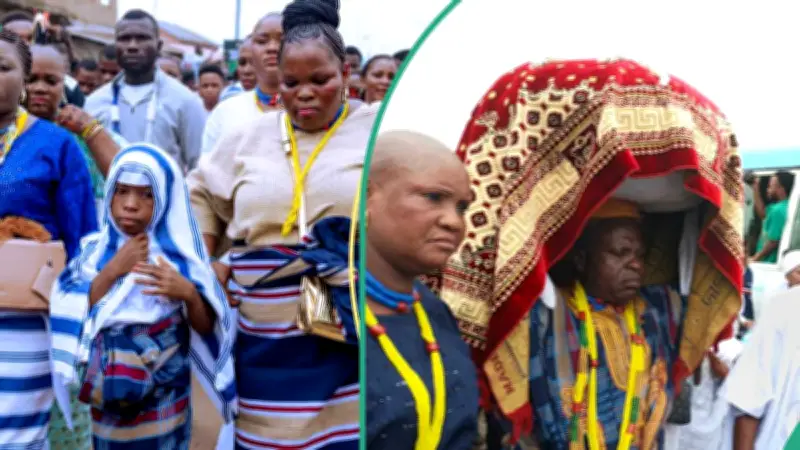
Osun carries the Yoruba nickname "Ipinle Omoluabi", commonly translated as the State of the Virtuous. This phrase reflects the Yoruba concept of Omoluabi, which emphasises good character, integrity, respect, and responsible conduct. Islam, Christianity, and indigenous Yoruba traditional religion are all practised across the state. Their coexistence is particularly visible during cultural events such as the Osun-Osogbo Festival, which draws both traditional worshippers and visitors who attend for its cultural significance. UNESCO describes the grove and its associated traditions as a living expression of Yoruba heritage.
Political History and the 2026 Election
Since its creation, Osun has been governed by a succession of military administrators and civilian governors. Notable civilian governors include Isiaka Adeleke, Bisi Akande, Olagunsoye Oyinlola, Rauf Aregbesola, Adegboyega Oyetola, and the incumbent, Ademola Adeleke. Adeleke returned to power in 2022 after defeating Oyetola and is now seeking another term.
The state has repeatedly attracted national attention during elections because of its competitive politics and closely fought contests. The 2022 governorship election was particularly notable, with Adeleke defeating Oyetola after a tightly contested campaign. The 2026 election has again drawn national interest as political parties and their allies mobilise across the state.
Osun is frequently described as one of the central homes of Yoruba history and cultural expression. Its ancient towns, traditional institutions, festivals, religious sites, and historical settlements have helped preserve aspects of Yoruba heritage both within Nigeria and among communities in the diaspora. The state covers about 14,875 square kilometres, making it one of Nigeria's smaller states by landmass, yet it contains a large number of towns and communities spread across its 30 local government areas.
Osogbo serves as the political and administrative headquarters of Osun but is also an important centre for art, culture, and tourism. The city is home to the Osun-Osogbo Sacred Grove and hosts the annual Osun-Osogbo Festival, making it a major cultural destination. The festival attracts visitors from Nigeria and other parts of the world, particularly countries and communities with historic Yoruba connections. Its international significance has helped reinforce the state's position as an important centre for African cultural heritage, with UNESCO recognising the grove as a site of outstanding cultural value.
As voters prepare for Saturday's election, the next administration will inherit a state whose political importance sits alongside a distinctive cultural and historical heritage. The August 15 poll will therefore determine more than who occupies the Osun Government House. It will also mark the next chapter in the political leadership of a state known for its Yoruba heritage, historic cities, religious traditions, agriculture, and cultural landmarks. INEC has officially scheduled the governorship election for August 15, 2026.
Key Contenders in the 2026 Election
Osun State is heading into its most watched political contest in years, with 14 candidates on the ballot for the governorship election set for Saturday, August 15, 2026. While the field is broad, three candidates have emerged as the most prominent contenders: incumbent Governor Ademola Adeleke of the Accord Party, Bola Oyebamiji of the All Progressives Congress (APC), and Najeem Salam of the African Democratic Congress (ADC).