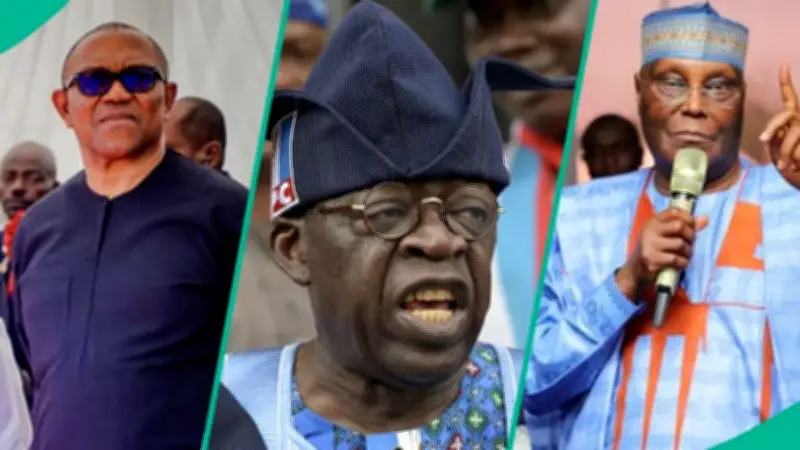
Political campaigns for Nigeria's 2027 presidential and National Assembly elections formally kicked off on Wednesday, August 19, 2026, setting the stage for what is expected to be one of the country's most competitive electoral contests in recent memory. The day before campaigns began, the National Peace Committee brought together political parties with presidential candidates to sign a Peace Accord, committing them to violence-free campaigns.
Key States to Watch in 2027
Several states are expected to play an outsized role in determining the final outcome of the presidential race, owing to their voter populations, political history, and the strength of party structures within them. Lagos State, home to over seven million registered voters as of June 2025, tops the list of closely watched territories. Despite being President Bola Tinubu's political base, he narrowly lost the state to Peter Obi of the Labour Party in 2023, with Obi polling 582,454 votes against Tinubu's 572,606. The ruling All Progressives Congress (APC) has already begun grassroots mobilisation in Lagos, while the African Democratic Congress (ADC) has accused the party of disrupting its sensitisation rallies there.
Kano State holds the largest number of registered voters in Nigeria, exceeding eight million. In 2023, Tinubu lost Kano heavily to Rabiu Kwankwaso of the New Nigeria Peoples Party, who won with 997,279 votes. For 2027, Kwankwaso has teamed up with Peter Obi under the Nigeria Democratic Congress (NDC), while Kano Governor Abba Yusuf has since defected to the APC. Both alliances are expected to clash for the state's substantial voter base.
Rivers, Kaduna, and Katsina Dynamics
Rivers State, one of Nigeria's wealthiest due to oil revenues, was won by Tinubu in 2023 despite being under PDP control at the time. FCT Minister Nyesom Wike, still a PDP member, continues to back Tinubu's re-election bid and has built what he calls a "Rainbow Coalition" of cross-party supporters in the state. Kaduna and Katsina, widely referred to as the "KK states", both went to Atiku Abubakar of the PDP in 2023. Atiku is now running under the ADC ahead of 2027, and persistent insecurity in the two states could affect the APC's standing with voters. Analysts also believe Kwankwaso's growing influence in the North-West could open a door for the NDC in the region.
Campaign Rules and Spending Limits
The Independent National Electoral Commission (INEC) has reminded all parties of the rules governing the campaign period. Campaigns must end 24 hours before election day, and parties are barred from using abusive language or conducting activities inside places of worship or public offices. Under a 2026 amendment to the Electoral Act, presidential candidates are now capped at ₦10 billion in campaign spending, while governorship candidates face a ₦3 billion limit.
INEC Chairman Joash Amupitan, speaking at the Peace Accord signing on Tuesday, August 18, 2026, said the commission has no preferred outcome. "INEC has no interest in who wins or loses any election. The commission has no candidate, and it does not favour any political platform," he said. Adding: "Let the 2027 election campaign be a marketplace of ideas, not a theatre of war. Nigerians do not want insults; they want solutions."