El-Rufai Unveils ADC's 2027 Presidential Selection Strategy
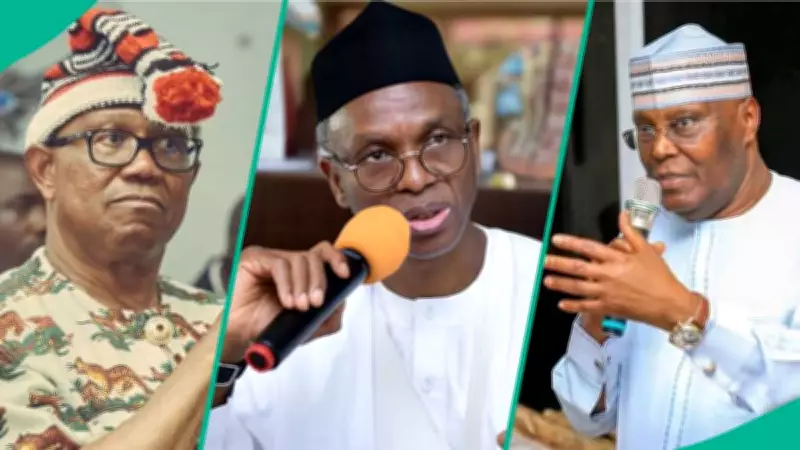
Former Kaduna state governor and prominent African Democratic Congress (ADC) chieftain, Malam Nasir El-Rufai, has made significant revelations about the party's approach to selecting its presidential candidate for the 2027 general elections. In a comprehensive interview monitored by Daily Trust on Trust TV's 30 Minutes program, El-Rufai outlined the opposition party's strategic positioning as it seeks to present itself as a credible alternative to the ruling All Progressives Congress (APC).
Rejection of Zoning in Favor of Open Competition
El-Rufai emphatically stated that the ADC will not adopt zoning arrangements for its presidential ticket, opting instead for open and competitive primaries that allow all aspirants equal opportunity. "We will not have zoning. We will not have any of that. Everyone will be given the opportunity to contest, and whoever wins will be supported by all," declared the former governor during the televised interview.
This position represents a significant departure from traditional Nigerian political practices where parties often rotate presidential candidates among geographical zones. El-Rufai's announcement signals the ADC's commitment to merit-based selection processes that prioritize competence over regional considerations.
Grassroots Mobilization and Strategic Organization
Addressing concerns about the ADC's perceived low public visibility despite growing dissatisfaction with the current administration, El-Rufai explained that the party has been conducting extensive background work at grassroots levels. "A lot of background work is being done. A lot of outreach at the grassroots is going on, even if it is not visible in the media," he revealed.
The former governor detailed the party's organizational strategy, which includes:
- Comprehensive membership registration drives
- Aggressive mobilization at polling unit and ward levels
- Planned congresses and national convention
- Civic engagement focused on questioning governance rather than promoting violence
El-Rufai emphasized that the ADC represents a coalition of individuals rather than political parties, requiring more time to establish robust internal structures compared to the APC's formation in 2014.
Ethical Governance Manifesto and Policy Direction
The ADC chieftain announced that the party will soon unveil a comprehensive manifesto centered on ethical leadership, performance accountability, and effective service delivery. "We are going to offer Nigerians an ethical government and a manifesto that works for the people," El-Rufai stated, positioning the ADC as a credible alternative to President Bola Ahmed Tinubu's administration.
In a sharp critique of the current government, El-Rufai accused the Tinubu administration of cronyism, tribalism, and poor governance performance. He clarified that his support for Tinubu during the 2023 elections was based on party loyalty and the principle of power rotation to southern Nigeria, rather than personal friendship or ideological alignment.
Advocacy for Electoral Reforms
On electoral matters, El-Rufai expressed strong support for mandatory real-time electronic transmission of election results from polling units, warning that removing this provision would facilitate manipulation at collation centers. "That provision is the only way to stop the manipulation that goes on in collation centres," he asserted.
The former governor revealed that he would have joined ADC leaders, including Peter Obi, in protests at the National Assembly if he had been in the country, demonstrating his commitment to electoral integrity reforms. He expressed optimism that the National Assembly's conference committee would recommend restoring electronic transmission provisions, believing lawmakers would ultimately act in voters' interests.
Security Concerns and Democratic Optimism
El-Rufai raised fresh concerns about Nigeria's security architecture, warning about a shift from national security to what he described as "regime security." Despite these challenges, he maintained optimism about Nigeria's democratic future, emphasizing that political power ultimately resides with the electorate.
The ADC's strategic positioning under El-Rufai's guidance represents a significant development in Nigeria's political landscape as opposition parties prepare for the 2027 electoral cycle. The emphasis on open primaries, ethical governance, and electoral reforms suggests the party aims to distinguish itself through transparent processes and policy-focused campaigning.