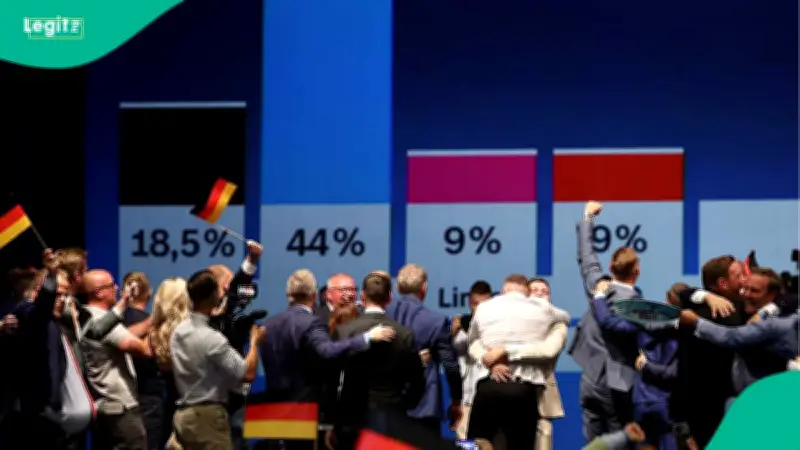
Germany's far-right Alternative for Germany (AfD) party is projected to win 44% of the vote in the eastern state of Saxony-Anhalt, according to initial projections, putting it far ahead of the conservative CDU, which stands at 17.8%. This result could hand the AfD control of a state government for the first time since World War Two, a historic shift in the country's political landscape.
Historic Victory Declared by AfD Leader
Ulrich Siegmund, the AfD's leader in Saxony-Anhalt, told cheering supporters at the party's election night event in Magdeburg that the result was "sensational" and that he intended to move towards forming a government without delay. "We have made history in this state," Siegmund said, as crowds burst into a rendition of the German national anthem.
According to BBC, no far-right party has controlled a German state government since World War Two. Winning in Saxony-Anhalt would give the AfD authority over state-level policing, education, and culture in a region with a population of about 2.1 million.
Path to Majority Depends on Smaller Parties
Despite the scale of the projected win, it remains unclear whether the AfD will secure enough seats to govern outright. The party appears headed for around 39 seats in the 83-seat state parliament, based on current projections. The final outcome may depend on whether the left-wing populist party BSW clears the required 5% threshold to enter parliament. If BSW falls short, the AfD's path to a working majority improves significantly.
The AfD in Saxony-Anhalt has been classified by domestic intelligence services as "right-wing extremist," a label Siegmund rejects. The party is openly pro-Russia and anti-migration, and among its national policy positions is a controversial "remigration" plan that critics interpret as a call for mass deportations, though the party describes it as targeting criminals and those in the country without legal status. At state level, the AfD would have no power to implement such national policies.
Reaction Across Germany
CDU leader in the state Sven Schulze conceded defeat, acknowledging it had been "an extremely tough and intensive election campaign." Germany's centre-left SPD described the outcome as "truly dramatic." National SPD leader Lars Klingbeil called the result a "signal to Berlin" and said his party would not ignore it.
Charlotte Knobloch, the 93-year-old Holocaust survivor who leads the Jewish community in Munich and Bavaria, said the news frightened her. "On days like this I find it hard to recognise my homeland any more," she said, urging mainstream parties not to allow "this decline" to continue unchecked.
Turnout in Saxony-Anhalt was estimated at 78%. Other major parties continue to maintain a so-called Brandmauer, or firewall, refusing coalition talks with the AfD, though BSW has indicated it may cooperate with the party on certain issues if it enters parliament.
Context and Previous Elections
The AfD previously won the 2024 state election in neighbouring Thuringia but fell short of the seats needed to govern. This latest result in Saxony-Anhalt marks a significant escalation in the party's electoral fortunes, though the final composition of the state government remains uncertain pending the official count and the performance of smaller parties.