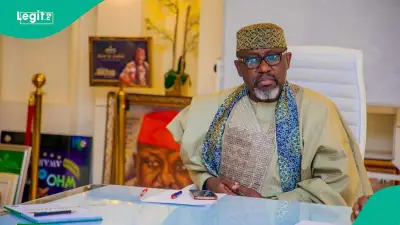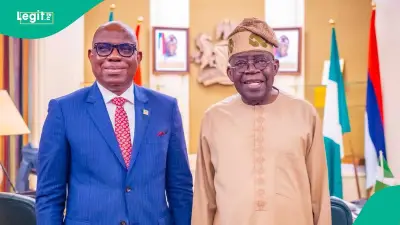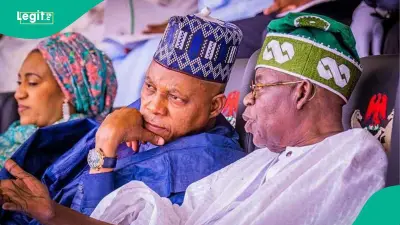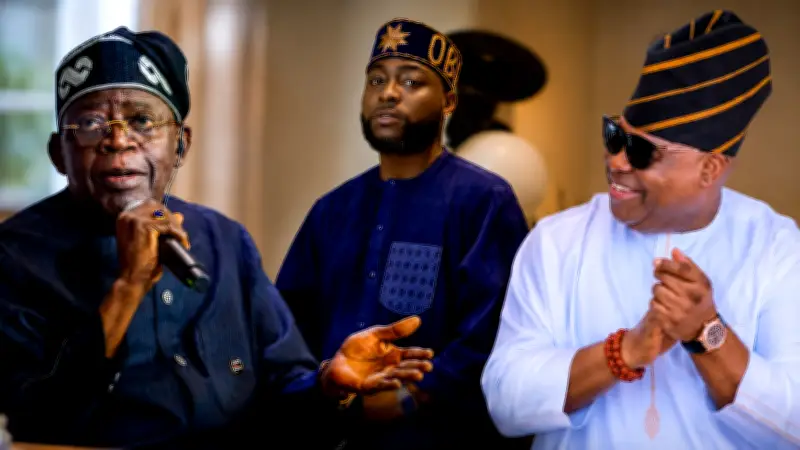
The National Youth Leader of the All Progressives Congress (APC), Dayo Israel, has identified President Bola Tinubu, Governor Ademola Adeleke, and Afrobeats singer David Adeleke, popularly known as Davido, as the three most influential personalities that shaped the outcome of Saturday's Osun State governorship election. Governor Adeleke, running under the Accord Party, secured a second term with 511,067 votes, defeating his main challenger, APC's Bola Oyebamiji, who polled 444,815 votes, and 13 other candidates.
Israel's Post-Election Analysis
In his post-mortem on the election result, Mr Israel blamed the APC's defeat partly on weak mobilisation structures and the party's failure to effectively engage young voters. Writing on X on Sunday, he stated, "There are bitter truths our party must confront before the 2027 general election," and maintained that "three personalities emerged as the defining figures of this election." He named President Tinubu, Governor Adeleke, and Davido, who is the governor's nephew, as the defining personalities.
Tinubu's Restraint Praised
Mr Israel commended President Tinubu for what he described as restraint during the election, saying the president did not deploy the powers of his office to influence the outcome in favour of the APC. He noted that President Tinubu had the power to deploy federal institutions and security agencies in ways that could have affected the contest but chose not to do so. "President Tinubu may have lost Osun for the APC, but he won something larger for Nigeria: another opportunity to demonstrate that the vote of the Nigerian people must matter," he said.
Mr Israel further explained that the president's attitude was consistent with his conduct during previous off-cycle elections won by opposition parties since he became president. "This restraint is consistent with the President's conduct in other off cycle elections under his administration, including Anambra and Bayelsa, where opposition parties retained power. President Tinubu has demonstrated that his commitment to democracy is not limited to elections that favour the APC. That is statesmanship, and it should be acknowledged even when the result is painful for our party," he added.
Adeleke's Grassroots Connection
Mr Israel also identified Governor Adeleke's grassroots connection as a key factor in retaining voter support. He argued that the governor's dancing and public persona, often dismissed by political opponents, helped him establish an emotional connection with ordinary voters. "Governor Adeleke's dancing was never a weakness. It was a political language," he said. "It humanised him, made him accessible, and created emotional proximity with ordinary voters."
According to Mr Israel, Adeleke's singing, dancing, accessibility, and public worship reinforced his connection with voters in a state where politics is strongly influenced by community, culture, and local identity. He cited former Osun governors Bisi Akande and Rauf Aregbesola as politicians who also understood the importance of cultural identification in building a political base. "Politics is not only policy. It is emotion, identity, presence and belonging," he stated. "Governor Adeleke stayed close to his grassroots while some opponents dismissed the very traits that strengthened his connection with the people."
Mr Israel noted that the APC should learn from the result and avoid confusing elite acceptance with grassroots support. "A candidate may dominate elite discourse and still fail to move a ward. Another may be mocked in elite spaces and still command overwhelming loyalty on the ground," he said. "Elections are not won by approval ratings in Abuja. They are won by understanding people as they are."
Davido's Youth Mobilisation
Mr Israel also highlighted Davido's influence in helping Governor Adeleke connect with younger voters, giving the campaign a strong cultural and digital appeal. According to Mr Israel, Davido played an active role in mobilising young people rather than merely serving as a celebrity presence. "Davido did not treat his role as symbolic. He was placed at the centre of youth mobilisation and used his influence, networks, music, digital reach and personal credibility to connect the campaign to a generation," he said. "He brought artistes, influencers and young voices into the process. Alongside emerging political and professional actors such as Pelumi Olajengbesi, he helped give the campaign a youthful, energetic and culturally resonant face."
In contrast, Mr Israel stated that the APC relied heavily on a structure dominated by governors, senators, and former office holders, failing to sufficiently deploy young people capable of mobilising their peers. "While the opposition deliberately activated its most recognisable young figures, our party largely relied on a structure dominated by governors, senators and former office holders," he noted. "These leaders are important, but we must ask a hard question: how many young Nigerians do they genuinely inspire, mobilise or emotionally connect with?"
Institutional Weaknesses
Mr Israel based his assessment partly on his experience during the 2022 Osun governorship election, when he travelled across the state and participated in reconciliation efforts. He recalled working with former party leaders, including Moshood Adeoti in Iwo, to bring divided members together. He stated that some of the same problems that affected the APC in 2022 resurfaced in the latest election. "We did not lose 2022 because there was no effort. We lost because division, weak reconciliation and fragmented mobilisation overwhelmed that effort," he said.
He also criticised the APC's failure to hold formal meetings of its National Working Committee to review the campaign, assess performance, and adjust strategy. According to him, the absence of structured oversight since the inauguration of the campaign council was a strategic weakness. He stressed that the party's youth and women wings should be treated as political structures with defined constituencies, not just for filling stadiums or providing decoration at rallies. "The National Youth Wing should not be activated only to fill stadiums or sidelined for support groups. A Women's Wing should not be reduced to decoration at rallies," he said. "These are political structures with constituencies that must be organised, engaged and deployed as part of a deliberate strategy."
Election Outcome and Next Steps
Mr Israel congratulated Governor Adeleke and the people of Osun State, while also commending Mr Oyebamiji, APC members, agents, and volunteers. He stressed that the result should prompt the APC to undertake an honest assessment of its mobilisation strategy and internal structures ahead of the 2027 general elections. "The Osun governorship election has been won and lost," he stated. "That margin is substantial enough to demand honest reflection, not excuses, blame shifting or the familiar ritual of assembling another committee whose report may never change how we campaign."
Although 15 candidates contested the election, it was essentially a two-horse race between Governor Adeleke and APC's Oyebamiji, as the 13 other candidates took an insignificant share of the votes. Adeleke's victory marked his second consecutive triumph over the APC in the state, after his failed attempt in 2018. As the candidate of the Peoples Democratic Party (PDP), he narrowly lost the 2018 governorship election to Adegboyega Oyetola, but in a comeback in 2022, also as PDP candidate, he defeated Oyetola to win his first term. The governor, who defected from the crisis-plagued PDP last year to join the Accord Party, won Saturday's election to clinch a second term in office.