Atiku Abubakar Announces 2027 Presidential Ambition as Potential Final Bid
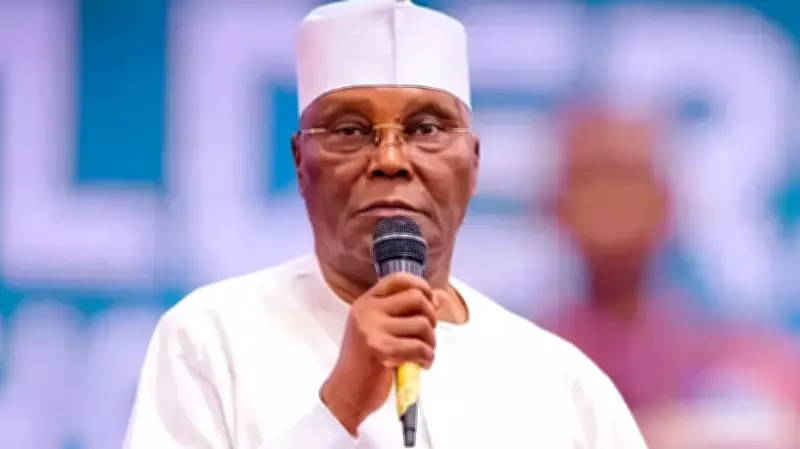
Former Vice President Atiku Abubakar has publicly declared that his anticipated participation in Nigeria's 2027 presidential election could mark his ultimate attempt to secure the nation's highest office. In a candid interview on Arise TV, Atiku emphasized the escalating political stakes and his desire to consolidate decades of experience into one final push for leadership.
Experience as a Defining Factor
Atiku, a veteran politician with multiple presidential campaigns under his belt, argued that his unique blend of historical perspective and practical governance knowledge positions him as an ideal candidate for Nigeria's critical juncture. "I represent both the past and the future," he stated, highlighting that while the country has seen leadership across generations, expectations from younger politicians have often fallen short.
He pointed to his tenure under former President Olusegun Obasanjo as foundational, asserting that true governance expertise can only be acquired through direct involvement at the highest levels of power. Addressing criticisms that he symbolizes Nigeria's entrenched political establishment, Atiku countered by noting leadership challenges in several states governed by younger figures, underscoring the necessity for seasoned experience at the federal level.
Critique of Current Administration and Past Governance
Atiku did not hold back in his assessment of President Bola Tinubu's administration, describing it as profoundly disappointing. "Tinubu has been a very bad president, to be honest with you. I didn't expect that from him... the way he governs the country, whether economically or otherwise, it's a disappointment," he remarked bluntly.
Reflecting on previous administrations, he acknowledged the late President Umaru Musa Yar'Adua's transition and the leadership of Goodluck Jonathan, whom he called "a decent man." However, Atiku attributed governance shortcomings during Jonathan's era to inexperience in managing national crises, reinforcing his argument for experienced leadership.
Formation of a Broad Opposition Coalition
Atiku confirmed his pivotal role in initiating a wide-ranging opposition coalition, which he said includes members from multiple political parties. He argued that such alliances are essential to bolster electoral competitiveness and strengthen Nigeria's democratic framework. The coalition, according to him, is driven by a shared vision and a collective determination to challenge the Tinubu administration, particularly on economic management.
He outlined the coalition's priorities, which include:
- Reinforcing the separation of powers
- Safeguarding constitutional governance
- Ensuring robust democratic institutions
Internal Dynamics and Candidate Selection
Addressing potential internal rivalries among prominent figures within the alliance, Atiku expressed confidence in the maturity of its members and the feasibility of reaching a consensus on a presidential candidate. He affirmed his willingness to support any candidate who emerges through either consensus or a democratic process, including former allies. "I will step aside for any candidate who emerges," he stated, demonstrating a commitment to unity over personal ambition.
Atiku concluded by emphasizing that the coalition is deliberately designed with a generational mix, aiming to ensure leadership continuity and create a pathway for future political succession in Nigeria. This strategic approach, he believes, will address both immediate governance issues and long-term stability.