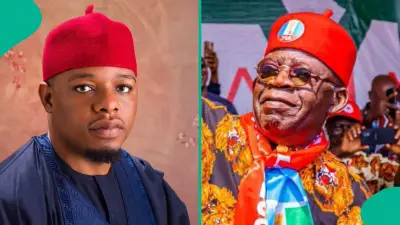
In 1979, Dr Kingsley Ozumba Mbadiwe, proprietor of the Medical Centre and a close friend of Chief Ojike, honored me by appointing me, along with journalist James Odafe Othinwa, as co-director of the centre.
The word 'boycott' was effectively used for the first time in Nigeria's 1964 general election. Since then, debates have persisted over whether boycotts have any real effect. In 1964, the NPC returned 60 of its candidates unopposed, a move challenged by the NCNC.
Formation of Alliances
On August 20, 1964, the Nigerian National Alliance (NNA) was formed, comprising the NPC (leader), the NNDP (controlling Western Nigeria's government), the Mid-West Democratic Front, and other elements including Dr Chike Obi's dynamic party. On June 3, 1964, the United Progressive Grand Alliance (UPGA) was formed, consisting of the NCNC and the Action Group. Political enmity became apparent before and after the election.
Uncontested Seats Controversy
UPGA opposed the return of 60 candidates unopposed, including Prime Minister Sir Abubakar Tafawa Balewa, Minister for Home Affairs Alhaji Shehu Shagari (Sokoto West), Minister of Economic Development Alhaji Waziri Ibrahim (Konduga-Mafa), and former Ambassador to Ivory Coast Alhaji Abdul Razak (Ilorin Town). Eastern Region Attorney-General Mr Christopher Mojekwu, on a fact-finding tour of Northern Nigeria, stated that 60 UPGA candidates in the North had been unable to file nomination papers. It later emerged that more NPC candidates were being returned unopposed as Northern Progressive Front candidates withdrew in seats like Yerwa (Minister of Commerce Alhaji Zanna Buka Dipcharima), Gombe Central (Speaker Alhaji Jalo Waziri), and Sumailia (Minister of Works Alhaji Inua Wada).
On December 21, 1964, the NCNC's Central Working Committee rejected the 61 unopposed candidates. Secretary F. S. McEwen declared, 'We do not regard these seats as won by the NPC,' adding that the party had decided on a 'course of action.' The Action Group protested against two NNDP unopposed candidates in Ife.
Political Tensions Escalate
Dr Okpara, NCNC leader and Eastern Premier, described election arrangements as a 'farce.' Sir Abubakar Tafawa Balewa called the NCNC a 'great liability to UPGA' and warned that if they lost, they would blame the AG. On December 22, Federal Electoral Commission Chairman Mr E. E. Esua admitted in an emergency broadcast that there had been cases where more than one candidate was validly nominated yet names were announced as returned unopposed. He appealed against unauthorized announcements.
Alhaji Dauda Adegbenro of UPGA led a delegation to President Nnamdi Azikiwe to postpone the election. The NPC warned UPGA not to drag the President into politics. The tug-of-war between NNA and UPGA fueled fears of a boycott. Two members of Esua's Commission, Prince Akenzua and Mr Anthony Aniagolu, resigned. Mr Anthony Nnaemezie Christopher Aniagolu (1922–2011) later became a Supreme Court Justice and chaired the 1988–1989 Constituent Assembly.
The Partial Election
On December 30, a 'partial' election took place with brisk voting in the North, moderate turnout in the West (where some polling booths were destroyed), very limited voting in Lagos (with booths destroyed and one man injured in a riot), and no voting in the East due to a complete UPGA boycott. In the evening, UPGA issued a statement rejecting any government formed on the basis of the elections, calling it 'compromising and evil,' and urged President Azikiwe to summon a conference of all political leaders to 'break up the Federation peacefully.' The NPC held a meeting at State House, Marina, Lagos, with President Azikiwe, aiming to preserve federal unity.
Presidential Intervention
On January 1, 1965, President Nnamdi Azikiwe, a non-executive president in the parliamentary system, announced that attempts were being made to compromise on forming a government. The broadcast text showed he had originally decided not to exercise his constitutional power to call on anyone to form a government and would rather resign, to 'arrest a situation which is rapidly deteriorating.' He stated: 'In my view, what will save our present political situation is to arrange for a free and fair election in the immediate future. All Nigerian patriots must hang their heads in shame today. The first national post-independence general election has been the signal for assaults on the Constitution and various acts of lawlessness hitherto unknown in the history of this country. As President of Nigeria, it is my view that the disruptive forces prevailing in the country constitute a situation which cannot be tolerated any longer. The all-embracing question is: do we wish to disintegrate as a united country, every region forming part of the Federation going its own separate way, or do we wish our country to be strong and united—a country that should command respect in the comity of nations? I should be falling in my duty as President of this great nation if I were to act literally on the results of this election. My honest opinion is that it would reopen old wounds, exacerbate feelings, prolong bitterness, and hasten the exit of unity and democracy from our beloved nation.'
Resolution and Aftermath
On January 2, 1965, the NCNC announced that all its successful candidates had resigned their seats. The NNA argued that elections already conducted were valid and that by-elections should only be held in the Eastern Region where no voting occurred. Sir Abubakar Tafawa Balewa said complaints should be taken to law courts and proposed a conference of all regional governments 'to avoid bloodshed.'
On January 4, 1965, President Azikiwe, after further consultations, stated the Constitution left him no alternative but to call on the outgoing Prime Minister to form a new 'broadly based national' government. He declared that the Prime Minister and he had resolved their differences, agreeing that election validity could only be questioned by due process; that elections should be held where none had taken place; that Western Nigeria results should be re-examined; and that a review of the Constitution and electoral machinery would occur.
Sir Abubakar confirmed he would form a broadly based government representing all shades of opinion, with plans to complete outstanding elections in the East, Mid-West, and Lagos, and to bring in new ministers.
On January 13, 1965, ministers in Sir Abubakar's new government were sworn in by the President. Chief Okotie-Eboh and Dr Mbadiwe, the two NCNC ministers, were absent. On January 14, Chief Okotie-Eboh was sworn in. Dr Mbadiwe said he boycotted the ceremony because he was waiting for his UPGA colleagues to join the government.
On January 18, 1965, the NCNC announced after a meeting in Enugu that they had 'rededicated themselves to the maintenance of democracy in Nigeria' and would give the new government 'a fair trial,' though Chief Theophilus Benson did not attend. The Action Group similarly decided not to defy Sir Abubakar further.
Reactions and New Cabinet
Chief Ladoke Akintola, Western Premier and NNDP leader, said no NNDP ministers were in the first list because his party had decided not to release names until the whole list was completed and adequate opportunity given to all patriotic elements. On January 6, Dr Okpara stated new elections would be held in the East as soon as possible and that UPGA would give 'careful consideration' to any invitation to join the federal government.
The following ministers were sworn in on January 7, 1965: Alhaji Sir Abubakar Tafawa Balewa (NNA) – Prime Minister and External Affairs; Alhaji Muhammadu Ribadu (NNA) – Defence; Chief Festus Okotie-Eboh (UPGA) – Finance; Alhaji Muhammadu Inuwa Wada (NNA) – Works and Surveys; Alhaji Zanna Bukar Dipcharima (NNA) – Commerce, Industries and Transport; Alhaji Shehu Shagari (NNA) – Internal Affairs and Communications; Alhaji Yusufu Maitama Sule (NNA) – Mines and Power; Alhaji Waziri Ibrahim (NNA) – Economic Development and Education; Alhaji Musa Yar'Adua (NNA) – Lagos Affairs; Dr Taslim Olawale Elias (formerly NCNC) – Attorney-General and Justice; Dr M.A. Majekodunmi (no party affiliation) – Health and Information; Chief J.C. Obande (NNA) – Establishments and Labour; and Dr K.O. Mbadiwe (UPGA) – Aviation. Others included Alhaji Nuhu Bamali, Alhaji Usman Maitambari, Alhaji Hashim Adaji, and Alhaji Ibrahim Tako – all Ministers of State.
Lessons for Today
The 1964 election boycott was averted due to Dr Nnamdi Azikiwe's personal intervention and because politicians recognized the futility of the boycott. My advice to opposition parties is not to boycott. Choosing to sit out is almost a losing proposition. Threaten but participate.
Concluded Teniola, a former Director in the Presidency, wrote from Lagos.