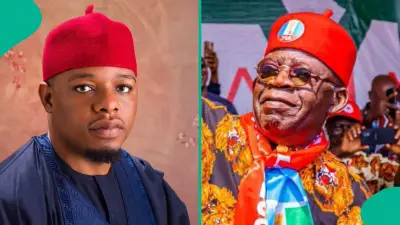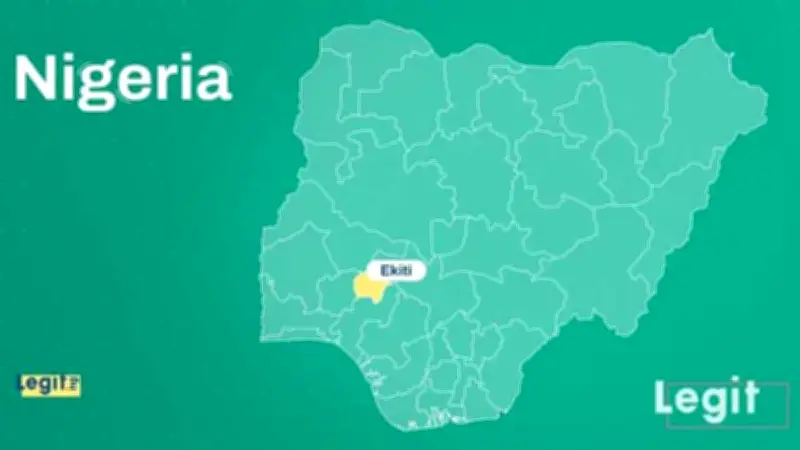
As political activities intensify ahead of Saturday's governorship election, attention has once again turned to Ekiti State. Despite being one of Nigeria's smallest states, Ekiti has built a strong reputation for educational excellence, political engagement, and producing influential national figures. Here are 15 interesting things to know about this culturally rich southwestern state.
1. One of Nigeria's Youngest States
Ekiti was created on 1 October 1996 during the administration of former military ruler Sani Abacha. It was carved out of the old Ondo State, with Ado-Ekiti designated as its capital.
2. Among the Smallest States by Land Area
Located in the South-west geopolitical zone, Ekiti covers about 5,888 square kilometres and shares borders with Kwara, Kogi, Ondo and Osun states.
3. Growing Population
The 2006 national census placed the state's population at more than 2.3 million people. Urban centres such as Ado-Ekiti have experienced significant growth since then.
4. Known as the Fountain of Knowledge
Ekiti earned this nickname because of its long-standing reputation for producing teachers, academics, judges, lawyers and other professionals.
5. Agriculture as Economic Backbone
Many residents depend on farming for their livelihood. Major crops include cocoa, cassava, yam, maize, rice, plantain and oil palm.
6. Current Governor: Biodun Oyebanji
Mr Oyebanji of the All Progressives Congress assumed office in October 2022. The APC also controls the state House of Assembly. He is seeking reelection on Saturday on the APC platform.
7. Fiercely Contested Elections
Since the return to democratic rule in 1999, political power has changed hands between major parties, making Ekiti one of Nigeria's most competitive political arenas.
8. Five Elected Governors
They are Adeniyi Adebayo, Ayo Fayose, Olusegun Oni, Kayode Fayemi and Biodun Oyebanji. Mr Oni's tenure ended after a court nullified his election in 2010.
9. Predominantly Yoruba Population
Most residents belong to the Ekiti subgroup of the Yoruba people. Yoruba is widely spoken across the state, alongside English.
10. 16 Local Government Areas
Ado-Ekiti, Efon, Ekiti East, Ekiti South-West, Ekiti West, Emure, Gbonyin, Ido/Osi, Ijero, Ikere, Ikole, Ilejemeje, Irepodun/Ifelodun, Ise/Orun, Moba and Oye.
11. Ado-Ekiti: Administrative and Commercial Centre
The capital hosts government institutions, courts, financial organisations and several higher educational institutions.
12. Rich in Mineral Resources
Granite, kaolin, quartz and feldspar are among the commercially viable minerals found across the state.
13. Ekiti State University
Established in 1982, it is one of Nigeria's oldest state-owned universities, producing graduates who have occupied prominent positions in different sectors.
14. Afe Babalola University
Founded in 2009, the university has gained national recognition for its investments in infrastructure, research and professional education.
15. Ikogosi Warm Springs
Located in Ekiti West Local Government Area, the site is famous for the meeting of warm and cold springs that flow side by side while maintaining different temperatures.
Notable Figures from Ekiti
The state has produced several distinguished Nigerians, including Afe Babalola, Wole Olanipekun, Femi Falana, Sam Aluko, Jacob Ade-Ajayi, Niyi Osundare, Opeyemi Bamidele, Dele Alake, Yinka Ayefele, Odunlade Adekola, Josy Ajiboye and late Olympic medallist Oluyemi Kayode.
Earlier, the Chairman of the Independent National Electoral Commission (INEC), Prof. Josh Amupitan, reassured residents that their votes will count in the upcoming governorship election scheduled for June 20, 2026. He gave the assurance during a readiness assessment visit to Ekiti State, where he formally presented the Register of Voters to political parties.