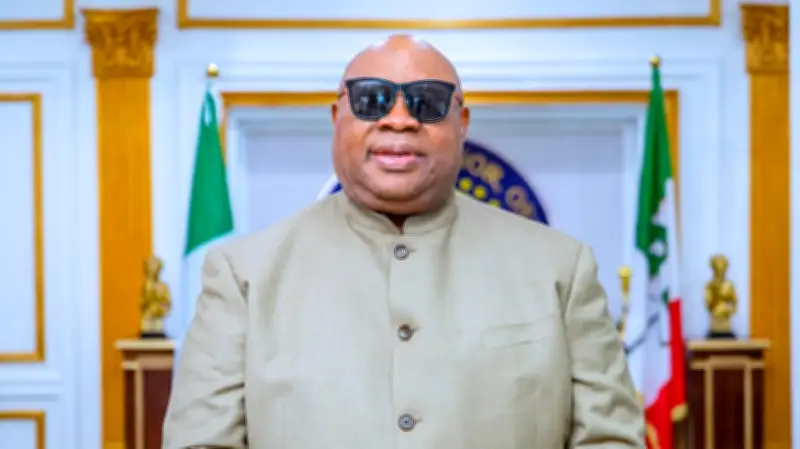
With less than two months until the August 15, 2026, governorship election in Osun State, political campaigns are increasingly being overshadowed by violence, fear and mutual accusations among rival political camps, OLUWOLE IGE reports.
High-Stakes Political Battle
What should ordinarily be a contest of ideas, records and visions for the future of Osun State is gradually assuming the character of a high-stakes political battle in which intimidation appears to be competing with persuasion. For many residents, the growing concern is no longer simply who wins the election. The bigger question is whether voters will be able to exercise their democratic right freely and elect a candidate of their choice without fear of violence, coercion or political manipulation.
The election, one of Nigeria’s major off-cycle governorship polls, has attracted national attention because of its significance ahead of the 2027 general elections. The contest looks more than a struggle for control of Government House, Oke-Fia. It is also being interpreted as a test of political strength between competing forces seeking to shape political alignments before the next presidential election.
Candidates and Legal Challenges
Incumbent Governor Ademola Adeleke is seeking another term on the platform of the Accord Party, which just got the marching order yesterday. The Federal High Court in Abuja ordered the Independent National Electoral Commission (INEC) to deregister the Accord Party and four other political parties. The court ruled that the party failed to meet constitutional and electoral requirements, including securing 25 per cent of the votes in the last general elections, and barred them from the 2027 polls.
Challenging Adeleke are the candidates of the All Progressives Congress (APC), Bola Oyebamiji, popularly known as AMBO, and the African Democratic Congress (ADC) standard-bearer and former Speaker of the Osun State House of Assembly, Najeem Salaam. Yet, instead of debates on governance, development priorities and the future direction of the state, headlines have increasingly been dominated by reports of shootings, attacks and allegations of politically motivated violence.
Escalating Violence
In recent weeks, tension has escalated across several parts of the state, particularly Osogbo, Ede and Ile-Ife, where attacks linked to suspected political thugs have heightened anxiety among residents. The incidents have left casualties, injuries and growing fears that the election season may degenerate into a wider security challenge if urgent preventive measures are not taken.
Among the incidents that have amplified concerns was the attack on the chairman of the Accord Party in Osogbo Local Government Area, Ashimiyu Ajibola, who survived an assassination attempt after gunmen reportedly opened fire on his vehicle. He sustained gunshot wounds and was rushed to the hospital alongside other injured occupants of the vehicle.
The Ataoja of Osogbo, Oba Jimoh Oyetunji, also disclosed that gunmen allegedly invaded his palace in what he described as an attempt on his life. The monarch linked the attack to political developments in the state and used the opportunity to appeal against violence. His intervention underscored the growing unease among traditional rulers and community leaders who fear that political rivalry may be pushing Osun towards a dangerous path.
Earlier, tragedy struck in Ikire, Irewole Local Government Area, where Kolade Eluyera, son of a female political leader, was shot dead. The killing added another layer of tension to an already heated political environment.
Accusations and Counter-Accusations
Predictably, the major political camps have exchanged accusations over responsibility for the attacks. The APC campaign council has repeatedly accused supporters of the ruling party of orchestrating violence and intimidation against opposition members. According to the party, campaign vehicles and supporters have been attacked in several locations. Its campaign leadership argues that a culture of political intimidation is taking root and has called on security agencies, election observers and civil society groups to pay close attention to developments in the state.
The Adeleke campaign, however, rejects the allegations and insists that its supporters have been the primary victims of violence. The governor’s camp has accused the opposition of sponsoring attacks while attempting to portray itself as the victim. Governor Adeleke himself has expressed dissatisfaction with the handling of security matters, accusing the police of failing to respond adequately to violent incidents and calling for stronger intervention from national security agencies.
The exchange of accusations has deepened political mistrust and raised questions about whether security agencies can maintain public confidence as election day approaches.
Impact on Democratic Integrity
Beyond partisan claims and counterclaims lies a more fundamental issue: the integrity of the democratic process. For many residents, elections are not merely about which political party occupies power. They are about the ability of citizens to participate freely in determining who governs them. Whenever violence becomes a dominant feature of electoral contests, that democratic objective is threatened.
Political violence rarely affects all voters equally. Women, elderly citizens, persons with disabilities and first-time voters are often the first casualties of fear. Even when they are not physically attacked, the perception of insecurity can discourage them from participating in the electoral process. In many elections across Nigeria, low turnout has frequently been linked to concerns over violence and intimidation. Voters who fear attacks often choose to remain indoors rather than risk being caught in clashes between rival groups.
The consequence is that election outcomes may no longer reflect the true preferences of the electorate but rather the choices of those willing or able to navigate an atmosphere of fear. This is why the developments in Osun have generated concern among democratic stakeholders.
Historical Context and Accountability
The state has experienced politically charged elections in the past. Governorship contests in 2014, 2018, and 2022 witnessed heightened tension, allegations of intimidation, and clashes between supporters of rival parties. Although Osun has generally maintained a reputation as one of Nigeria’s relatively peaceful states, memories of those episodes remain fresh in many residents’ minds.
One of the major factors encouraging recurring violence is the perception that perpetrators are rarely held accountable. Where political actors believe that violence carries little consequence, the temptation to use intimidation as an electoral strategy often increases. The danger is that such a culture gradually weakens democratic institutions and shifts political competition away from persuasion and public engagement towards coercion.
Broader Implications
For Osun, the stakes extend beyond the outcome of a single governorship election. The state has often played an influential role in Nigeria’s political evolution. The election is expected to provide important signals about voter sentiment in the South-West ahead of the 2027 elections. It is therefore attracting the attention of political parties, civil society organisations, and observers across the country.
A peaceful, credible and transparent election would strengthen public confidence in democratic institutions and demonstrate that electoral competition can take place without violence. Conversely, an election marred by widespread insecurity could raise questions about legitimacy, undermine public trust and further deepen political divisions.
Former Deputy National Publicity Secretary of the Peoples Democratic Party, Prince Diran Odeyemi, recently described the violence as a worrying development in a state long regarded as peaceful. He urged security agencies and the Federal Government to act decisively to prevent further deterioration. His concern reflects a broader sentiment among many residents who believe that security agencies must take proactive rather than reactive measures.
Similarly, APC chieftain, Liadi Tella, warned against the desperation for political power, arguing that no elective office is worth the loss of human life. His position echoes growing calls for political actors to place peace above partisan interests.
These appeals highlight a critical reality: regardless of who eventually wins the election, Osun stands to lose if violence becomes the defining feature of the contest.
Path Forward
Democracy derives its legitimacy from the consent of the governed. Such consent is meaningful only when citizens are free to make political choices without intimidation. The challenge before security agencies is therefore not merely to maintain law and order but to create conditions that inspire confidence among voters. Citizens must believe that polling units will be safe, that votes will count and that political preferences can be expressed without fear of reprisal.
Campaign rhetoric that could inflame tensions must be avoided. Supporters should be educated on peaceful participation, while party leaders must publicly and consistently reject violence. Traditional rulers, religious leaders, civil society organisations and community groups equally have important roles to play in promoting tolerance and dialogue during the campaign period.
Ultimately, the significance of the August 15 election goes beyond the personalities of Adeleke, Oyebamiji and Salaam. It is a test of democratic maturity in Osun State. Will voters be allowed to evaluate candidates based on performance, competence and vision? Will campaigns be driven by issues affecting livelihoods, infrastructure, education, healthcare and economic opportunities? Or will fear and intimidation shape the political environment?
The answers to these questions may determine not only who becomes governor but also the quality of democracy in the state. As election day draws nearer, many residents hope the focus shifts from violence to governance and from confrontation to persuasion. Their expectation is simple: an election in which every eligible voter can freely participate and where the outcome reflects the genuine will of the people.
For Osun, that remains the ultimate stake. Beyond party victories and political calculations, the real contest is whether democracy will be strong enough to allow citizens to choose their governor without fear. If that objective is achieved, whoever emerges victorious will govern with legitimacy. If it is not, the election may leave behind questions that will linger long after the ballots have been counted.