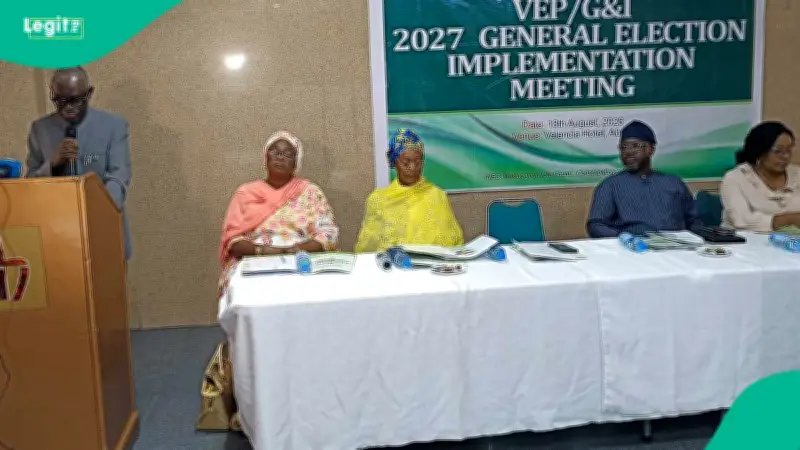
The Independent National Electoral Commission (INEC) has officially kicked off preparations for the 2027 General Election, with a strategic emphasis on reaching every eligible Nigerian voter. The initiative was the central theme of a joint implementation meeting that brought together the Commission's Voter Education and Publicity Department and its Gender and Inclusivity Department.
The meeting, which took place after the conclusion of the off-cycle governorship elections in Ekiti and Osun states, was attended by Heads of Voter Education from all 36 states and the Federal Capital Territory. The gathering was convened to design communication strategies that would encourage active participation in the upcoming polls.
INEC's Priorities for 2027
Addressing the attendees, National Commissioner and Chairman of the Information and Voter Education Committee, Mallam Mohammed Kudu Haruna, stressed the urgency of accelerating preparations. He described the task as both straightforward and deeply complex, noting that while voter education focuses on who to reach, what they need to know, and how to reach them, translating these into action across Nigeria's diverse population requires careful planning and professional execution.
Haruna emphasized that the core aim of voter education is to help citizens understand how to participate in elections and to encourage eligible voters to exercise their civic responsibility, while acknowledging that voting in Nigeria remains voluntary. He identified women, young people, the media, civil society organisations, and persons with disabilities as priority audiences whose specific information needs must be understood and addressed directly.
Call for Accurate and Timely Communication
Haruna told voter education officers that every message issued by the Commission must be accurate, truthful, timely, transparent, and consistent. He added that communication channels should be chosen based on the target audience and the nature of the message. He challenged officers to sharpen their communication skills and deepen their understanding of the electoral process, stressing the need for clear and civil public engagement.
He also highlighted the importance of officers being familiar with the Constitution, electoral laws, and relevant legislation, including the Freedom of Information and Data Protection laws. Haruna said the Commission's communication policy must be strictly followed, as effective information management is central to maintaining public trust in the electoral process.
He described the overall task as enormous but expressed confidence that the meeting would help departments close existing gaps and turn approved plans into real activity on the ground. INEC is chaired by Prof. Joash Ojo Amupitan, SAN, under whose leadership the Commission has committed to conducting elections that are credible, inclusive, and reflective of the Nigerian people's will.
Related Developments
In a related development, the Muslim Rights Concern (MURIC) has held INEC responsible for the alleged widespread barring of hijab-wearing Muslim women from casting their votes during the Osun state governorship election held on Saturday, August 15, 2026. MURIC's executive director, Prof. Ishaq Akintola, detailed the allegations in a statement released on Sunday, August 16, 2026, describing the incidents as deliberate and targeted.
These allegations come as INEC steps up its efforts to ensure inclusivity and credibility in future elections, with the 2027 general election preparations now underway.