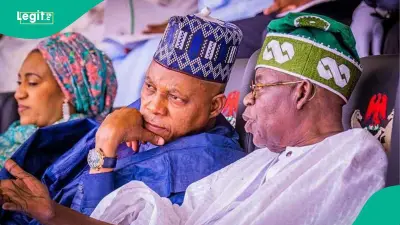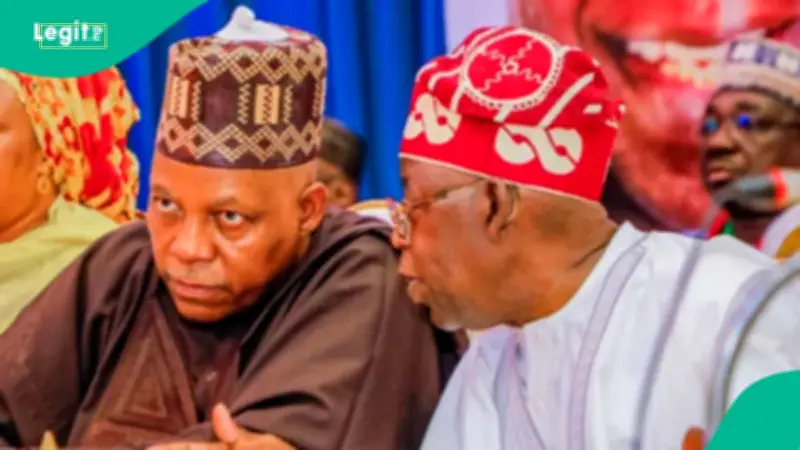
X user Imran Muhammad, @Imranmuhdz, set the social media agenda on Saturday, August 1, when he shared the just-published INEC credentials for President Bola Tinubu, the All Progressives Congress (APC) flagbearer for the 2027 election. The documents, which list Tinubu's educational history, notably omitted any primary or secondary school attendance, while recording Chicago State University as his only tertiary institution and listing his age as 74.
The publication, part of INEC's statutory requirement for all presidential candidates, includes personal details such as name, date of birth, and educational qualifications. For Tinubu, the only educational institution listed is Chicago State University. No certificates from primary or secondary schools were included, and the omission immediately became a focal point of discussion across social media.
Details of the Credentials Publication
INEC released the credentials on Saturday, August 1, as part of the APC's submission for the 2027 presidential ticket. While the publication covers both President Tinubu and his running mate, Vice-President Kashim Shettima, most of the online debate centered on Tinubu's educational records.
The document records Tinubu's age as 74, a figure that some social media users have questioned given his appearance. The timing of the release, well ahead of the 2027 general elections, ensures that the president's academic background will likely become a recurring topic during the campaign season.
Reactions on Social Media
The post spread rapidly on X, provoking a wide range of responses. @Favour247_ wrote: "So according to inec tinubu dnt attend primary and secondary school but he went to university. Chaiii who do us this kain thing. He is even 74 years old...but why does he look like 98?"
Another user, @Flame_dab, accused the South-West region of failing to vet its candidate, writing: "This is utterly shame. That we come here to rationalise this would hunt generations from the SW. I say this without fear or favor, after all this and the Presidential candidate of 2027 elections in the person of Bola Ahmed Tinubu is found to be defective in any form, let embargo be placed on the SW for the next 25years." The same user also pointed to a discrepancy in a listed NYSC certificate, asking: "Now the NYSC certificate shows Tinubu Bola Ade...kini?"
@Tosky2008 questioned the plausibility of Tinubu's claim that no colleagues from his school era are alive to verify his attendance: "Tinubu claimed that all his colleagues are dead, so nobody can attest that he attended any school, even the places that he worked, nobody can attest to that. Those that fought WWII from 1939-1945, still have a few of their colleagues alive but Tinubu has none. Real clown ???"
Some observers, however, dismissed the controversy as irrelevant. @Oludamolala wrote: "No record of primary school. No record of secondary school. Graduated from Chicago State University. Worked as an accountant with Mobil. Has he broken any rule? Capital NO. A mystery. Bola Tinubu is a textbook that needs to be studied."
A History of Educational Controversy
Questions about President Tinubu's educational records are not new. The controversy over documents linked to his academic history, including a Chicago State University certificate submitted during past electoral processes, has featured in legal challenges and public discourse for years. The latest INEC publication adds a fresh layer to the ongoing debate.
With the 2027 presidential election now on the horizon, the released credentials are expected to fuel further scrutiny of the president's qualifications and background. The APC has not yet released an official response to the publication, but analysts suggest the issue may become a central theme in the run-up to the elections.
Calls for Tinubu to Step Aside
The INEC publication is not the only challenge facing Tinubu's re-election bid. The National Christian Elders Forum (NCEF) recently called on the president to rule out a second-term bid, arguing that his government has fallen far short of expectations on security, the economy, and the welfare of ordinary Nigerians. The position was contained in a communiqué dated July 9 and signed by NCEF national chairman Samuel Gani, who said the federal government's handling of critical national issues had been "hugely sub-optimal."
As the 2027 election season approaches, these developments suggest that President Tinubu's path to another term will be met with significant opposition, both from political rivals and from civil society groups. For now, the INEC publication has once again put his educational history under the public microscope.