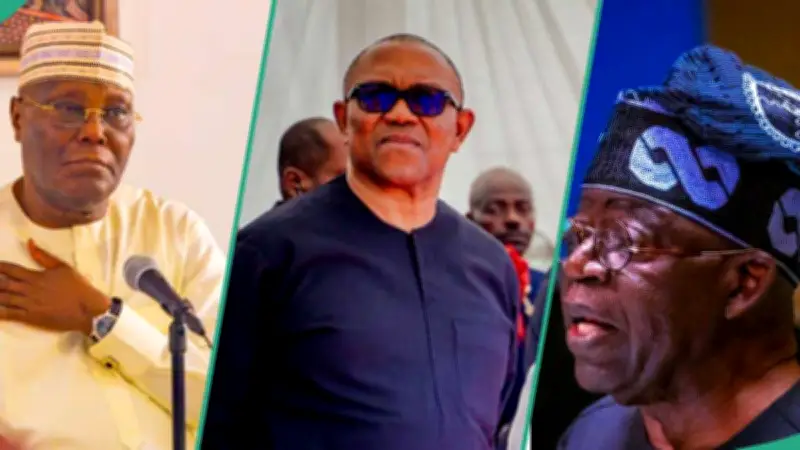
Peter Obi, the presidential candidate of the Nigeria Democratic Congress (NDC), has declared that every candidate seeking the presidency in 2027 must be prepared to face the public directly, present their credentials, and defend their academic records. Speaking at a press conference on Friday, August 21, 2026, Obi urged Nigerians to hold all candidates to account by demanding transparency over their backgrounds and policy plans.
According to Premium Times, Obi's remarks came against the backdrop of lingering questions over President Bola Tinubu's birth records and academic history, a controversy that first arose before the 2023 election and has resurfaced in the build-up to 2027. While Obi did not name any candidate directly, his call for open scrutiny appears aimed at addressing these unresolved issues.
Obi's Call for Open Scrutiny of All Candidates
Obi stressed that no candidate should hide behind the high walls of power or send proxies to campaign on their behalf. He said, "Every candidate must be willing to present their credentials, defend their records, and subject their vision to open scrutiny. No candidate should hide behind the high walls of power, send proxies or surrogates to the hustings, and expect Nigerians to entrust them with the leadership of the country."
His statement underscores a growing demand for accountability among Nigerian voters, particularly as the 2027 general elections approach. The controversy surrounding Tinubu's academic records has been a recurring theme in Nigerian politics, and Obi's comments are likely to intensify the debate.
Economic Plan: From Consumption to Production
On the economy, Obi outlined a comprehensive plan to shift Nigeria away from a consumption-driven model towards one anchored on production, investment, and enterprise. He argued that the country's population of over 200 million people represents an opportunity that must be harnessed rather than wasted. Alongside his running mate, Rabiu Kwankwaso, Obi pledged to implement policies that would drive economic transformation across all regions.
His regional development plan is ambitious: the North-west would expand agriculture and manufacturing, the North-east would focus on reconstruction and restoration of livelihoods, and the North-central would strengthen food production and processing. The South-west would build on its existing strengths in technology, finance, and the creative economy, while the South-east would deepen its industrial and entrepreneurial capacity. The South-south would extract greater value from oil and gas while growing maritime services and fisheries.
Obi emphasized that every region must contribute to national development. "Every region must produce. Every region must contribute. Every region must benefit," he said. He also pledged to improve rural infrastructure, link farmers to markets and financing, strengthen manufacturing and agro-processing, and ensure public finances are managed with clear accountability for every naira spent.
Security and Healthcare Commitments
On security, Obi acknowledged that insecurity had displaced millions of Nigerians and continued to damage agricultural output and economic activity. He promised to improve intelligence coordination among security agencies, invest in border management, and adopt technology-led approaches to policing. He added that his administration would also tackle the root conditions that make young Nigerians vulnerable to criminal recruitment.
On healthcare, Obi admitted that Nigeria's health indicators remain a serious concern. He committed to improving maternal and child health outcomes, expanding access to essential medicines, and equipping health workers to deliver better services. These commitments are part of his broader vision to address the systemic challenges facing the country.
Apart from Tinubu of the ruling All Progressives Congress, Atiku Abubakar of the African Democratic Congress is among the leading presidential candidates expected to contest the 2027 general elections. Obi's call for transparency is likely to resonate with voters who are increasingly demanding accountability from their leaders.
Disagreement with Atiku on Fuel Subsidy
In a related development, Legit.ng reported that Peter Obi pushed back against Atiku Abubakar's call to restore fuel subsidy. Obi backed the removal of petrol subsidy but said the federal government failed to manage the savings from the policy responsibly. The Labour Party's 2023 presidential candidate said he had outlined a structured plan for subsidy removal in his manifesto before the election.
Obi's stance on the subsidy issue highlights the policy differences among the leading opposition figures. While Atiku has called for a return to subsidies to ease the burden on Nigerians, Obi believes that the removal was necessary but poorly implemented. This disagreement could shape the opposition's strategy as the 2027 elections draw closer.