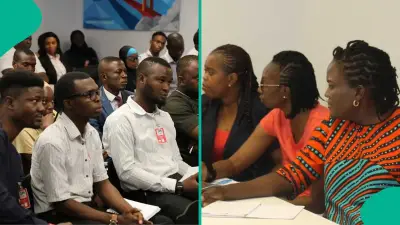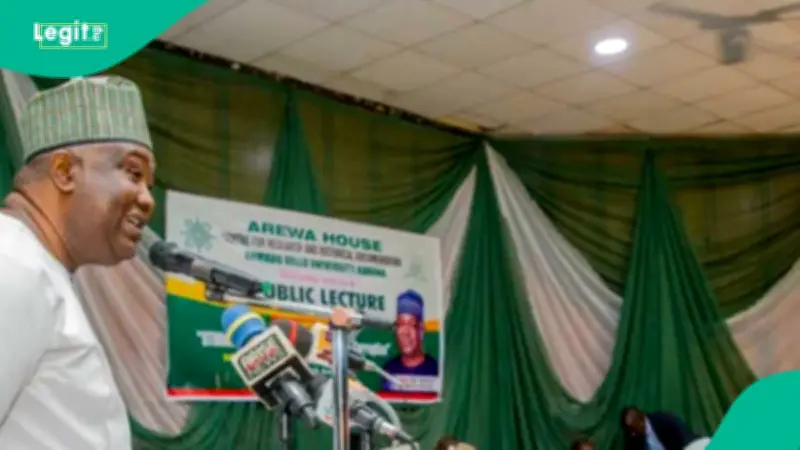
Accord Party presidential candidate Gbenga Olawepo-Hashim and former Director-General of the Nigerian Law School, Prof. Isa Hayatu Chiroma, SAN, have called for sweeping reforms to revive public trust in Nigeria's democratic process. Both men spoke at a colloquium held in Abuja to mark the 60th birthday of civic advocate Chief Ezenwa Nwagwu, which also featured the formal presentation of his book, Eze Unhinged: Electoral Reforms, A Participant's View and Reflections.
Voter Turnout and the Crisis of Confidence
Olawepo-Hashim, represented at the event by the Vice-Chancellor of Baze University, Prof. Abiodun Gabriel Adeniyi, cited figures from International IDEA showing that presidential election turnout in Nigeria fell from 69.08 per cent in 2003 to just 26.71 per cent in 2023. He attributed the decline to distrust in the electoral system, poverty, insecurity, logistical difficulties and widespread dissatisfaction with candidates.
He called on authorities to make elections safer, more accessible and more transparent, rather than placing the burden of disengagement on citizens who had lost faith in the process. "Poverty does not extinguish political rights, but it can diminish the capacity to exercise them when survival consumes the time, resources, and energy required for meaningful participation," he said.
Olawepo-Hashim also called for economic reforms that would convert Nigeria's natural resources into jobs, enterprise and improved living conditions. He pointed to high energy costs as a symptom of the gap between the country's resource wealth and the daily struggles of ordinary Nigerians, and advocated transparent cost accounting, reliable domestic crude supply and efficient refining as part of the solution.
Ciroma: Institutions Over Individuals
Prof. Chiroma, who chaired the colloquium, argued that Nigeria needed to shift away from a system shaped by powerful individuals and move towards independent institutions that served all citizens regardless of political affiliation or social status. He also called for broader economic opportunities and a national identity rooted in something beyond ethnic loyalty.
Former Kogi West Senator Dino Melaye criticised Nigerian political parties for lacking clear ideological direction, saying the country had not yet built a sustainable democratic culture despite 27 years of uninterrupted civilian rule. He urged citizens to understand their power and demand accountability from their representatives, and called for equal civic rights for all Nigerians as well as greater opportunities for women and young people within party structures.
Obstacles to Women's Participation
Nwagwu himself highlighted restrictive cultural practices, financial barriers and entrenched political interests as the main obstacles to women's participation in politics, criticising the limited influence women held even in designated party leadership roles. The president of the Nigerian Institute of Public Relations, Dr Ike Neliaku, called for collaboration across generational lines, arguing that young people and older Nigerians each brought distinct strengths that were essential to national progress.
The event was attended by Nigeria Labour Congress President Joe Ajaero, former Academic Staff Union of Universities presidents, the Director-General of the National Institute of Democracy and Legislative Studies, former TETFund Executive Secretary Prof. Sulayman Bogoro and other civil society figures.
Olawepo-Hashim Wins in Court
Meanwhile, Legit.ng earlier reported that a Federal High Court sitting in Abuja declared Olawepo-Hashim the authentic presidential candidate of the Accord Party for the January 16, 2027 presidential election, directing the party to forward his name to the Independent National Electoral Commission (INEC). Justice Mohammed Garba Umar delivered the ruling on Monday, finding that the Accord Party breached Section 86 of the Electoral Act 2026 by failing to submit Olawepo-Hashim's name to INEC after he emerged as the winner of the party's May 30, 2026 presidential primary.